Poland’s deputy defense minister seeks answers on canceled US rotation


NEWYou can now listen to Fox News articles!
EXCLUSIVE: WARSAW, Poland — Poland’s deputy defense minister said Warsaw will press U.S. officials in the coming days over the Pentagon’s decision to halt the planned rotation of U.S. Army soldiers in armored brigades. — a recent decision that rattled one of Washington’s closest NATO allies, despite assurances that US troop levels in Poland would remain unchanged.
At the same time, Polish officials stressed that Warsaw still considers itself a “model ally” within NATO and hopes that military cooperation with the United States will continue to expand.
“We will ask questions and I suppose we will get answers,” Polish Deputy Defense Minister Paweł Zalewski told Fox News Digital in an exclusive on-camera interview ahead of meetings in Washington with Pentagon officials and members of Congress.
The Pentagon reduces troops on NATO’s eastern flank and refuses American withdrawal from Europe
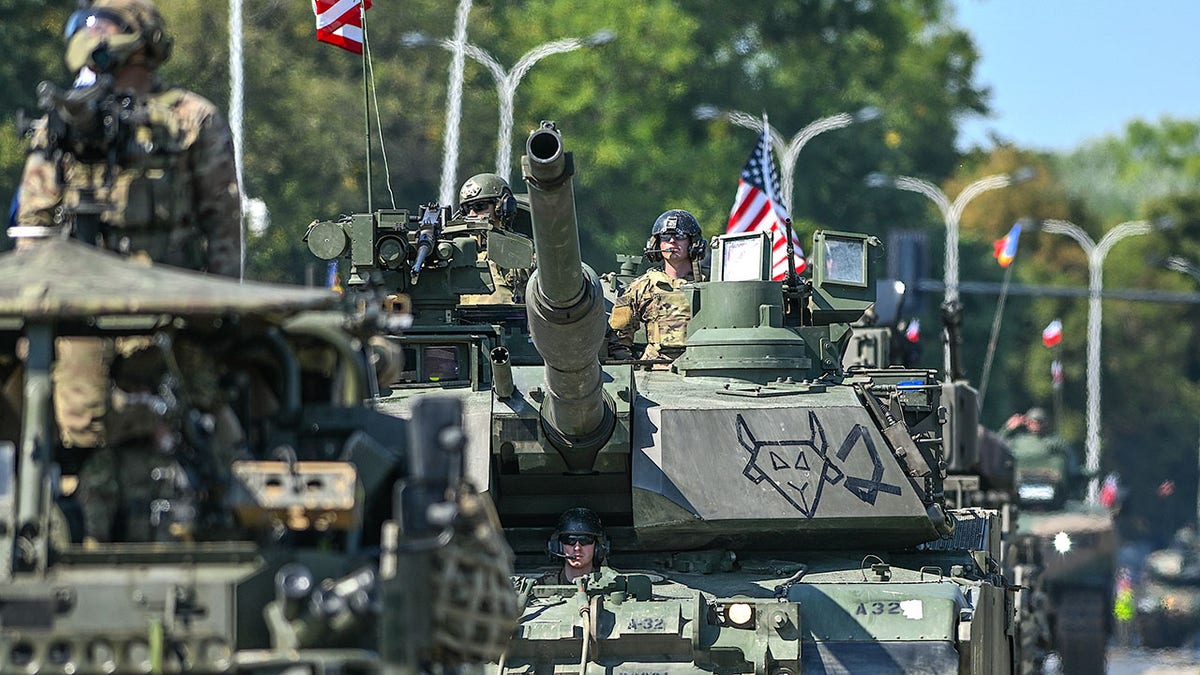
U.S. Army M1 Abrams tanks participate in the Armed Forces Day parade, commemorating Poland’s victory over the Soviet Red Army in 1920 and marking the 105th anniversary of the Battle of Warsaw, in Warsaw, Poland, August 15, 2025. The event brought together more than 4,000 Polish troops, approximately 200 troops from NATO allied countries, approximately 300 military vehicles and nearly of 50 planes, making it the largest parade in the country’s history. (Artur Widak/NurPhoto)
The comments come days after the Pentagon halted a planned rotation of about 4,000 U.S. Army troops to Poland, sparking concern in Warsaw and criticism from U.S. lawmakers. The move affected the 2nd Armored Brigade Combat Team of the 1st Cavalry Division, which was to be deployed to Poland and other eastern flank positions as part of a routine nine-month rotation of NATO forces.
About 10,000 U.S. troops are typically stationed in Poland, with most deployed on a rotational basis for several months at a time. The American military presence in Poland relies heavily on these recurring rotations, the end of the brigade’s deployment has raised concerns in Warsaw.
It is not yet clear whether stopping the brigade will result in a permanent reduction of U.S. forces in Poland.
Zalewski referenced President Donald Trump’s recent assurances to Poland’s president-elect.

Poland’s deputy defense minister said Warsaw would pressure U.S. officials this week over the Pentagon’s decision to halt the planned rotation of armored brigades. (Fox News Digital)
“We remember that President Trump, speaking directly with President Nawrodski of Poland, said that the United States would maintain its armed forces in our country and the number of its armed forces,” Zalewski told Fox News Digital.
“We will stay in Poland,” Trump said in September 2025. “We are very aligned with Poland. We will put more into it if they want it.”
The Pentagon said the decision was made after consultations with the United States European Command (EUCOM), which directs American military operations on the continent.
“The decision to withdraw troops follows a comprehensive, multi-level process that incorporates the views of senior EUCOM leaders and the entire chain of command,” Acting Press Secretary Joel Valdez told Fox News Digital. “This is not an unexpected, last-minute decision, and it would be wrong to report it as such.”
The Pentagon declined to detail the reasons for stopping the rotation. The White House could not immediately be reached for comment.
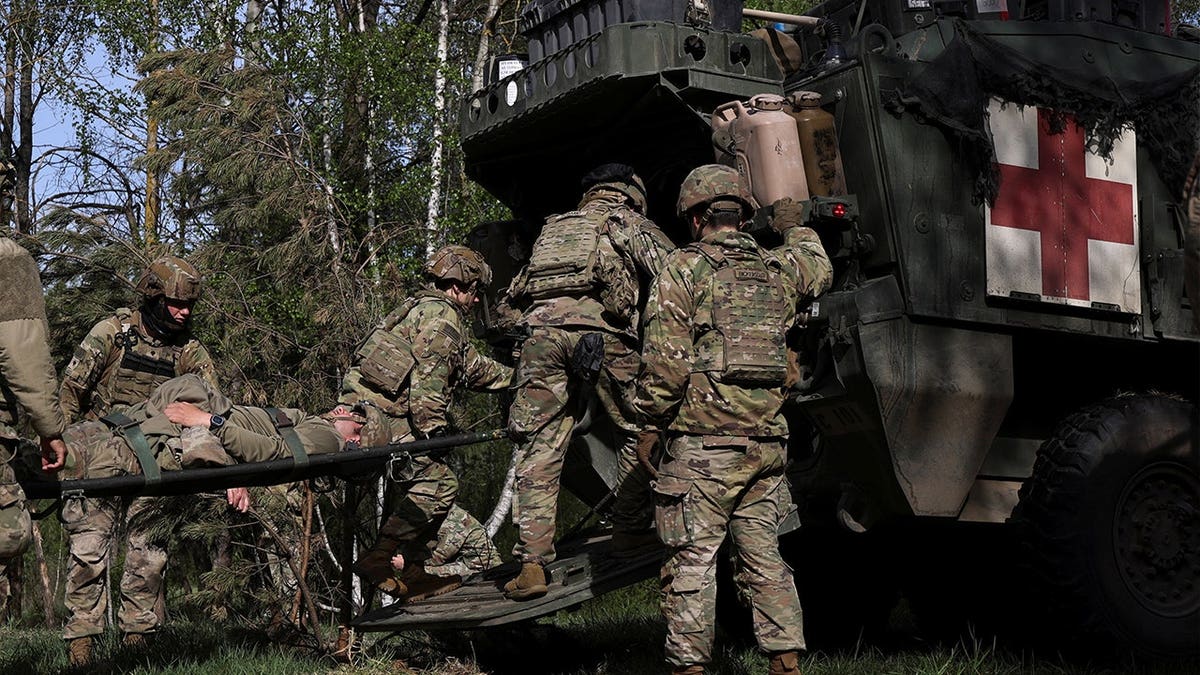
About 10,000 U.S. troops are typically stationed in Poland, with most deployed on a rotational basis for several months at a time. (Kuba Stezycki/Reuters)
The move sparked bipartisan criticism on Capitol Hill because Poland is seen as a key state on the front lines against Russia. Secretary of War Pete Hegseth had already hailed Poland as a “model ally.”
“The level of partnership – just to highlight it here – is unmatched in Europe,” Hegseth said during a February 2025 visit to Warsaw, Poland.
Rep. Don Bacon, R-Neb., called the cancellation of the brigade rotation a “slap in the face to Poland” during a House Armed Services Committee (HASC) hearing Friday, while HASC Chairman Mike Rogers said lawmakers were not properly consulted.
NATO ALLY POLAND WARNS RUSSIA AND BELARUS PUSHING ILLEGAL MIGRANTS TOWARDS THE ALLIANCE — AND THE US
Poland has become one of NATO’s most important military and logistics centers since Russia’s invasion of Ukraine in 2022, hosting rotating U.S. forces and serving as a departure point for military assistance flowing east.
Trump has repeatedly threatened to cut U.S. support for NATO allies, who he says spend too little money on defense, while pushing European governments to take greater responsibility for continental security. But Poland spends the largest share of its GDP on defense of all NATO countries, at 4.8%.
On Friday, Polish Deputy Foreign Minister Marcin Bosacki He acknowledged Poland’s frustration with how the situation had been communicated, while emphasizing that Poland had received assurances that the United States had no plans to reduce its military presence in the country.
“This should have been communicated better,” Bosacki said during a meeting with journalists in Warsaw, Poland. “We are still waiting for answers.”
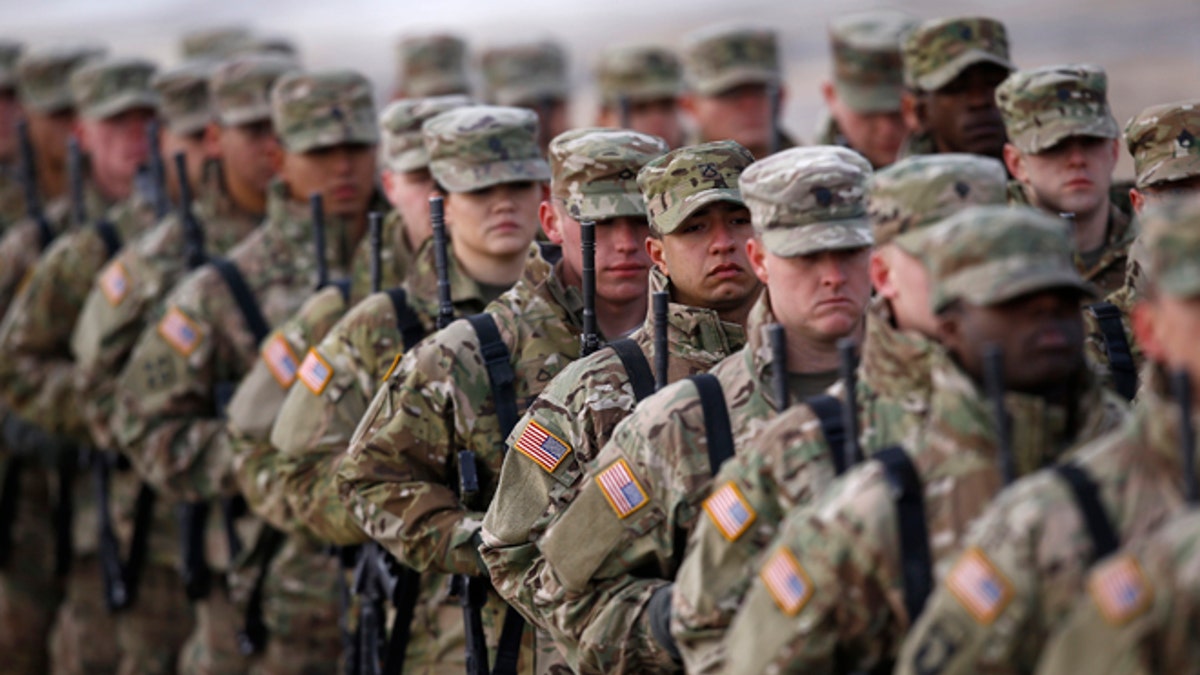
U.S. soldiers attend the inauguration ceremony of bilateral military training between U.S. and Polish troops in Zagan, Poland January 30, 2017. REUTERS/Kacper Pempel – RTSY23N (Reuters)
“But we are reassured by the United States: they do not plan to reduce either the number or the capabilities of their troops in Poland,” he added.
Bosacki said Poland expects troop rotations to continue and the total number of U.S. troops in the country to remain around 10,000, and highlighted Warsaw’s desire to further deepen the military partnership.
The cessation of the rotation in Poland comes as part of a broader effort by the Trump administration to reduce the U.S. military footprint in Europe and push NATO allies to take greater responsibility for conventional defense.
The Pentagon announced plans to withdraw about 5,000 U.S. troops from Germany, while earlier in 2026 the military ended the rotational deployment of the 101st Airborne Division to Romania and other eastern flank positions as force levels in Europe approached pre-war levels in Ukraine.
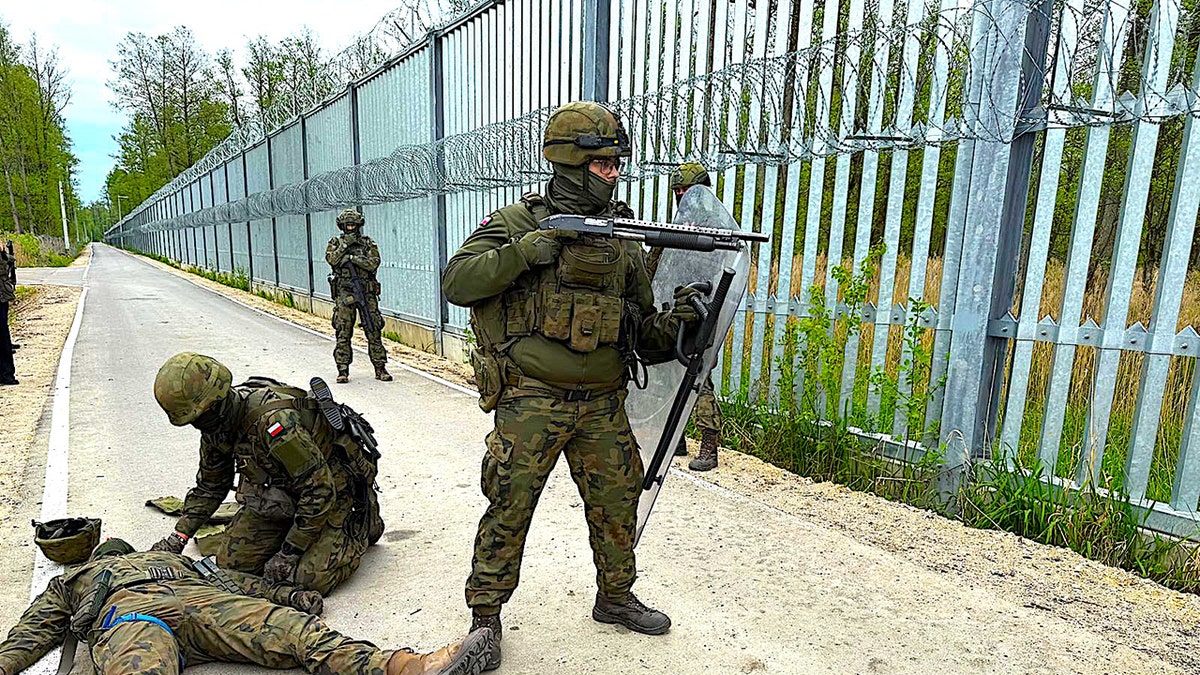
Soldiers of the Polish 18th Division conduct medical training on the battlefield near the Belarusian border on May 16, 2026, after a serviceman died in an attack by an illegal migrant. (Efrat Lachter/Fox News Digital)
Despite concerns over the halt in troop rotation, Zalewski said the main focus of the delegation’s meetings in Washington would be to discuss the future structure of NATO and defense cooperation between the United States and Europe.
The discussions are expected to focus in part on the Trump administration’s so-called “NATO 3.0” approach, a Pentagon-backed vision that would push European allies to take greater responsibility for conventional defense in Europe while the United States shifts more of its military attention to China and the Indo-Pacific. The strategy emphasizes increased European military spending, force readiness and defense industrial capacity, while reducing long-term US dependence on massive troop deployments across the continent.
OFFICIAL PENTAGON FLAGS SIGN RETURN OF ‘COLD WAR MENTALITY’ AS TRUMP ADMINISTRATOR REFORMS NATO ALLIANCE
Zalewski described Poland as a “model ally” because of its heavy defense spending, military modernization and close security partnership with Washington.
At the same time, he warned that Poland and other eastern NATO members remain under constant pressure from Russia through cyberattacks, sabotage and disinformation campaigns — threats that Polish officials increasingly see as part of a broader hybrid war against the alliance.
In recent years, Polish authorities have accused Russia-linked actors of being responsible for cyberattacks targeting government institutions and critical infrastructure, while authorities have also investigated suspected Russian sabotage plots linked to arson attempts and surveillance operations inside Poland. Warsaw further accused Moscow of orchestrating online disinformation campaigns aimed at undermining public trust, weakening support for Ukraine and fueling divisions among NATO allies.
“Poland and NATO’s eastern flank states are engaged in some kind of hybrid warfare,” Zalewski said. “We are constantly attacked by Russian cyber forces. There are many acts of sabotage in Poland.”
He said Poland had also experienced incursions into its airspace by Russian drones and “huge disinformation coming from Moscow” aimed at undermining trust in authorities and dividing NATO allies.
Zalewski argued that these hybrid threats have become particularly dangerous since Russia’s capture of Crimea in 2014, because they aim to weaken NATO internally without triggering a direct military confrontation.
He also expressed skepticism about efforts to improve relations between Washington and Moscow, saying Russia continues to view the United States and NATO as its main adversaries. Zalewski warned that Moscow’s long-term goal was to break Western alliances and drive divisions between the United States and frontline NATO states, such as Poland.
CLICK HERE TO DOWNLOAD THE FOX NEWS APP
“Yes, in the United States, some people think it is possible to find a path between Russia and the United States,” Zalewski said. “But this is just a game played by Moscow.”
“In fact, since the beginning of the 20th century, for this Russian elite which governs the country after the Russian revolution, the United States has been the greatest enemy,” he added. “And in fact, the most visible emotion they have toward America is simply hatred.”


