18-Million-Year-Old Ape Fossil From Egypt Suggests Modern Apes Originated Outside East Africa


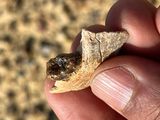
In a stretch of desert north of Cairo, a small fragment of jawbone is forcing a rethink of where the story of modern apes, including humans, may have begun.
The fossil belongs to a newly identified species, Masripithecus moghraensis, which lived about 17 to 18 million years ago during the Early Miocene. Described in Science, the fossil was found at Wadi Moghra and is the first definitive ape from North Africa from this time period — pointing to Egypt, and possibly the wider North Africa–Middle East region, as a key region in the origin of living apes, helping fill a gap in the early history of crown Hominoidea, the group that includes all living apes and their last common ancestor.
“We spent five years searching for this kind of fossil because, when we look closely at the early ape family tree, it becomes clear that something is missing — and North Africa holds that missing piece,” said senior author Hesham Sallam in a press release.
Read More: Early Humans Outsprinted Other Apes in Evolution, Growing a Larger Brain at a Faster Rate
Early Miocene Ape Fossil From North Africa
Until now, Early Miocene sites in North Africa had turned up monkeys, but not apes. That gap helped shape the view that early apes and their close relatives were restricted to more southern parts of Africa during this period. Younger ape fossils have been found across Africa, Asia, and Europe, but their relationships and the group’s first emergence remain debated.
Masripithecus shows that apes lived in North Africa during the Early Miocene and that the species was distinct from similarly aged East African apes, suggesting the fossil record has been missing part of the record of where the earliest branches of the ape family diversified.
Masripithecus combines Masr, the Arabic word for Egypt, with the Greek word for ape. The species name, moghraensis, refers to Wadi Moghra, where the remains were recovered in 2023 and 2024.
Filling a Gap in the Ape Family Tree
The fossil consists of a lower jaw, but it preserves a combination of features not seen in any other known ape from this time. The jaw is robust, with large canine and premolar teeth and rounded, textured molars.
This suggests Masripithecus had a flexible, mainly fruit-based diet, with the ability to process tougher foods, such as nuts and seeds, when needed. That flexibility would have been useful in a region becoming more seasonal, where climatic shifts in northern Africa and Arabia made food supplies less predictable.
How Apes Spread Beyond Africa
To place Masripithecus on the ape family tree, researchers combined anatomical evidence from living and extinct apes, DNA from living apes, and the geological ages of fossil species using Bayesian methods. Their analysis found that Masripithecus is more closely related to living apes than any species currently known from the Early Miocene of East Africa.
Biogeographic analyses point to northern Africa and the Middle East as the most likely home of the common ancestor of all living apes during the Early Miocene. At the time, the African and Arabian plates were moving north in their final phase of collision with Asia, while shifting sea levels reduced marine barriers and periodically opened routes into Eurasia.
In this context, the region acted as a corridor for animal dispersal. Masripithecus represents an intermediate link between the previously disjunct African and Eurasian fossil records — evidence that apes were already diversifying in this region before expanding into Europe and Asia as land connections formed.
“For my entire career, I considered it probable that the common ancestor of all living apes lived in or around East Africa. But this new discovery, and our new and novel analyses of hominoid phylogeny and biogeography, now strongly challenge that idea,” said co-author Erik Seiffert.
Researchers say further exploration in North Africa and the Middle East may uncover additional fossils that help clarify how and where modern apes first emerged.
Read More: Bizarre Origins of Kissing Trace Back 21 Million Years to Apes — And Possibly Neanderthals
Article Sources
Our writers at Discovermagazine.com use peer-reviewed studies and high-quality sources for our articles, and our editors review for scientific accuracy and editorial standards. Review the sources used below for this article:


