2025 was the year Xbox died

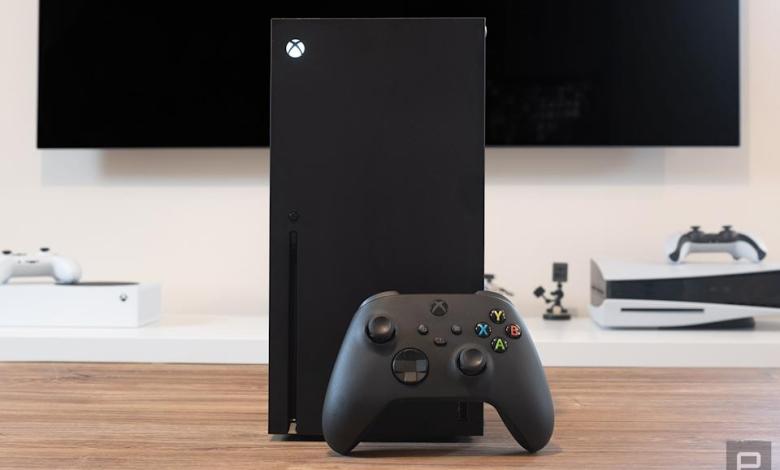
Do you want to see a corpse? I present to you the Xbox. After a tepid launch at the height of the COVID pandemic in 2020, the Xbox Series As prices rose due to supply chain issues and the Trump administration’s volatile tariff system, there were even fewer reasons to get an Xbox (even the cheapest Series S). When I re-reviewed the Series X last year, it was clear that it never lived up to its potential. Any sane person would be better off buying a PlayStation 5.
Xbox didn’t enter 2025 in great shape, and it’s coming out of the year looking for help, like a Arc Raider player desperate for a revival after being eliminated. Microsoft has canceled the Perfect dark restart and Always wildtwo of the most interesting games on its weak upcoming slate. The company brought titles like Forza Horizon 5 to the PlayStation 5, prompting Engadget deputy editor Nathan Ingraham to declare that he no longer needed an Xbox.

Xbox Series (Engadget)
Making matters worse this year, Microsoft has raised prices across the board, with the Xbox Series S starting at $400 and the cheapest Series X starting at $600. And slow sales prompted Costco to stop selling Xbox consoles altogether. Microsoft didn’t even try to promote the systems during Black Friday: why bother making sales if no one is buying the hardware in the first place?
Even Game Pass, which was once renowned as one of the best deals in gaming, has nearly doubled in price over the past year, going up to $30 per month (or $360 per year) for the Ultimate tier. Sure, Microsoft tried to add more value to its cheaper Game Pass tiers and eventually upgraded its cloud streaming platform, but the lack of consistent, must-have exclusive titles has devalued the service (and Xbox as a whole). Declared And South of midnight were among the few exclusive highlights, but these will be coming to PS5 and Switch 2 next year. There is no word on Declared reaching other consoles yet, but given Microsoft’s current trajectory (and the fact that this is a truly great game), I wouldn’t be surprised if it becomes available elsewhere.
Microsoft had a chance to reinvigorate the Xbox brand with the ASUS ROG Xbox Ally and Ally X gaming handhelds, but launch prices of $600 and $1,000 put them out of reach for most gamers. It also doesn’t help that Windows still isn’t well optimized for handheld devices with touchscreens, nor are these systems compatible with older Xbox titles like consoles. At the very least, Microsoft now has a foot in the handheld. But a future portable Xbox console would have to be significantly cheaper to compete with the Steam Deck, which starts at $549 (following the discontinuation of the $400 LCD model).
And speaking of Valve, the company’s recently announced Steam Machine also stole a lot of potential thunder from the Xbox. The Steam Machine is essentially a small gaming desktop for your TV, running the Steam Deck’s SteamOS. This platform is a Linux distribution optimized to emulate Windows titles. But unlike an Xbox console, it is in no way closed. You are free to install whatever you want on a Steam machine, even Windows!
While we haven’t seen the Steam Machine in action yet, the Steam Deck’s excellent performance and game compatibility makes me think its desktop sibling could be truly compelling for console gamers looking for something new. And it will likely directly compete with the next Xbox, which is expected to arrive in 2027 as a PC in a TV-compatible case (according to Windows Central Jez Corden). Microsoft’s recent partnership deal with AMD also hints at a more PC-like experience: Xbox President Sarah Bond noted that the Xbox team “is working closely with the Windows team to ensure Windows is the number one platform for gaming.”
It’s worth remembering that only one generation of Xbox – the Xbox 360 – was successful enough to truly rival Sony’s PlayStation. The original Xbox reportedly cost Microsoft $4 billion over a four-year period, leading the company to quickly jump ship and move on to its successor. The Xbox 360 was truly innovative, thanks to Xbox Live and smarter online integration, and it had good third-party support. By comparison, Sony’s PlayStation 3 cost $100-$200 more than the Xbox 360 at launch, its online support was much worse, and developers struggled with programming.

Xbox Series (Devendra Hardawar for Engadget)
Unfortunately, Microsoft wasted most of its goodwill with the Xbox One. This console was first announced as an “always online” device with restrictive DRM features that limited how you could share and sell games; it came with a Kinect camera that could potentially monitor you; and at $499, it was $100 more than the PlayStation 4. Microsoft quickly canceled many of its DRM-heavy plans for the Xbox One, but by that point the damage was done. Sony ultimately sold more than twice as many PS4 units as the entire Xbox One family (which included the cheaper One S and the more powerful One X), according to data from Ampere Research.
Things look worse this generation: the Xbox Series S and If this trend continues (and it doesn’t look like Xbox sales are increasing anytime soon), Sony could end up selling three times as many consoles this generation as Microsoft. Xbox sales have been so slow that the family-focused Nex Playground managed to surpass it in November, according to Circana data.
Given the Xbox’s inability to compete with the PlayStation 5, it’s no wonder Microsoft is completely changing things up for its next system. Its partnership with AMD could easily lead to new handhelds, and it also gives Microsoft a head start in producing a compact and powerful Xbox PC. After all, why should the company continue to try to take on Sony’s closed PlayStation platform? Why shouldn’t Microsoft embrace its PC roots and give us a gaming PC under our TVs? The company has already committed to bringing new Xbox games to PC immediately, so the line between the two has already blurred.
It may be a risk, but moving to PC proves that there’s still life in the Xbox brand. And importantly, it’s also something Sony can’t easily replicate.


