Bill to prosecute October 7 terrorists set for vote as Knesset returns from recess

The bill would create a special legal framework to prosecute Hamas terrorists and others involved in the massacre, including the Nukhba terrorists captured in Israel.
A bill authorizing the imposition of the death penalty and holding public trials for terrorists involved in the October 7 Hamas attacks is expected to pass second and third readings on Monday, as the Knesset opened its summer session on Sunday after more than a month of spring break.
The bill was sponsored by MK Simcha Rothman (Religious Zionist Party) and MK Yulia Malinovsky (Yisrael Beytenu), in a rare instance where legislation is advanced and supported by both the coalition and the opposition.
Justice Minister Yariv Levin, who championed the bill, said Sunday that after the Oct. 7 massacre he had ordered “the immediate creation of a task force whose goal is to ensure that terrorists and their accomplices are brought to justice and punished, and that justice is fully implemented.”
“The law regulates this, including the full power to impose the death penalty,” he added.
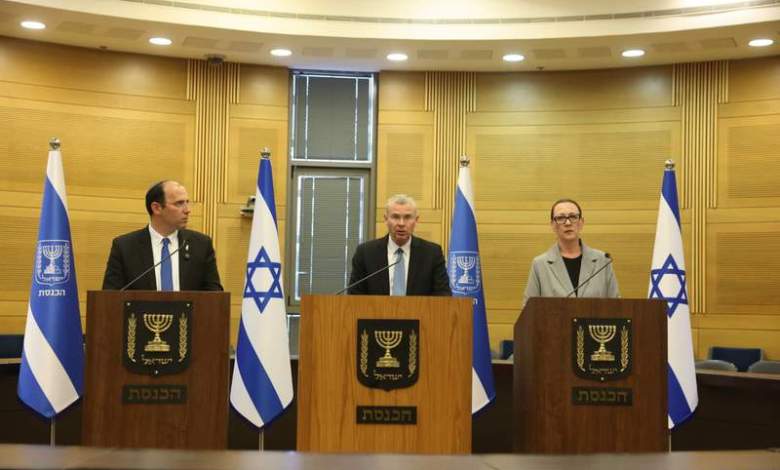
The three held a press conference in the Knesset, before the final votes in the Knesset plenary session to pass the proposal.

Justice Minister Yariv Levin, MK Simcha Rothman (Religious Zionist Party) and MK Yulia Malinovsky hold a joint press conference in the Knesset ahead of the upcoming vote on the bill to publicly prosecute the October 7 terrorists, on Sunday, May 10, 2026. (credit: MARC ISRAEL SELLEM)
Malinovsky said she advanced the legislation immediately after October 7. “Today, almost three years later, we have reached the finish line, which is actually the starting line – the start of historic events that the whole world will witness,” she explained.
“Everyone will see how the State of Israel is a sovereign country that knows how to hold those who have harmed it accountable. Everyone will see how the victims and their families look directly in the eyes of these murderers, rapists and kidnappers,” she added.
Special framework for terrorist prosecutions
The bill would create a special legal framework to prosecute Hamas terrorists and others involved in the massacre, including the Nukhba terrorists captured in Israel.
The charges range from terrorism and murder to sexual violence and even genocide crimes.
Under the bill, cases would be brought before a special military court, which would be different from ordinary criminal trials.
The military court and the special legal framework are expected to manage a legal process of considerable scale and importance. For this reason, the bill would allow the court to adjust certain normal rules of evidence and procedure.
This could include rules on testimony, detention and cases involving multiple defendants, but only if the court believes they are necessary for truth and justice and do not materially harm the fairness of the trial.

Justice Minister Yariv Levin, MK Simcha Rothman (Religious Zionist Party) and MK Yulia Malinovsky hold a joint press conference in the Knesset ahead of the upcoming vote on the bill to publicly prosecute the October 7 terrorists, on Sunday, May 10, 2026. (credit: MARC ISRAEL SELLEM)
The trial would take place in Jerusalem and its key moments, including the opening hearing, verdict and sentencing, would be filmed and broadcast on a dedicated website. A special unit of the Israeli Prison Service would provide security for the court.
The bill also includes provisions to establish a dedicated military headquarters to oversee proceedings, create an inter-ministerial steering committee and preserve video and audio documentation in state archives.
Although a bill was passed in March to legislate the death penalty for terrorists in Israel, it cannot be applied retroactively, requiring a separate bill to prosecute terrorists involved in the October 7 attacks.
Capital punishment has only been used twice in Israel’s history.
The last person executed by Israel was Nazi Holocaust architect Adolf Eichmann, who was hanged in 1962.