3D printed skulls make mounting antlers less of a bloody mess


3D printing makes the dirty business of mounting an animal skull onto the mantle a little less bloody.
A growing number of hunting enthusiasts and several companies are taking the manufacturing principles used to make everything from blinds to advanced medical equipment and applying them to deer and other “trophy” animals. Once the skulls are 3D printed, a hunter or collector can then take their real antlers or horns and slide pre-made holes into them. The final product looks pretty close to the real thing, but avoids hours of intensive, bloody cleaning or an appointment with an expensive taxidermist. Separate printheads also provide mounting options for shed hunters who collect naturally shed antlers, but don’t want to kill an animal.
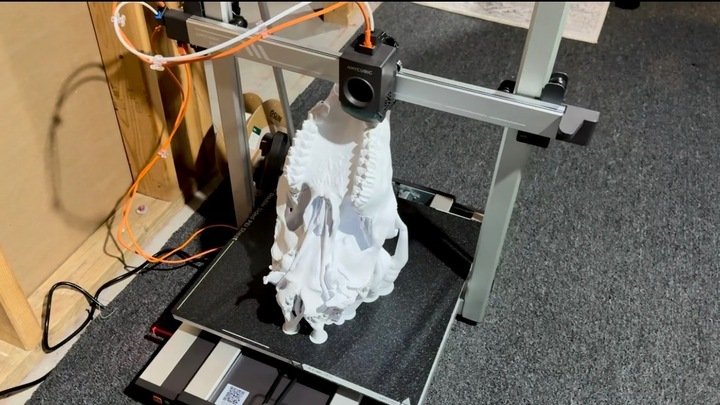
Although the space is primarily made up of individual creators, Utah-based Bucks N Bull Skulls currently sells an assortment of 3D-printed deer, elk and caribou skulls ranging from $50 to $150. Bucks N Bull Skulls founder Shawn Sanchez, himself an avid hunter, tells Popular science that the process begins by scanning real animal skulls that he has collected over the years. The scanning is done entirely using an iPhone application and involves taking more than a thousand photos of a skull. These are then transformed into a 3D image. Production time varies: Sanchez says a typical deer skull takes about 12 to 15 hours to print, while a larger, more complex elk skull can sometimes take nearly 50 hours.
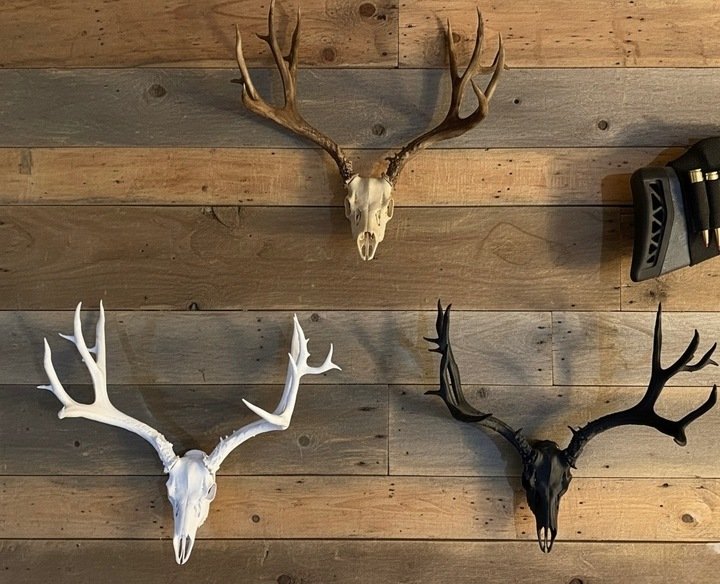
Although skulls can vary greatly in size, Sanchez says the base of the antlers tends to have a more uniform shape, allowing them to fit most printed casts. Sanchez works alongside 3D artist and designer Daniel Smith (who goes by the moniker DTM247) to add peach touches to the skull designs “to bring them to life.” Once printed, the skulls are stress tested to ensure they can reliably support the weight of the attached antlers without breaking. True to the community philosophy of 3D printing, Bucks N Bull Skulls also makes its digital files available to customers who use their own printers.
Sanchez himself is relatively new to 3D printing. He spent the previous 17 years in the automotive industry, working for companies like Lexus and Acura, but found himself “down for a while” following back surgery. He bought a printer (his 14-year-old son already owned one) to stay productive and see if he could apply it to his passion for hunting. While browsing online design forums, he came across Dan, who was already creating models of deer skulls. The two teamed up, combining Sanchez’s hunting expertise with Dan’s design experience. Since then, Sanchez has become a strong advocate for the collaborative 3D printing community.
“I really think if more people knew about this technology and how user-friendly it is, more people would literally have it in their homes, waiting to create whatever they need,” Sanchez said. “You can do so much with this. »
A cleaner alternative to boiling or beetling
Normally, assembly involves a bloody and very laborious process of stripping a skull of its flesh and meat, leaving behind only stark white bones. Doing this is not for the faint of heart. DIY approaches generally fall into three categories: boiling, water pressure, or beetles. All require a certain mental strength.
The first method involves dipping a cut animal head into soapy water, bringing it to a boil, then letting it simmer for hours. A blog post from hunting site Rocky Mountain Elk Foundation advises hobbyists using this approach to periodically remove the head from the pot and use a hanger to “scrape up any loose meat.” Needless to say, this should not be done on a stovetop. “Be prepared for a stinking mess along the way,” the writer warns.
Using a high-pressure water gun to remove the flesh is quicker, but it risks damaging the skull, which defeats the purpose of mounting it. Hunters who take this approach must also avoid flying pieces of debris, which is not ideal.
Related stories about 3D printing
The beetle method, on the other hand, involves placing the skull in an enclosure housing carnivorous insects, which will usually leave it spotless after several days. The creatures will almost certainly leave the skull spotless, but maintaining a healthy beetle colony requires enduring the lingering stench of rotting flesh. Some hunters choose to entrust their skulls to a “beetle guy”, but there aren’t exactly a lot of them.
Those who choose to entrust their skull to a professional taxidermist can generally expect to wait weeks or several months and likely spend several hundred dollars for this service. It should also be noted that all skulls mentioned here are considered “European” frames. More realistic approaches that include an animal’s fur and facial features (think eyeballs and lips) generally require the expertise of a seasoned taxidermist and significantly more time and money.
“It’s a little morbid,” admitted Sanzchez, who has prepared many of his own European mounts in the past.
Rise without killing
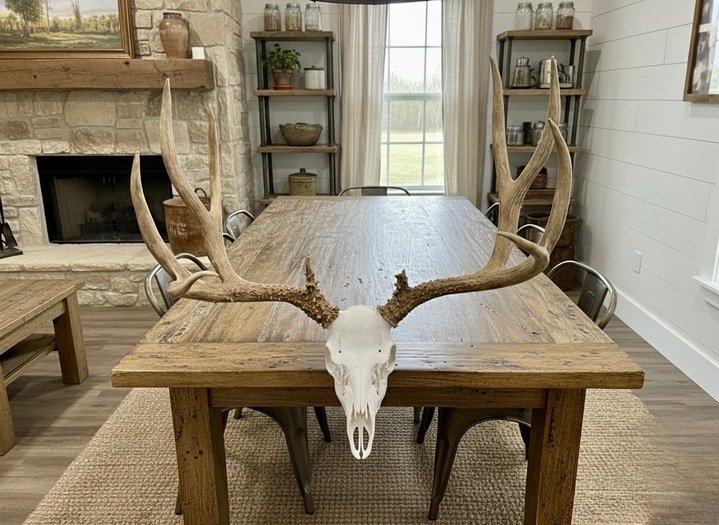
3D printed skulls offer several other benefits. Since the head is not made of real bone, it can maintain its white color indefinitely, while real bones turn yellow over time and can become brittle. Sanchez sells black skulls and has experimented with more exotic colors like purple, but says the majority of customers still prefer the more traditional white. Hunters also need not worry about damaging a physical skull, either while hunting or when carrying it long distances through mountainous or forested terrain. Taxidermists are also interested in the process, Sanchez says, particularly as a way to make complete copies of molds for clients who want to have multiple versions of their same mounts in different locations.
But perhaps most interestingly, 3D printing makes European-style frames accessible to people who aren’t hunters at all. Deer and other ruminants shed their antlers each spring and grow them back even larger the following season. A growing number of enthusiasts, known as shed hunters, are venturing into the woods to scavenge these abandoned timbers. Combine reclaimed antlers with a printed skull, and you have an attractive mount without ever having to pull a trigger or take a life.
Bucks N Bull Skulls is one of the larger companies selling these models, but there are also other enthusiasts on Reddit and 3D printing forums showcasing and detailing their own approaches. Many of these hobbyists share their files online, allowing others to download and print the designs using their own devices. And while it’s certainly possible that a Snachez could lose a potential customer by offering the files, he believes people will still choose to order from him for convenience and assured quality.
“To me, it’s possible that it could hurt the business, but probably not because there’s always going to be someone who says, ‘I don’t want to have to deal with that,'” he said.

PopSci Outdoor Gift Guide 2025


