Georgia’s extended drought impacts agriculture, raises wildfire risk

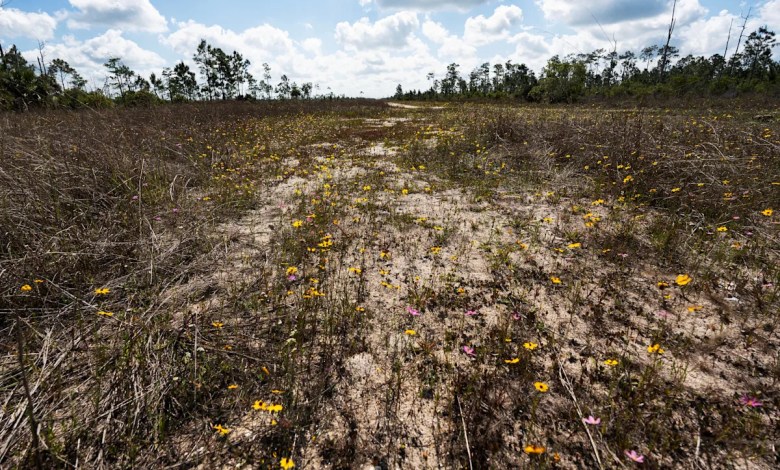
Georgia is experiencing a prolonged period of drought, a major consequence of climate change, experts say, noting that rising temperatures increase evaporation, dry out soil and vegetation and make droughts more frequent and intense.
A drought is a prolonged period of abnormally low precipitation, such as rain or snow, that leads to severe water shortages and affects ecosystems, agriculture and communities, according to the National Oceanic and Atmospheric Administration.
“Georgia has been experiencing something of a drought — a precipitation deficit, depending on where you are in the state — since last fall,” said Frank Alsheimer, chief science and operations officer for the National Weather Service in Columbia, South Carolina.
Alsheimer said drought categories range from D0, which is abnormally dry, to D4, classified as exceptional drought.
“The Augusta area is in the D2 drought category,” he said. “We started seeing a severe drought develop in March. Before last week’s rain, we were about 6 to 7 inches below normal for the year starting January 1. With the rain, that helped, but we are still about 4.5 inches below normal.”
Alsheimer said about 4 to 6 inches of rain would be needed to get the Augusta area back on track.
“But we don’t expect much rain this week,” he said recently. “This deficit could therefore increase as we move towards spring and early summer, if the weather remains dry. »

Pam Knox is director of the Weather Network at the University of Georgia.
Pam Knox, an agricultural climatologist at the University of Georgia Extension, said up to 30 percent of Georgia’s growing season precipitation typically comes from tropical systems.
“We didn’t have that last year, so we started drying out as early as August, before the peak of the tropical season,” Knox said. “November was very dry. There was very little rain and it was hot. Often that goes hand in hand because when it’s dry there aren’t a lot of clouds. There’s more sun, which tends to raise temperatures.”
Knox said weather conditions changed in mid-March to more typical summer conditions.
“It was sort of a triple whammy: the absence of tropical storms, La Niña and the early onset of summer conditions,” she said. “Fortunately, we are now back to a more typical spring pattern, with fronts moving in and bringing some rain.”
Drought conditions take time to develop and fade, Alsheimer said.
“You don’t end a drought in a day unless a tropical event drops 10 inches of rain – and then you end up with a different problem,” he said. “We need a few months of above-normal precipitation to begin to emerge from this drought.

A haze hangs over Washington Road in Augusta, Ga., Wednesday, April 22, 2026. Richmond and Columbia County have been placed under a burn ban as a large wildfire continues in South Georgia. Mandatory Credit: Katie Goodale – Augusta Chronicle/USA TODAY NETWORK
“Right now, the biggest impacts are in agriculture and forestry. The soils haven’t been wet enough to allow normal planting. That’s where we’re seeing the most significant effects so far.”
Alsheimer said Georgia has already seen several large wildfires this spring.
“If we stay dry for a few more months, we could see conditions like those in northern South Carolina, where businesses face restrictions on water use,” he said. “We’re not at that point yet in the Augusta area.”
This reporting content is supported by a partnership with Journalism Funding Partners.
Erica Van Buren is the climate change reporter for The Augusta Chronicle, part of the USA TODAY Network. Connect with her at EVanBuren@usatodayco.com or on X: @EricaVanBuren32.
This article was originally published on Augusta Chronicle: Georgia drought: What you need to know about water scarcity


