5 essential privacy features that are only on Google Pixel phones


Google doesn’t have the best reputation when it comes to privacy, but that doesn’t mean it’s all bad. Pixel phones actually have some of the best privacy-focused features you’ll find in the Android world. You just need to make sure you enable them.
Before we get started with the list, I should mention that the best privacy feature Pixel phones offer is the ability to avoid Google’s software altogether. Graphene OS is a privacy-focused, de-Google custom ROM, and it’s easily installable on Pixel phones, almost exclusively. If that seems like a lot to you, keep reading.
Call screen
When I receive a call from an unknown number, my first instinct is to ignore the call and hang up. Part of me is curious too, but what happens if they don’t leave a voicemail? Call Screen lets you operate Google’s in-device AI and answer the call on your behalf. You can sit back and watch the call unfold with a real-time transcript of the conversation. If you want to answer the call, you can do so at any time, or you can just let it go, and the caller won’t know anything about you.
To make sure the call filter is enabled, open the Phone app and tap the menu icon in the top corner, then select “Settings.” From there, select “Call Screen” in the “Call Assistance” section. You can choose to automatically filter at different protection levels, get AI response suggestions, and record an audio recording of the call.
Private space
Private Space is a little-known but incredibly interesting Pixel feature. It basically lets you create a separate phone on your Pixel. This can be used in several ways. You can sign in with your same Google account and use space for private apps, or you can sign in with a secondary Google account and keep your work-related apps sequestered. When Space is locked, these apps are hidden from your app drawer and notifications, making them invisible to anyone holding your unlocked device.
You can configure Private Space by going to Settings > Security & Privacy > Private Space. You will be guided to create a new Google account or sign in with an existing account. You’ll then choose a separate PIN or biometric lock, and from that point on, you can hide the entire space by scrolling to the bottom of your app drawer and tapping the lock icon.
VPN by Google
Using public Wi-Fi in a cafe or airport is often a necessity, but unfortunately it’s not the best solution for privacy. Your Pixel can help with the built-in VPN that encrypts your internet traffic so neither the network provider nor potential bad actors can see what you’re doing. Google’s VPN was once limited to Google One customers, but is now completely free and works for mobile data connections as well as Wi-Fi.
To enable Google VPN, go to Settings > Network & Internet > VPN. You will see “VPN by Google” under “Built-in”. Select it, then select “Use VPN” – enable “Use VPN on mobile network” if desired. Once enabled, you’ll see options to pause it on specific networks and exclude certain apps. There is also a Quick Settings toggle to turn it on and off.
Lock mode
Biometric security methods such as fingerprints and facial recognition are convenient, but they are not as secure as a PIN, password, or pattern. Lock mode is a feature that instantly turns off all biometrics, disables unlock extension, and hides notifications from your lock screen. This ensures that the only way to access your phone is through these more secure methods, preventing someone from forcing your phone open by holding it in front of your face.
Lock mode can be accessed from the power menu. There are two ways to display the power menu. You can hold down the power button (you’ll need to customize it first) or tap the power icon when you fully expand Quick Settings. Just press the big “Lock” button and your phone will need a PIN, password or pattern to unlock it. Technically, some other Android phones have this feature, but it needs to be enabled in the settings. On a Pixel, this is a standard feature that cannot be added or removed.
Advanced protection
The most advanced security and privacy tools on your Pixel phone are grouped into a section aptly called “Advanced Protection.” There are six categories of protection here:
-
Device security: Protects your personal information if your phone is lost or stolen.
-
Apps: Protects you from malicious apps or apps that negatively impact your device’s performance.
-
Networks: Currently only blocks access to the 2G network.
-
Web: Blocks harmful web pages, warns you of dangerous websites, and more.
-
Phone by Google: Automatically activates caller ID, spam protection and the aforementioned call screening feature.
-
Google Messages: Enables spam protection and warns you of suspicious links.
Now, most Android phones have at least a few of these individual settings, but Pixel phones have them all. And an easy way to activate them all at once. Go to Settings > Security & Privacy > Advanced Protection. Enable “Device Protection”, then confirm by tapping “Enable”. Restart your phone and you are ready.
Google tries to respect privacy
Look, using a phone with deep Google integration isn’t inherently good for privacy. The convenience of using Google’s apps often means giving up your personal information. Everyone has to decide for themselves what they are comfortable with, but you can at least take steps to mitigate it.
-
- Brand
-
Google
- SoC
-
Google Tensor G5
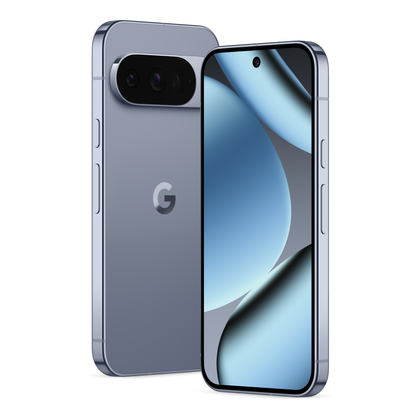
The Pixel 10 Pro offers an upgrade over the base model with the powerful Google Tensor G5 chip, more RAM, and more storage (if you need it).
-

- SoC
-
Google Tensor G4
- Display
-
6.3-inch Actua screen
The Google Pixel 10a is a barely updated version of the Google Pixel 9a, with a slightly brighter screen and an upgrade from Gorilla Glass 3 to Gorilla Glass 7i. Google shaved the remaining few millimeters off the camera bump, making it completely flat. Unlike previous versions of the Pixel a series, this model year does not share the same Tensor processor as the main Pixel 10.


:max_bytes(150000):strip_icc()/GettyImages-1172534839-e7ac1ddc7324473a9485b0394311b6b7.jpg?w=390&resize=390,220&ssl=1 "How To Get Rid of Butt Acne: Proven Tips and Treatments")


