5 upgrades that will make your Home Assistant server more reliable


What’s the point of having a smart home if you can’t depend on it? You need to trust that your Home Assistant setup will “just work,” just like a stupid house would. To achieve this goal, you may need to make some executive decisions and investments along the way.
(Power-over) Ethernet everywhere

I’m assuming most of the devices in your smart home are wireless, which begs the question: why is Ethernet so important? The truth is that wired networks will always trump wireless networks when you have the option, whether you’re building a simple home network or fleshing out a smart home.
For Home Assistant in particular, choosing to connect your server to the network via an Ethernet cable provides a solid foundation. Wi-Fi can be spotty in coverage, be affected by factors like the weather or your neighbor’s home network, and the network can become congested as you add more and more devices. The more devices you can connect, the better.
This is especially true when it comes to high-bandwidth devices like video cameras and smart doorbells. One of the benefits of a Home Assistant server is the ability to use solutions like Scrypted to share camera feeds or add-ons like Frigate as a connected network video recorder. Constantly transferring high-resolution video streams over the wireless network is a great way to slow down devices that can’t use Ethernet.
Additionally, Power over Ethernet (PoE) means that a single cable can be used to power and transfer data from devices. With a set of PoE cameras, a PoE doorbell, or even a PoE transmitter for your mesh network, you can kill two birds with one stone with a decent cable and a PoE injector.
Add or strengthen mesh networks

To further reduce your reliance on Wi-Fi, add a mesh network designed specifically for smart home networks. Technologies like Zigbee, Thread, and Z-Wave allow you to communicate with low-power devices like switches, outlets, sensors, and thermostats using a dedicated mesh network separate from Wi-Fi.
This avoids congesting your wireless network, leaving you with a lot of router overhead to deal with smartphones, laptops, and other “real” wireless devices. All of these solutions use mesh networking, with most powered devices (like switches and smart plugs) acting as intermediate routers that extend the network’s reach.
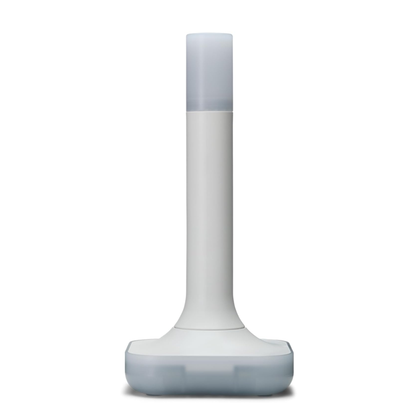
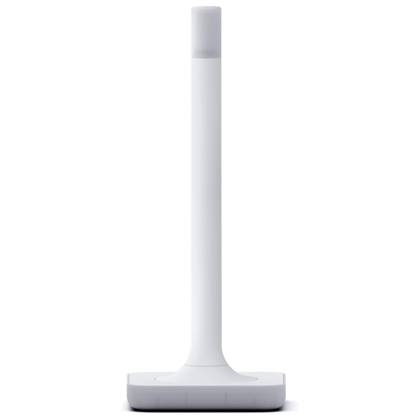
Which of these you choose depends on your personal choice. Zigbee has been around the longest, it’s relatively cheap, and there’s a dedicated Home Assistant radio in the form of the ZBT-2 to choose from. Thread is the newest, with the fewest devices available at present, but looks set to become dominant in the future (it can also be deployed with a ZBT-2). Z-Wave trades bandwidth and latency for range, with adapters like Home Assistant’s ZWA-2 capable of communicating with devices a mile away.
-
- Dimensions (exterior)
-
83x83x179mm
- Weight
-
157g
The Home Assistant Connect ZBT-2 supports both Zigbee and Thread, although it must be configured for use with either protocol. It offers 4x more responsiveness than the previous model and is designed to be easy to open for modding, with accessible pins and pads.
-
- Compatibility
-
Home assistant
- Connectivity
-
Z-Wave
The Z-Wave Home Assistant Connect ZWA-2 Antenna connects to your Home Assistant setup via a simple USB cable. Offering almost a mile of range from the hub, you can connect Z-Wave devices even from your property’s outbuildings to your Home Assistant setup with this hub.


If you already have a mesh network, you might consider strengthening it by adding a few powered nodes as smart plugs to cover dead zones.
Ditch the memory card (or change servers completely)

The Raspberry Pi is one of the easiest ways to get started with Home Assistant, as you can easily write an image of the Home Assistant operating system to a memory card using the official Pi Imager tool. The single board computer is powerful, energy efficient, and small enough to fit just about anywhere. You can wire it via Ethernet and expand the capabilities with radios that connect via USB ports.
Unless you’ve gone out of your way to add an M.2 HAT+ to your Pi, you’re probably running Home Assistant via an SD or microSD card. Even though it’s not as risky as it used to be, it’s still not a good idea. In addition to being slower than SSD storage, removable storage is not designed to handle the stress of frequent read-write cycles associated with a smart home server.
While you can add an M.2 drive relatively easily, ditching the Raspberry Pi and turning to a mini PC might be the best solution. You can run your Home Assistant server in a virtual machine like VirtualBox or ProxMox, with more overhead available (especially RAM) if you need it. You can also run other software with Home Assistant, including custom cloud storage and music streaming services that can save you money.
You can then put your Pi to good use by reusing it for another project.
Static IP addresses

Some devices that connect to Home Assistant through your network, whether wired or wireless, rely on an IP address assigned by your router. By default, these devices are assigned IP addresses dynamically. When you restart your router or the device disconnects from the network, the next time it connects it might use a different address.
Although many devices also use a hostname as an identifier, including your server itself (this is probably http://homeassistant.local:8123), many benefit from a static IP that does not change. If you notice that devices sometimes disappear from Home Assistant and become unavailable, reserving an IP address (and pointing Home Assistant to it) is a solid first troubleshooting step.
Personally, I have configured a static IP address for my Home Assistant server itself, because I find that the hostname sometimes does not resolve or takes longer than I would like. On the other hand, 192.168.0.208:8123 never fails me. Other integrations rely on a static IP address to work. I’m adding an air conditioning controller that specifies that a static IP should be used in the documentation.
You can configure static IP addresses for Home Assistant using your router by reserving an entry for the MAC address of the device in question.
A Home Assistant Cloud subscription

Setting up remote access for your Home Assistant server may seem like more trouble than it’s worth if you’re not familiar with VPN tunneling or opening ports and encrypting your server. If you’re looking for another way to access your smart home server when you’re away from home, consider a Home Assistant Cloud subscription.
Connect your Home Assistant server to your Nabu Casa account and log in with your mobile device. Now you can enjoy remote access without configuring anything or depending on third-party DNS services or VPN providers. For your money, you’ll also get cloud storage to back up your Home Assistant server over the Internet.
Enabling Home Assistant backups is simple, but making sure they’re safe no matter what is a little more difficult. If the only place you store your backups is on the machine that runs your server, you’re playing a risky game. One solution is to build your own cloud storage solution, the other is to export directly to Nabu Casa servers with Home Assistant Cloud.
But perhaps the most underrated feature of a Cloud subscription is the ability to use Google Assistant or Amazon Alexa to manage your voice requests. You can also use the cloud-based Assist model of Home Assistant if you feel disappointed with the offline version.
With the new year approaching, I’m also taking the opportunity to look into some issues with my Home Assistant server and correct course.


