5,000 years ago, Stone Age people in China crafted their ancestors’ bones into cups and masks


Skull sections and skeletal masks have been discovered among a pile of 5,000-year-old human bones in China, according to a new study.
The carved skulls were found mixed with pottery and animal remains, but the purpose of these macabre objects has so far eluded experts.
Several Liangzhu cemeteries were discovered in the past, but none of them contained carved bones. Archaeologists have recovered more than 50 individual human bones from canals and moats at five sites that show signs of “working” – split, perforated, polished or ground with tools.
“The fact that many worked human bones were unfinished and thrown into the canals suggests a lack of respect for the dead,” said the study’s lead author. Junmei Sawadabiological anthropologist at Niigata University of Health and Welfare in Japan, told Live Science in an email.
There were no traces of bones from people who had died violent deaths, nor any signs that the skeletons had been taken apart. That means the bones were likely processed after the corpses decomposed, Sawada said.

Researchers found that the most commonly worked bone was the human skull. They found four adult skulls that had been cut or split horizontally to create “skull cups”, and four other skulls split up and down to create an object resembling a skeleton mask.
Sections of human skulls have previously been recovered from high-ranking burials of the Liangzhu culture, the researchers wrote in the study, suggesting they may have been made for religious or ritual purposes.
The mask-shaped facial skulls, however, have no equivalent. And other types of discarded worked bones, including a skull with perforations on the back and a deliberately flattened lower jaw, are also unique.
“We suspect that the emergence of urban society – and resulting encounters with social ‘others’ beyond traditional communities – may hold the key to understanding this phenomenon,” Sawada said.
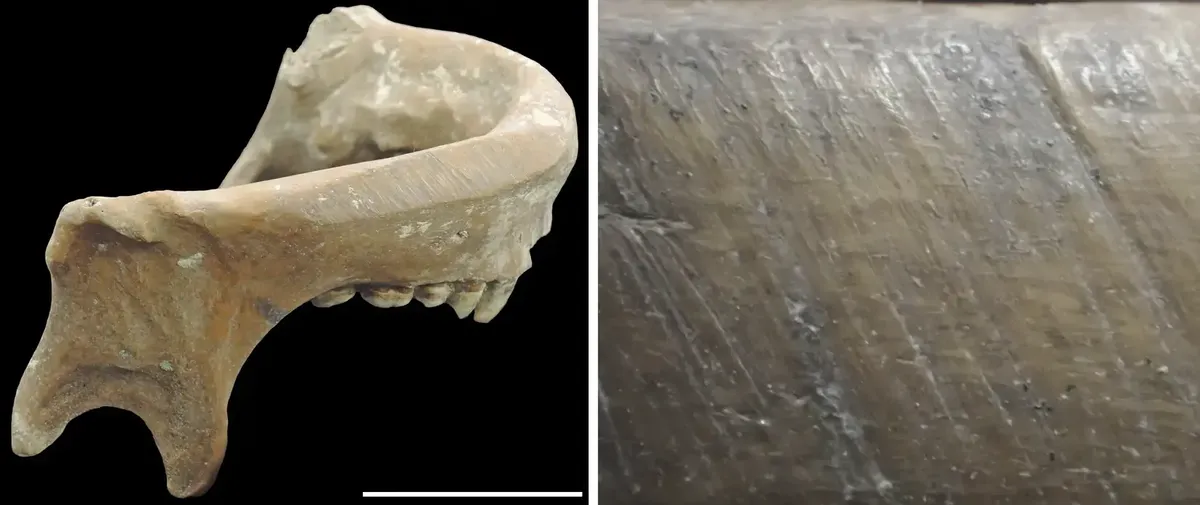
Given that many worked bones are unfinished, this suggests that human bones were not particularly rare or significantly valued, according to the study, which highlights a transformation in the perception of the dead during the rapid urbanization of the Liangzhu culture. When people no longer know all of their neighbors or consider them relatives, it may be easier to separate bones from the people they belonged to, the study authors suggest.
“The most interesting and unique thing about these finds is the fact that these worked human bones were essentially waste,” Elisabeth Bergera bioarchaeologist at the University of California, Riverside, told Live Science. Berger agreed with the researchers that the atypical treatment of bones might be linked to the increasing anonymity of an urban society.
The Liangzhu culture’s practice of working on human bones appeared suddenly, lasted for at least 200 years based on radiocarbon dating, and then disappeared, the researchers wrote.
“The people of Liangzhu came to view some human bodies as inert raw material,” Berger said, “but what caused this and why did it last only a few centuries?”
Sawada said future studies could help answer these questions, including helping to reveal when and how people obtained the bones. These additional analyzes could help researchers understand the significance of this practice and its relationship to the evolution of social bonds and kinship in Neolithic China.
Stone Age Quiz: What do you know about the Paleolithic, Mesolithic and Neolithic?


