
A mobile phone battery stores enormous amounts of energy in a very small space. As long as everything is working properly, we don’t notice anything. But a technical defect or incorrect handling can trigger a chain reaction — known as thermal runaway. This causes the battery to fuel itself with energy until it bursts into flames or ruptures under intense pressure. What makes this particularly dangerous is that battery fires often start silently and produce extremely toxic fumes that can attack the lungs and nervous system. This can even happen with a cordless vacuum cleaner.
These charging errors can set your home on fire
It is often our convenience that becomes a danger. A smartphone, for example, that is charging under your pillow or on a fluffy carpet at night cannot dissipate the heat it generates. This can lead to heat build-up, causing the chemical processes inside the battery to spiral out of control. You should watch out for these typical charging mistakes:
- Charging on soft surfaces: Mattresses, blankets, and carpets act as insulators. The heat builds up until, in extreme cases, the device catches fire.
- Heatstroke from mobile phone cases: Protective cases made of silicone or leather are like a winter coat for your smartphone. They prevent heat from escaping through the case. It is best to remove your mobile phone from its case when charging if it gets very warm.
- The risk of multi-port chargers: Chargers with multiple ports dynamically distribute power. With cheap models, this quickly leads to high heat build-up at the plug or on the device — especially when several power-hungry batteries are drawing a lot of energy at the same time.
- Cheap hardware without protection: Saving on the power supply means saving on safety. Cheap hardware often lacks protective circuits that cut off the power in case of overheating.
- Charging at night: When you’re asleep, you often don’t notice the first crackling sound or smell until it’s too late. Ideally, only charge devices that generate a lot of heat when you are in the same room.
- Ignoring defective cables: A broken cable is more than just a loose connection — it is a potential source of sparks. Only use technically sound devices and cables for charging!
Tip: Use a hard, non-flammable surface such as a glass plate, tiles or a wooden board without a tablecloth as a charging area. Also, make sure that the device is at least 20 inches away from your pillow — this will give you valuable seconds to get to safety from smoke and flames in an emergency.
Special case: e-bike batteries – high-caliber energy in your garage
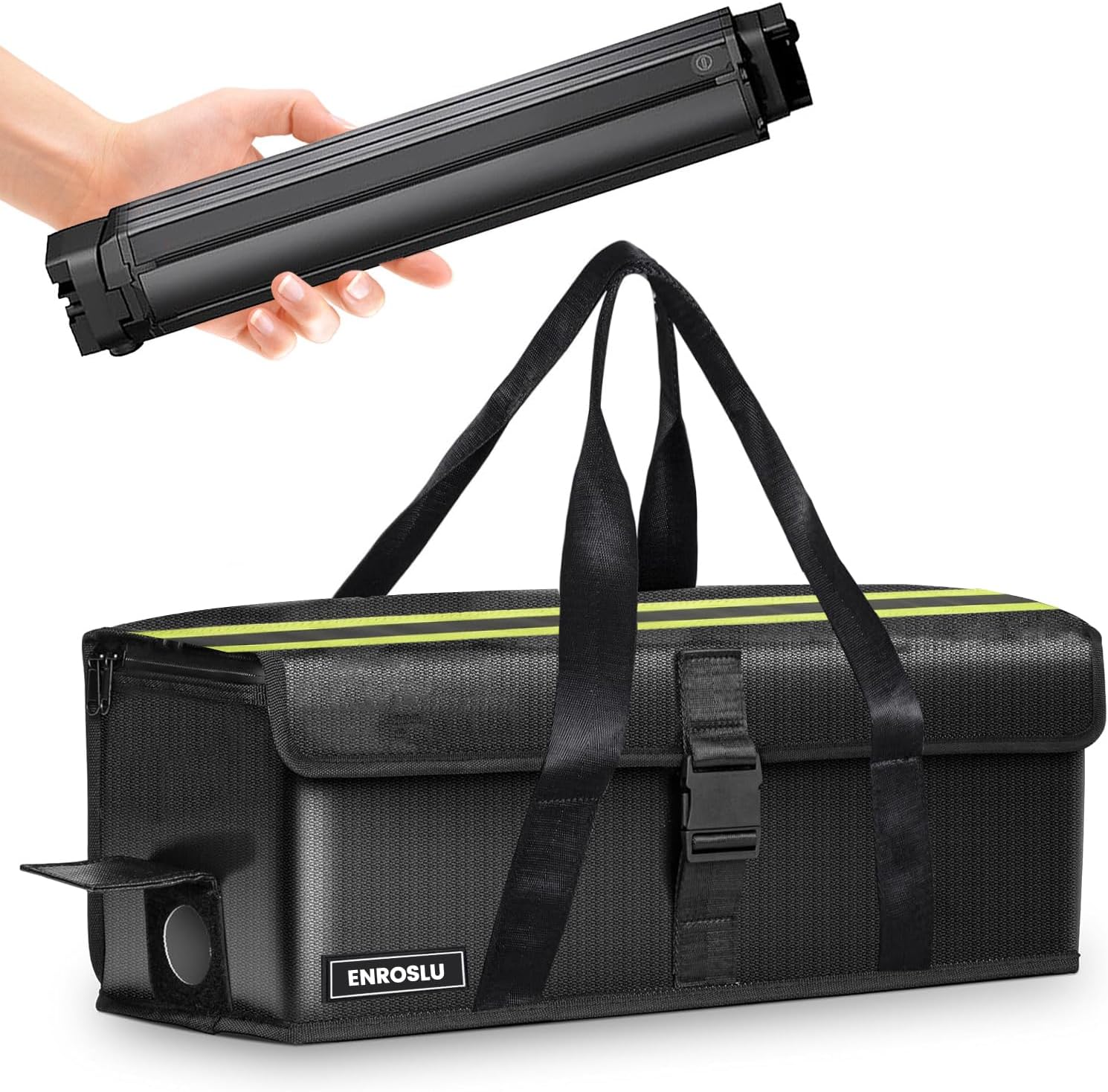
Enroslu
What is dangerous for smartphones is life-threatening for e-bikes. An average e-bike battery has the energy of hundreds of mobile phone batteries. If it catches fire, a bucket of water will not help — metal and chemicals burn with high intensity here.
- No charging in escape routes: Never charge your e-bike in the hallway or directly next to the front door. In the event of a fire, this battery will become a wall of fire that cuts off your only escape route.
- The basement mistake: Batteries are often charged on basement shelves between old newspapers or paint cans. A technical defect can then lead to an uncontrollable major fire in a flash.
- After a fall: An e-bike battery that has taken a hard knock is a ticking time bomb. Even if it looks undamaged on the outside, internal damage can lead to a fire hours or days later. Always have it checked by a specialist dealer after an accident!
Tip: E-bike owners should consider purchasing a special battery safety box or a special fireproof bag (LiPo bag) for charging. In an emergency, this will keep the flames at bay long enough to call the fire brigade.
If there is a fire: How to respond correctly
In an emergency, stay calm and act decisively!
nullplus/Shutterstock.com
When there is smoke or sparks, every second counts. But be careful: A burning lithium-ion battery reacts differently to a normal fire. You need to act calmly so as not to put yourself in danger.
First aid for battery fires
- Unplug the device: Only if it is possible to do so without risk of burns.
- Do not inhale, and leave the room: The smoke is highly toxic. Leave the room immediately, and remember to think about any children and animals in the house. Do not stand around to watch the spectacle – batteries can still release highly toxic aerosols 20 minutes after the flames have gone out.
- The right extinguishing agent: For small lithium-ion batteries (e.g. in smartphones), plenty of water is generally suitable for cooling to stop the chain reaction. Contrary to what is sometimes claimed, lithium-ion batteries do not react like pure metallic lithium, which immediately forms highly explosive hydrogen gas and burns violently when it comes into contact with water. Important: Never throw the battery into a small container with a little water – the rapid development of gas can cause a dangerous deflagration.
- Sand, salt, or fire blanket: These agents serve to smother the flames and prevent them from spreading to the surrounding area. Important to know: A battery fire can hardly be smothered in the traditional way because the battery itself releases the oxygen for the chemical reaction inside. Nevertheless, sand or large quantities of table salt help to insulate the heat and shield the source of the fire. If in doubt, take the burning energy storage device outside with a metal shovel and place it on open ground.
Tip: Special fire blankets are available at low cost, for example from Amazon. There are also fire extinguishers specifically designed for lithium batteries or other energy storage devices.
How to keep your battery healthy and safe
Safety and battery health go hand in hand. A well-maintained battery is less likely to pose a risk:
- The 20-80 rule: Keep the charge level between 20 and 80 percent if possible. This protects the chemistry and prevents excessive heat build-up when pumping up the last few percent.
- Activate flight mode: Switch your mobile phone to flight mode when charging. This reduces background activity and prevents the processor from generating more heat due to additional tasks.
- Avoid extremes: Never charge an ice-cold mobile phone (e.g. from a car in winter) immediately. Allow it to reach room temperature first.
- Pay attention to the chemistry: If you are looking for power stations, solar storage units or replacement batteries, look for the designation LiFePO4 (lithium iron phosphate). This battery chemistry is significantly more stable than conventional lithium-ion batteries. Even when mechanically damaged, they are hardly prone to the dreaded thermal runaway and are therefore currently considered the safest choice for your home.
Tip: You can find high-quality and particularly fire-safe LiFePO4 solutions here, for example:
- Anker SOLIX C300 DC Powerbank Power Station, 288Wh, LiFePO4
- ECO-WORTHY LiFePO4 car battery with Bluetooth, 1280Wh
- 3.2V AA 600mAh rechargeable battery, LiFePo4
Conclusion: Charge safely, sleep soundly
A modern battery is a technical marvel, but it is also a highly active chemical reactor in a very small space. The good news is that you don’t have to be a fire safety expert to get through everyday life safely.
Often, a critical look at the charging location and avoiding dubious cheap accessories is enough to virtually eliminate the risk of thermal runaway. Make it a habit to treat your smartphone like a technical device and not like a cuddly toy — then you’ll protect your home and also extend the life of your faithful companion.


