7 Great Reasons to Ditch Free Hotspots


Previously, public Wi-Fi hot spots were rare. These days, however, you must scroll through a list of choice because each store, restaurant and public toilets offers you a “free” Wi-Fi.
The fact is that, thanks to the magic of attachment (if your contract allows), you transport a personal hotspot all the time, which is (almost) always the best choice for a long list of reasons – which I had with me at the moment.
Before using the attachment, make sure you know and understand the terms and conditions of connection of your cellular contract!
7
Security in whom you can really trust

The security of a computer network to join depends almost entirely on the configuration of this network. When you connect to Wi-Fi at work, the network administrator has configured things so that you cannot, for example, monitor what your colleague does on their computer. A normal Wi-Fi network like the one you have at home or probably the one your local coffee uses is configured to assume that everyone on the network is reliable.
The Wi-Fi password itself is the encryption key, so anyone who has the password can decipher traffic on the network. That not mean that they can exceed the encryption of a website, which has its own layer of separate encryption using HTTPS. However, there are many ways in which bad players can use public Wi-Fi networks to hurt you.
They can execute a so-called man attack in the community, steal information without security, site sessions of diversion and means, path More creative and devious traps. A VPN can help you, but it is by no means an infallible solution, which is why I would never use public Wi-Fi only as the last resort and then to do something trivial and not, for example, of my bank.
If you use cellular data on attachment, you connect to the Internet using a private encrypted connection managed by your operator. There is no perfect security, but it’s much better than random public Wi-Fi. So, personally, I recommend leaving public Wi-Fi as a last resort.
6
Coherent speeds without the crowd

A public Wi-Fi network allows you to access the wide-band connection of this establishment, but this applies to everyone. So if coffee has a connection of 50 Mbps and there are 25 people on the network, you get a lean 2 Mbps of this already tiny pie.
Obviously, if you are in a fancy location like a high -end hotel, there can actually be a lot of bandwidth to do, but whatever happens, your performance depends on the other people in this network,
Now, technically, this is also true for cellular data, because you share the bandwidth with other users connected to this cell tower, but the overall quantity of bandwidth available is more orders of magnitude.
5
Connection portals without summary

On their credit, some public Wi-Fi suppliers are trying to offer better security than a simple Vanilla Wi-Fi security, which means very little on a public network.
It is at this point that you meet a connection portal when connecting to “free” Wi-Fi where you must offer identification information. In some cases, it turns out that you really have to pay access and you will get connection details after buying a good one. In other cases, you will need to save an account and provide personal information such as your name and address.
There is generally also a long legal agreement with fairly odious confidentiality problems, but, of course, most people will not even read it before accepting, goodness knows what. At the very least, it is a version to pass through this attachment using your own data moves easily. At worst, you give information that you should not really be and accept things you would not have if you were not in a hurry.
4
Works wherever you have a signal

If you are counting on public Wi-Fi hot spots, this means that you effectively go from one data island to another. In the past, the coverage of rapid cellular broadband can have been uneven, but it is unlikely that these days will find dead points in urban and suburban areas. So you don’t have to be linked to a lounge or the airport coffee when you try to connect.
3
Less risks and hidden restrictions

In general, your private cellular internet connection does not restrict you more than a home connection at home, but a public Wi-Fi hotspot may have all kinds of restrictions, such as certain blocked websites, no video streaming or the use of prohibited VPNs. If you need these sites or services, make them block the point of a Wi-Fi hotspot!
2
Better reliability for work and travel

Even if the speed announced in a public hotspot is decent, according to my experience, these connections are simply too unreliable and unpredictable. So I would not want to use one for work, video calls or anything that is based on a secure and stable connection. As long as you have at least a few signal bars, your own cellular connection will probably be more consistent.
Remember that if you are traveling, homemade data costs can be obvious. So try to find a local cellular solution. In the past, I would simply buy a prepaid SIM card at the destination airport, but many phones now support ESIM technology, which means that you can connect to a local network and pay local prices using what you already have. There are also ESIM services dedicated to travelers like Saily, but I have not used them myself, so I cannot comment on the quality of service or offers.
1
5G test
If you already have a 5G modem or phone that you can use for connection, things will only improve over time. The 5G coverage continues to grow (despite the strange 5g myths), so you will have fewer and fewer reasons to count on random Wi-Fi hot spots. Of course, if there is a Wi-Fi hotspot in which you trust (like your Wi-Fi work), then use it and save on your own data costs, but in almost all other situations, connection is the way to follow.
You also don’t have to use your phone directly. If you want the ultimate private navigation experience for your devices during your trips, remember to get a travel router as part of your kit. With a good travel router, you can get better speeds, connect your devices more and even use Wiredthert if you really want to avoid a kind of Wi-Fi espionage.
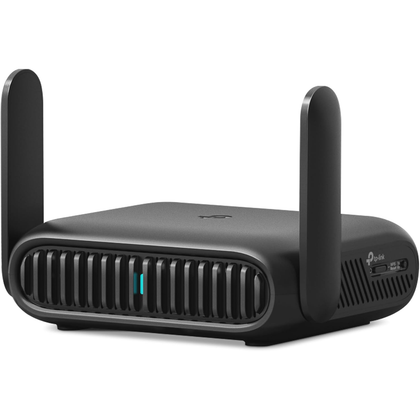
- Brand
-
TP
- Range
-
1800 square feet
- Sustained standards
-
802.11N, 802.11AX, 802.11ac, 802.11g, 802.11.be