Black mothers in Texas and Indiana say hospital staff ignored cries for care while they were in labor


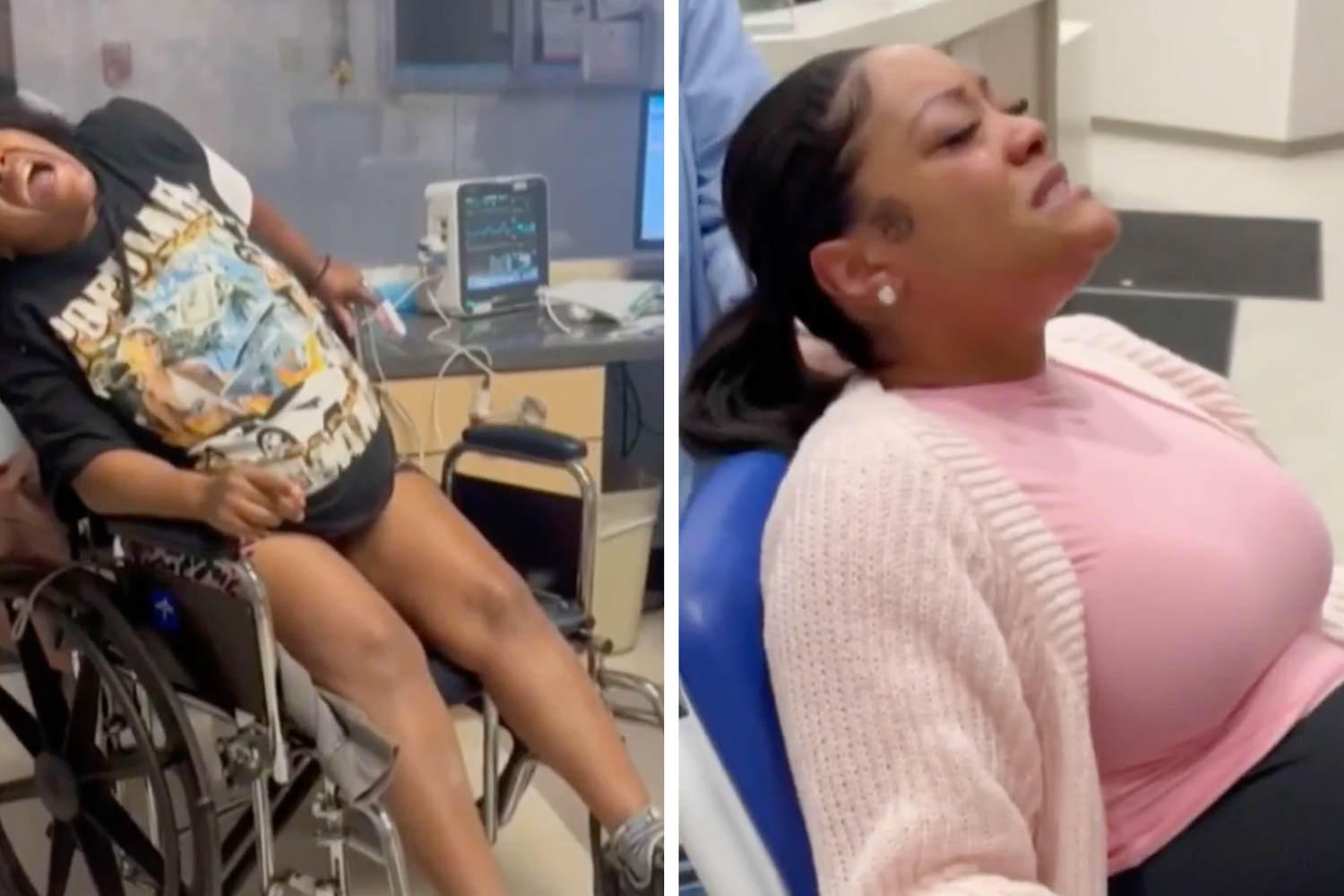
Two black women said they were denied immediate medical care when they were minutes away from giving birth.
The incidents, which occurred within days of each other in different states, highlight long-standing disparities in health outcomes for black women, health experts say.
In a TikTok video that went viral, Texas resident Karrie Jones can be seen screaming while a nurse at Dallas Regional Medical Center in Mesquite asks a series of admitting questions, including her due date.
“Right now,” Jones cries as she writhes in pain in a wheelchair.
Jones’ mother, who filmed the video on Nov. 11, can be heard asking the nurse if she treats all patients the same “or just black ones.” The nurse doesn’t respond.
In another video posted online, her mother says she asked hospital staff if they could take Jones to labor and delivery because she was visibly in distress. “She said no, I have to fill out all this paperwork.”
Jones’ family says they waited more than half an hour before she was admitted. Jones’ mother declined to comment at this time.
“It’s hurtful”
Less than a week later in Crown Point, Indiana, Mercedes Wells rushed to Franciscan Hospital when her contractions were 10 minutes apart, she told NBC News.
Knowing the pains of childbirth as a mother of three waiting at home in Illinois, Wells knew the contractions meant her fourth baby could soon arrive.
After six hours and a medical examination by the nurse, Wells said, she was sent home without ever seeing a doctor.
“They didn’t give me or my husband a chance to warm up the truck,” she said.
Her husband, Leon, said that while he was driving, “I actually see the baby’s head. I see the baby’s head right there. I’m like, Oh, my God. I’m stopping.”
Eight minutes after Wells and her husband got into their truck, Wells gave birth while they were parked on the side of the road.
“It was really a horrible situation to be treated like a dog, or even not like a dog, at least,” Wells said.
“It shows that they don’t care at all about the health of black women, and it’s hurtful,” she later said. “We thought that, you know, things had changed at this point in our country, and I don’t see any change.”
Her husband said he feared losing his wife and child in labor.
“The kind of ‘what ifs’ bother me as a man and as a protector, as a husband,” he said. “It was very hard to see my wife go through this situation.”
In a statement, Dallas Regional Medical Center said, in part, that it prioritizes “the safety, dignity and well-being of our patients.”
“We are committed to providing compassionate, high-quality care to every person who walks through our doors, and we are reviewing this situation to understand what happened,” the statement said.
Franciscan Hospital said it was conducting a thorough investigation into how staff members allegedly treated Wells, adding, in part, that “the videos and the narrative surrounding them do not accurately represent the hospital’s values.”
Disparities in maternal mortality
The maternal mortality rate for black women in the United States is significantly higher than that of other racial groups. Black women are three times more likely to die in childbirth than white women, with 50 deaths per 100,000 live births, compared to 14.5 deaths for white women, 12 deaths for Latinas and 10 for Asian women, according to the Centers for Disease Control and Prevention.
Black babies are more likely to die and be born prematurely, which could contribute to health problems later in life, according to the CDC.
“This is one of the most stark disparities in all of medicine, and most of these deaths are preventable. Delays in care – exactly what we saw in the videos – are one of the biggest contributors. And so for me, this is not an isolated moment,” said Dr. Joel Bervell, a physician and social media personality who spoke about the videos.
“It is impossible to ignore the statistics that confirm that black women are treated differently in the health care system,” he added.
Under a 1986 law called the Emergency Medical Treatment and Labor Act, emergency department staff members must stabilize patients who appear to be in active labor. But the definition of active work can be subjective, said legal analyst Angela Cenedella, an attorney who does not represent Jones or Wells. A patient may be refused if a healthcare professional decides that labor is not imminent.
“In these cases, if things change quickly and a baby is discharged sooner than expected, that doesn’t necessarily constitute hospital liability. … That’s really where the subjectivity exists,” she said, adding that if hospital staff members are negligent in decision-making “and don’t make decisions based on reasonable standards of medical care, then there’s always a possibility of liability.”
“This shouldn’t happen to people.”
The Wells family has retained an attorney, who has been in contact with hospital officials, NBC Chicago reported.
Texas lawmakers told NBC Dallas-Fort Worth they are meeting with hospital administrators about Jones’ treatment.
“We will continue to closely monitor the investigation, maintain communication with hospital leadership and work collaboratively to help restore trust and ensure that every person in our community receives fair and appropriate medical care,” state Rep. Linda Garcia, a Democrat whose district includes part of Mesquite, said in a statement on social media.
Even though the incidents have now been seen by millions, the moments for Wells remain intimate and raw.
“Actually, I was watching [the Texas] video while I was in the labor and delivery room,” Wells said. “I didn’t think this was going to happen to me.”
She added: “This shouldn’t happen to any woman. I don’t care about race, ethnicity, anything, none of that should matter. This shouldn’t happen to people.”