800-year-old ‘hugging skeletons’ are genetically confirmed as Poland’s only medieval same-sex double burial


About 800 years ago, two people were buried in an embrace in a prominent church in Poland. Now, new DNA analysis of the “entwined skeletons” reveals that the two individuals were female and were not genetically related.
The discovery, which researchers say is the first known double burial of people of the same sex in medieval Poland, raises questions about the relationship between the women.
“The discovery of an atypical burial in such a unique setting naturally raised questions about the nature of the relationships between the individuals buried together in the same grave,” Agata Cieslikbiological anthropologist at the Ludwik Hirszfeld Institute of Immunology and Experimental Therapy in Poland, told Live Science in an email.
Mysterious double burial
The skeletons were discovered during archaeological excavations at the 13th-century Cathedral of the Exaltation of the Holy Cross in Opole, Poland, between 2022 and 2025.
One of the individuals had been buried according to the typical Christian rites of the time: lying on his back, his arms placed at his sides. The other person had been placed on their side, with one arm under the other person’s head, as if in an embrace. Based on the burial positions, researchers believe the people were buried simultaneously.
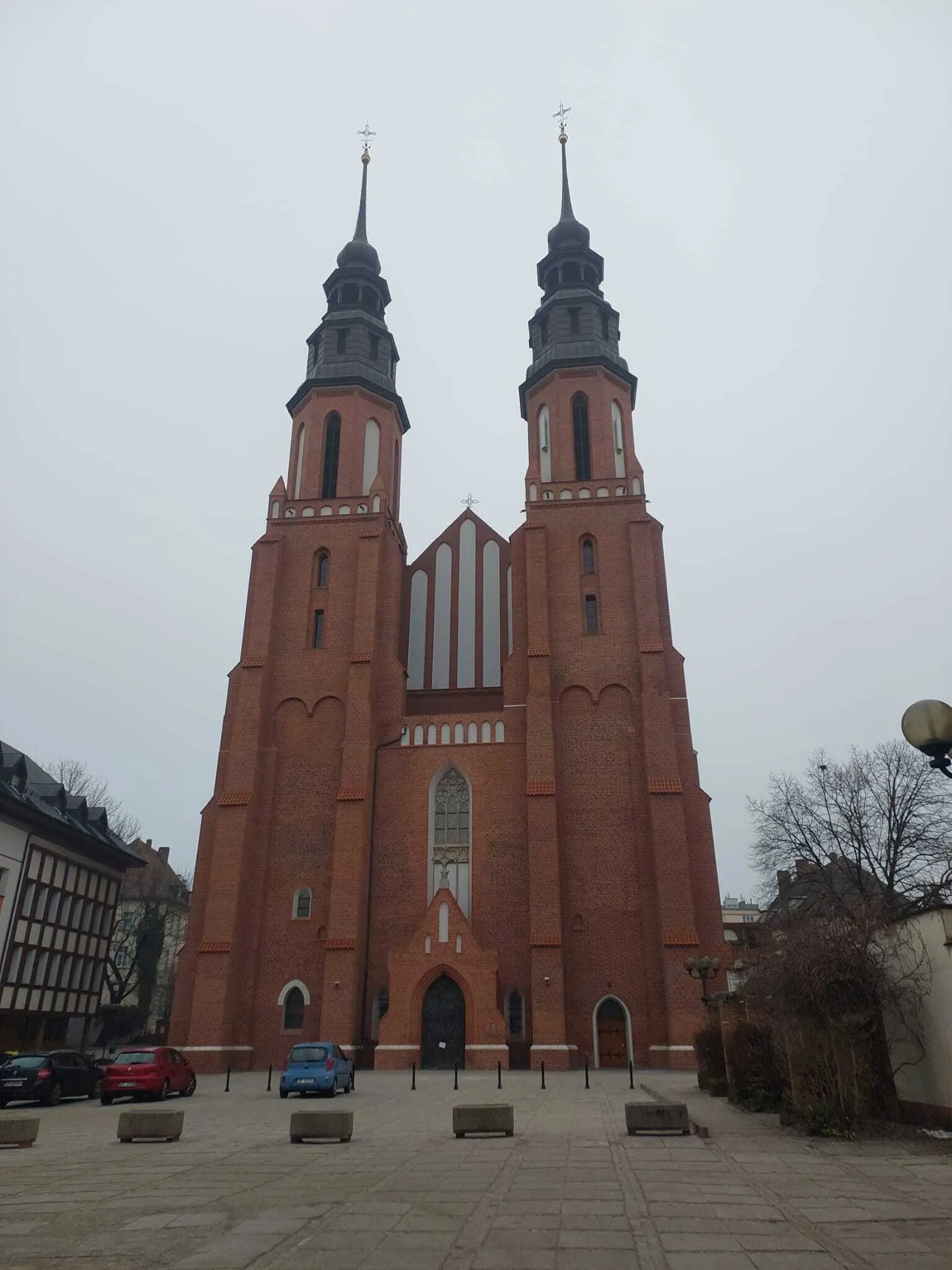
The Cathedral of the Exaltation of the Holy Cross in Opole, Poland.
(Image credit: Magdalena Przysiężna-Pizarska)
Typically, double burials of adults are interpreted as married couples. However, assumptions based on body position and estimation of physical sex can be misleading. Thus, in a new study, published in the September issue of Journal of Archaeological Sciences: ReportsCieślik and his colleagues analyzed the two skeletons DNA to better understand their relationship.
They extracted DNA from the bones and reconstructed parts of the individuals’ genetic code, co-author of the study Joanna Romeyer-Dherbeypostdoctoral DNA researcher at Kiel University and Yale University, told Live Science in an email. “We then sequence these fragments and use computational tools to reconstruct parts of the genetic code,” Romeyer-Dherbey explained, comparing the process to “trying to reconstruct a book after shredding it into countless little pieces.”
DNA analysis confirmed that the two skeletons were female and were not closely related, making this grave the first genetically confirmed homosexual burial in medieval Poland. But researchers don’t know why two unrelated adult women were buried together.
Some unusual burials in medieval times were intended to ritually prevent the dead from returning or causing harm. These feared individuals – sometimes called “wights” – were generally buried in seclusion and unholy ground, and were often decapitated Or weighed down with stones. But the women’s burial next to the cathedral walls – a position often reserved for kings and local notables – and the absence of other evidence of protective rituals suggest that these women were not marginalized by society.
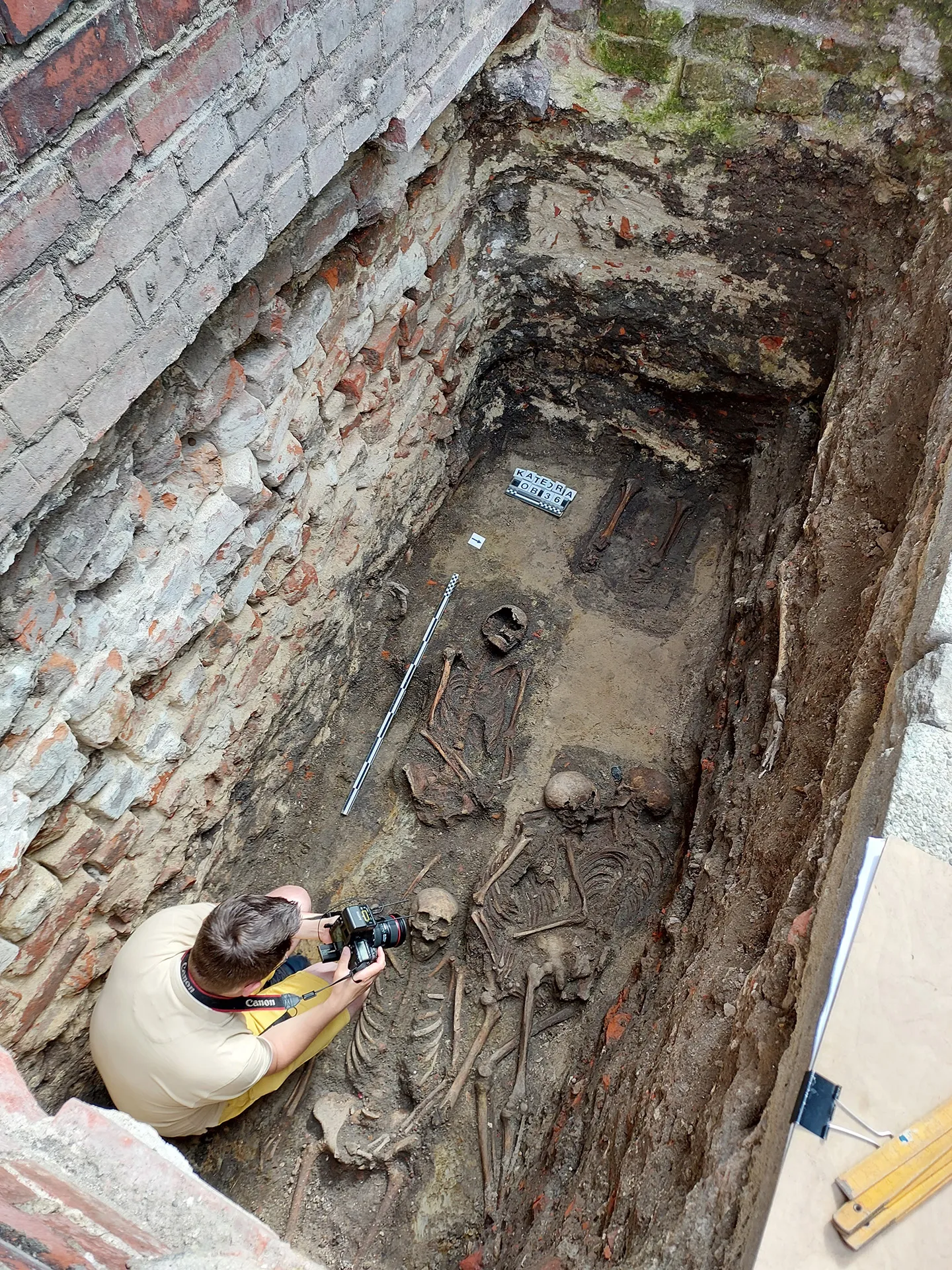
Excavations at Opole, Poland, with multiple burials, including “entwined skeletons.”
(Image credit: Magdalena Przysiężna-Pizarska)
Medieval legal and religious sources harshly condemned same-sex partnerships, often punishing them with execution. If these women had been suspected of being lovers, they would not have benefited from such a visible grave, the researchers write in the study.
The exact connection between the women remains a mystery, but past relationships have taken various forms.
“People could have been linked by religion, shared households, economics or work, what researchers call ‘fictitious kinship’,” Cieślik explained. “These socially recognized ties functioned similarly to family ties and might have been reflected in burial practices.”
According to the study, future genetic analyzes of other medieval graves could help determine whether these same-sex burials were isolated incidents or part of a larger trend.
Meanwhile, excavations in Opole have revealed many objects, such as coins, jewelry, animal bones and pottery fragments, which are still under investigation. “Future analyzes will help us better reconstruct the historical landscape and daily life of medieval Opole,” Cieślik said.
Cieślik, A., Da Silva, NA, Przysiężna-Pizarska, M., Krause-Kyora, B. and Romeyer-Dherbey, JH (2026). Ancient DNA analysis sheds light on two individuals buried in a mutual embrace at the Cathedral of the Exaltation of the Holy Cross in Opole, Poland. Reports from the Journal of Archaeological Sciences, 73105792. https://doi.org/10.1016/j.jasrep.2026.105792