DNA’s Death Notice


Explore
IThe Magine being capable of seeing what Rosalind Franklin saw, when she and a graduate student first imagined the structure of DNA – then studying the intimate handwritten notes.
Now, in fact, you can. A mine of historic historical images and artifacts (which also include notebooks, handwritten annotations and even an inner joke or two), recently joined the collection of science History Institute, a museum and a library based in Philadelphia, which work to make them widely accessible to the public.
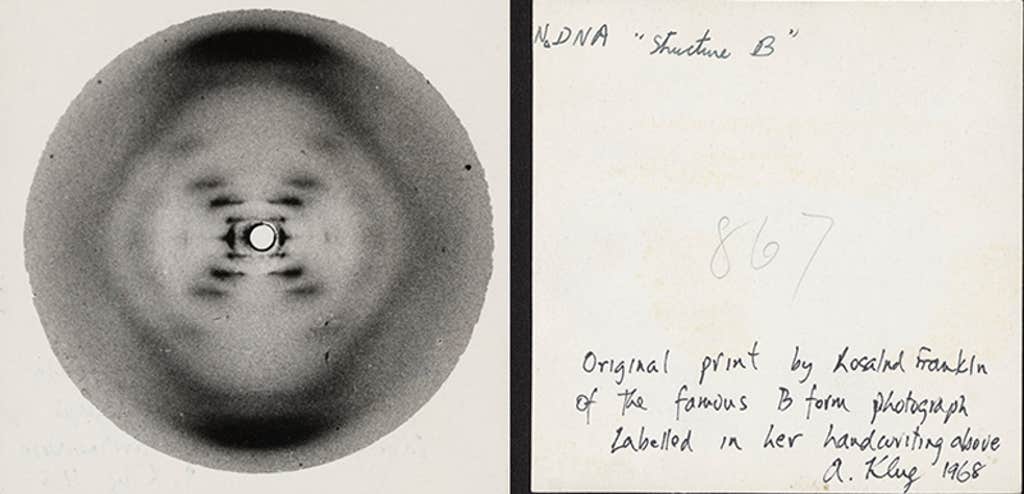
The jewel of the crown of the collection so far is, of course, the image produced in 1952 by the crystallographer with X -ray Rosalind Franklin and its graduate student Raymond Gosling showing the double helicoid structure of a DNA molecule. The image “Photo 51”, which was Franklin’s own personal copy and is annotated with handwritten notes, will be the centerpiece of a new exhibition at the Science History Institute Museum planned for the fall 2027, which will mark the 75th Birthday of “Photo 51”.
ADVERTISEMENT
Nautilus members benefit from experience without advertising. Connect or join now.
The newly acquired collection includes laboratory devices used by Franklin and Gosling in their fundamental research, as well as letters, photographs and other pair materials and other notable molecular biologists of the time. You can also find photos of Franklin on vacation and even a death notice, jokingly writes, for the structure of the DNA propeller (a delicious reminder that even scientists worthy of Nobel like to have a little fun here and there).

“We consider this as a collection of seeds that will inspire additional growth when we preserve the history of life sciences for a global audience,” said David Cole, president and chief executive officer of Science History Institute, in a press release. The History of Molecular Biology collection has recently been acquired from L. Craig VENTER Institute, and the staff of the Science History Institute are scanning the documents it contains, offering free access via their website.
In the meantime, there are more than 140 articles already available to browse and see the inner functioning of people who have cajolized revolutionary ideas of the hidden worlds around us.
ADVERTISEMENT
Nautilus members benefit from experience without advertising. Connect or join now.
Main image Graceful of Science History Institute

:max_bytes(150000):strip_icc()/grande-s1-foldable-tiny-house-podx-go-8-d80a2542d5b546198f982f0e70390347.jpg?w=390&resize=390,220&ssl=1 "This Foldable Tiny House Expands to 20 Feet Wide")
:max_bytes(150000):strip_icc()/Health-GettyImages-1437053956-58eb972c3ce64e34a04bb309f7759bf4.jpg?w=390&resize=390,220&ssl=1 "10 Exercises That Strengthen Your Core Better Than Pilates")