
I don’t want an iPhone Air, I’m buying the iPhone 17 Pro instead. The Air’s drawbacks just aren’t worth it to me; I don’t want an ultra-thin body at the cost of battery life and camera.
Despite this, I’m convinced that the iPhone Air is the most important iPhone that Apple has released since the iPhone X. Here’s why.
How Apple Redesigned the iPhone
At the heart of the iPhone Air’s design is the camera plateau, a term that Apple has only recently started using after a decade of thick lenses. Though it sounds better than “lens bump” or “camera hump,” the term is perhaps a little misleading when you consider how central it is to the iPhone Air’s overall design.
The camera plateau doesn’t just house the camera; it’s where Apple has managed to stick most of the iPhone’s brains. This is where you’ll find the A19 Pro system-on-chip, wireless chips, storage, and the bulk of the iPhone Air’s brains. There’s simply not enough room in the rest of the iPhone’s 5.6mm-thick chassis to house all this stuff.

The rest of the phone comprises the battery, a 3,149mAh cell that’s smaller than any other 2025 model, and the touchscreen assembly. Apple also had to make room at the bottom of the phone for the usual charging port assembly, microphone, and speaker.
You probably have your own thoughts about the camera plateau and Apple’s tendency to only pick the thinnest part of the chassis when quoting numbers. Despite this, squeezing an entire iPhone’s inner workings into a thin protruding band at the top of the phone is an impressive feat. And it’s something that will likely go on to dictate future designs, whether you like it or not.
In addition to a radical new internal design, the iPhone Air is also something of a testing ground. The inclusion of an A19 Pro has raised some eyebrows since Apple has made a big deal about the heat-dispersing properties of its iPhone 17 Pro this year, since it uses a slightly more powerful version of the same chip. The iPhone Air is titanium and lacks a vapor chamber for cooling, which should make it considerably worse at conducting heat than aluminum (another change for the Pro range).

The Air also picks up the torch previously held by only iPhone 16e by including the C1X Apple-designed 5G modem. The C1 was Apple’s first in-house modem, and it’s considered more energy efficient than the chips Apple is still using in its other models. The Air even goes as far as dropping support for mmWave 5G (not that you’ll notice) as Apple seeks to min-max the design at pretty much any cost.
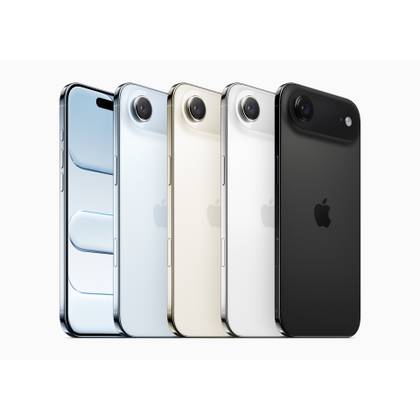
- SoC
-
A19 Pro chip
- Display
-
6.5-inches
- Storage
-
256GB, 512GB, or 1TB
- Ports
-
USB-C
The iPhone Air is the newest model to join the iPhone flagship line, and its design is lighter and thinner than ever.
You Don’t Have to Buy the iPhone Air to Benefit
Perhaps the most exciting thing about the iPhone Air is the fact that this design philosophy has already reared its head in other products, most notably the iPhone 17 Pro models. This year’s Pro features a big old camera plateau, which unceremoniously hangs out of the back of the top of the iPhone.
It’s also where Apple has seen fit to move this model’s vitals, and the results speak for themselves. Despite being roughly the same size and sporting many of the same features, the iPhone 17 Pro manages an extra six hours of “video playback,” which is Apple’s metric used to gauge battery life.

How Apple measures this ultimately doesn’t matter, since it’s all relative: the iPhone 17 Pro has notably improved battery life, and the method by which this was achieved is the same one Apple used to make the iPhone Air a reality. Cram the innards next to the camera and get a bigger battery in there, at all costs.
If you’re an engineer working on the next version of a product that, let’s be honest, has somewhat stagnated in recent years; do you play it safe and suffer a chorus of critics complaining about how little your device has changed, or do you risk the device being mocked for an unorthodox design choice that actually results in a significant improvement? I know which I’d pick.
This could become all the more vital in upcoming models, notably the long-rumored iPhone foldable that’s due to launch next year. Though Apple is rumored to be working on a “creaseless” design, it’s not outside of the realm of possibility that the iPhone Air’s design is a stepping stone that the company landed on while designing an even more daring form factor. What if the iPhone Air is just one half of an iPhone Fold?

The company has also been rumored to be working on a set of augmented reality wearable glasses, like Meta’s Ray-Ban collaboration, for a few years now. Miniaturization of the hardware is vital for such a product to succeed, with analysts like Mark Gurman suggesting these wearables could arrive as soon as 2026. Could the iPhone Air also be a more built-out version of the Apple Glasses?
Speculation aside, the lessons learned from this kind of leap in design are likely to have knock-on effects in all models going forward. You don’t have to buy the iPhone Air or even like it, but it’s hard to deny that this is where the smartphone market is headed considering the current roadblocks.
-
- SoC
-
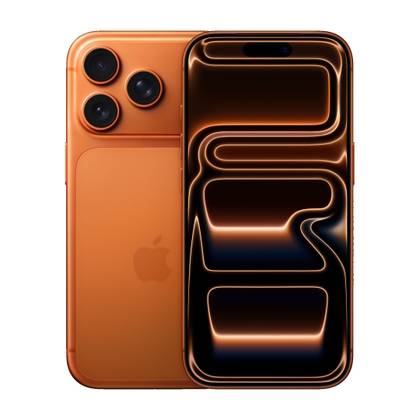
A19 Pro chip
- Display
-
6.3-inches
- Storage
-
256GB, 512GB, or 1TB
- Ports
-
USB-C
- Operating System
-
iOS
- Colors
-
Silver, Cosmic Orange, Deep Blue
The Apple iPhone 17 Pro is the company’s most powerful smartphone to date, offering impressive cameras and the A19 Pro chip. It lets you do practically anything, including shooting quality videos.
-
- SoC
-
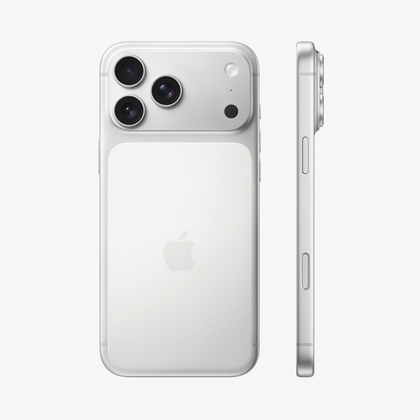
A19 Pro chip
- Display
-
6.9-inches
- Storage
-
256GB, 526GB, 1TB, 2TB
- Ports
-
USB-C
- Operating System
-
iOS
- Colors
-
Silver, Cosmic Orange, Deep Blue
The iPhone 17 Pro Max has many of the same specs as the iPhone 17 Pro, but you get a larger screen and up to 2TB of storage.
The One Thing Holding All Smartphones Back
With OLED technology enabling displays to drop backlights and become thinner than ever, and the miniaturization of the most vital components of any computer or smartphone, there’s plenty of innovation happening in pocketable tech. Unfortunately, one area that seems to be really dragging its heels is the battery technology that powers these devices.
Many will argue that they don’t want thinner phones, they want better phones. One of the main issues frequently cited is battery life, something anyone with a smartphone would surely want to see improved. Silicon-carbon batteries are arguably the most promising new technology in this department, and are capable of storing more energy in a smaller space than traditional lithium-ion cells.
They also come with other benefits, like the ability to handle much faster charging speeds at higher wattage while being more durable against battery degradation over time. Unfortunately, they’re not without their flaws and they tend to expand and contract way more than existing lithium-ion cells. That’s bad news for ultra-thin devices like the Air and the Galaxy Edge.

Neither Apple nor Samsung has yet to include the technology in its devices, and this might be the reason. There are devices on the market using silicon-carbon batteries, including Chinese flagships like the Realme GT7 Pro, which offers a battery capacity of 6,500mAh with up to 120W charging. That’s more than double the iPhone Air’s capacity, and more than three times its fast charge speed.
Solid-state batteries are another promising technology, which are already being used in electric vehicles with mass production expected in 2027. These cells have challenges associated with their manufacture and remain expensive. There are also lithium-sulfur batteries on the horizon, but these have typically exhibited poor longevity despite now being relatively cheap to manufacture.
The bottom line is that there’s no silver bullet when it comes to battery technology; each of these is jostling for relevance and offers tangible benefits and its own set of drawbacks. Just like the gradual shrinking of die sizes, it looks like such battery improvements will arrive slowly over time rather than through one big breakthrough.
The iPhone Air feels like a tacit acknowledgement of this fact. It’s not only the “what we can do right now” of smartphones, it’s homework for the future.
Some people love thin phones, while others just want better battery life. With a bit of luck, we’ll be able to have our cake and eat it too within a few years. Until then, you might want to stock up on external power banks and MagSafe snap-on batteries.


