How to change the icon of a macOS storage device


Apple hides some of its best features through darkness, not intentionally. For many years, you have been able to select and modify the icon for any file, folder, volume or reader. But it is a process in several stages that requires departure With the right image.
You can find source icons everywhere. Generics are available in places like Iconarchive and Deviantart (which has a lot of NSFW content, but not linked to the reader); Companies that sell readers often put downloadable icons available to all the models they sell, such as One World Computing and Lacie; And you can copy an icon from an existing volume. You can also find small projects, such as these 20 icons made from historic Japanese models by a designer in the Panic software manufacturer in 2012.

A Panic designer made these beautiful icons from Drive Waritsuki.
(In the steps below, do not select or do not slide on the larger icon indicated at the bottom of the information GET if the preview section is extended. This shows a larger size of the element icon, but it cannot be copied and slide on it, it is like sliding on a backrest or a volume.)
To copy an icon from a volume, a file or another element existing in the Finder:
- Select the item.
- Choose File> Get information (or press Command-i).
- Click on the small icon in the upper left corner and press Command-C to copy it.
To replace the icon on an existing volume or another type of element in the Finder:
- Find the item you want to use. If it is another icon already used, follow the above steps to copy it to the clipboard.
- Select the target item.
- Choose File> Get information (or press Command-i).
- If the icon is in the clipboard, select the icon in the upper left corner and glue; If it is a downloaded file, you can simply slide it from the researcher on the current element in the upper left corner.
In some cases, you may be invited to enter your password (or the account of an administrator) to complete the modification. In MacOS Tahoe, you may have to restart the Mac – we have seen cases where the change comes into force immediately, and other times, the change would not appear before we reddemn.
Replace the SSD icon by MacOS Tahoe
As we have pointed out in our article on the new icons of MacOS Tahoe, Apple replaced the icon of the hard drive with a silver box icon (it is supposed to represent an SSD, which all Macs now use). It is not a bad icon, but it is not as cool as the icon of the hard drive.
If you have installed Tahoe and prefer to use the hard drive icon, you can replace the SSD icon. First, get the hard drive icon by downloading this file:
This file is an image of the hard drive icon in the image format of the Apple icon. It is compressed as a .zip file, so after downloading it, you must decompress it by double-clicking it.
Once you’ve done this, open the SSD Get Info window, then click and drag the file to the icon at the top left of the window. You can also open the ICNS file in APROVE, select everything (Command-A), Copy it (Command-C), then paste them on the Get Info icon.
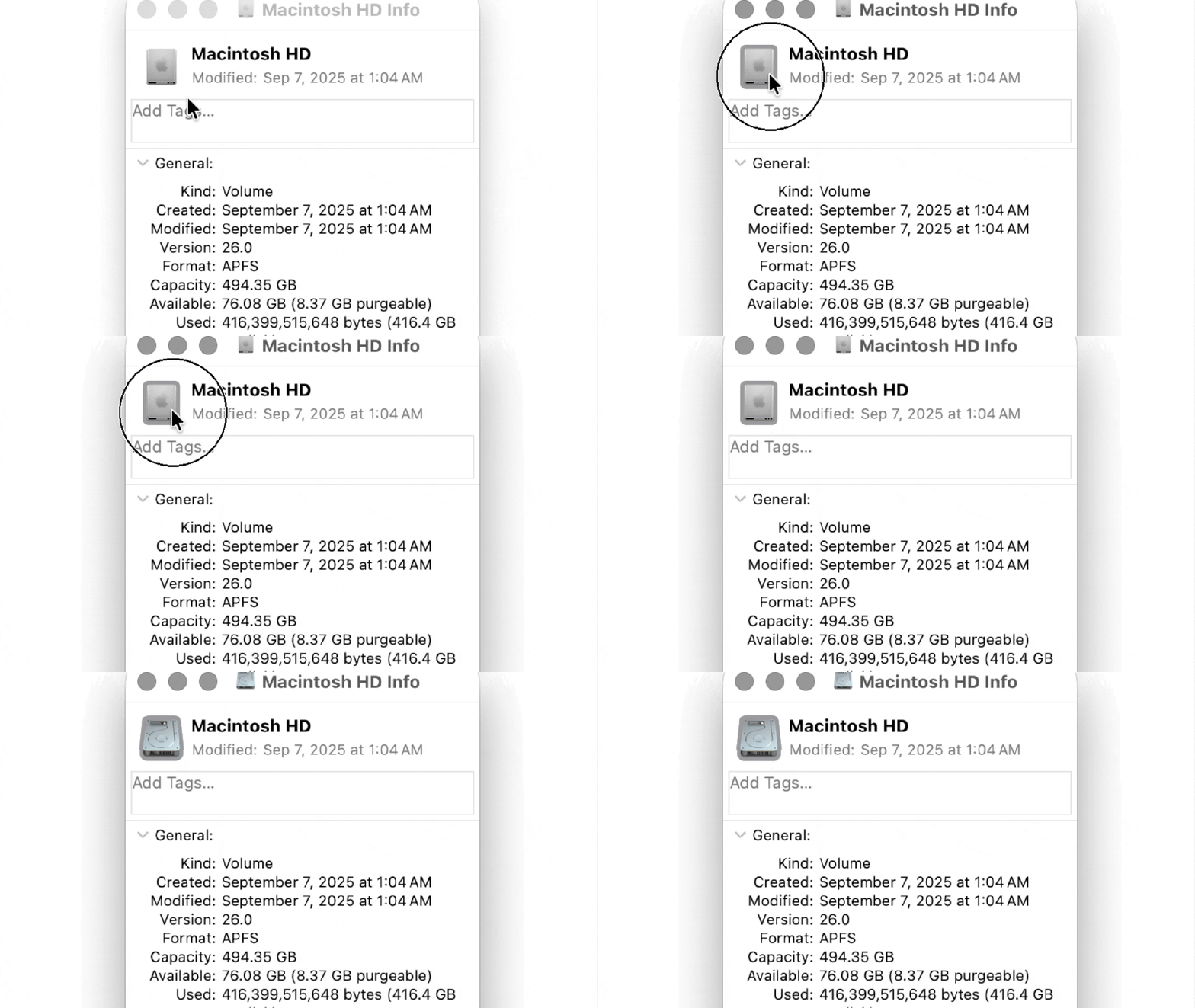
Foundry
As we mentioned earlier, you may need to restart your Mac to make the changes take effect.
Create your own icons
You can create your own personalized icons quite easily. The research objects are square and are better created at 1024 per 1024 pixels in all the software you use to modify or create arts or images from zero, then crop or export to 1024 by 1024 pixels.
The Finder is based on the ICNS file format, which stores several articles resolutions, so you can choose to personalize the appearance with 16 by 16 by 16 to this 1024 pixels 1024 by 1024, and MacOS always chooses the most appropriate or closest size for its ends.
However, if you just create the largest size, you can use free online tools or free applications in the Mac App Store to convert your regular image file to a properly formatted ICNS file. Image2icon, for example, allows simplicity to drag and drop free of charge and offers more options with integrated purchases. Cloudconvert offers a web utility to convert all kinds of files, including a huge range of ICN formats.
This Mac 911 article is in response to a question submitted by the Macworld Luis reader.


