Do Fish Pee? | Discover Magazine


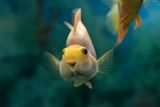
The main dishes to remember on fish pee
- Fish is pee like humans to excrete metabolic waste. Some species produce concentrated and somewhat yellow urine which is quickly dispersed in their aquatic world.
- In addition to water, fish pee is mainly made of nitrogen and urea, but exact makeup differs between the 36,000 species of fish described, in particular between salt water and freshwater species.
- Most of the water, salt and other chemical exchanges occurs through the gills, the waste being excreted by the Cloaca and the vent.
Like humans, fish pee to regulate their body fluids. Micitation is a vital physiological process that helps humans eliminate waste and maintain fluid balance. Our kidneys filter water substances – urea, uric acid, creatine – blood, which we then pee.
Fish also excreted metabolic waste, in particular excess water and ammonia, to osmot or balance their internal fluids with their external environment. The way they do it depends on the type of water in which a fish is found.
“The fish is pee like you and me,” explains Prosanta Chakrabarty, director of Louisiana State University Museum of Natural Science.
Does fish pee?
Expert in ichthyology, the study of fish, Chakrabarty says that fish excrete ammonia, urea and other components of their kidneys and a cloaca or a vent. The fish kidneys filter the blood to produce urine, which is then excreted through this cloaca.
“Basically, it is a versatile” poop “. And yes, they also poop and fart, ”explains Chakrabarty. The gills, on the other hand, excrete a by-product known as ammonia.
In addition to water, fish urine is mainly made of nitrogen and urea, but exact makeup differs between the 36,000 species of fish described, in particular between salt water and freshwater species.
Learn more: Do fish feel pain?
What color is the fish pee?
While humans have a separate pee color, fish pee is an excretion of waste, namely by their branchies, rather than urinary bladder like humans.
Urea is a concentrated salt with nitrogen, a combination of carbon dioxide and ammonia. The sharks hold or excrete urea through less concentrated urine, also to maintain a better balance of salt in their blood. Some species produce concentrated and somewhat yellow urine which is quickly dispersed in their aquatic world.
How fish get rid of waste
Most of the water, salt and other chemical exchanges occurs through the gills, the waste being excreted by the Cloaca and the vent. A cloaca is a primitive and unique cavity at the end of the urinary and digestive tracks found in animals such as fish, birds, reptiles and amphibians. Cloacas served as a root for the human scalable urinary system, explains Chakrabarty.
“Except [fish] Can be part or most of this work thanks to an exchange of gas in the branchies. But they metabolize food and water and produce filtered waste through blood, branchies and kidneys that end up leaving the vent or cloaca, “explains Chakrabarty.
Because the fish is pee, it also means that they drink the water in which they live. Unlike freshwater fish, those of the ocean extract salt from their surrounding seawater to osmoregurate it or regulate their internal balance of water and solutes to maintain homeostasis.
“The fish drink so that they can osmot and balance the salts in their bodies in relation to the water in which they swim.” Drinking “is more in marine / salt water species than those of fresh water, which can be forced mainly by the branchies and not have water.
Understand the fish and the ocean
Understanding chthylogy and marine sciences, including if and how fish pee, is essential to our wider understanding of the ocean – and perhaps surprisingly, contributes to the chronology of human evolution.
“We have evolved from fish. We do what we do, including breathing in the lungs, nostrils that fill these lungs, with arms and legs and big brains, all of which came from our aquatic ancestors. Likewise. said Chakrabarty.
In other words, ichthyology helps to explain “how we got our funky anatomy as a fish out of the water”.
Learn more: Wild fish can recognize individual people, and perhaps even human faces
Article Sources
Our Discovermagazine.com writers use studies evaluated by high -quality peers and sources for our articles, and our publishers examine scientific precision and editorial standards. Review the sources used below for this article:


