‘When people gather in groups, bizarre behaviors often emerge’: How the rise of online social networks has catapulted dysfunctional thinking


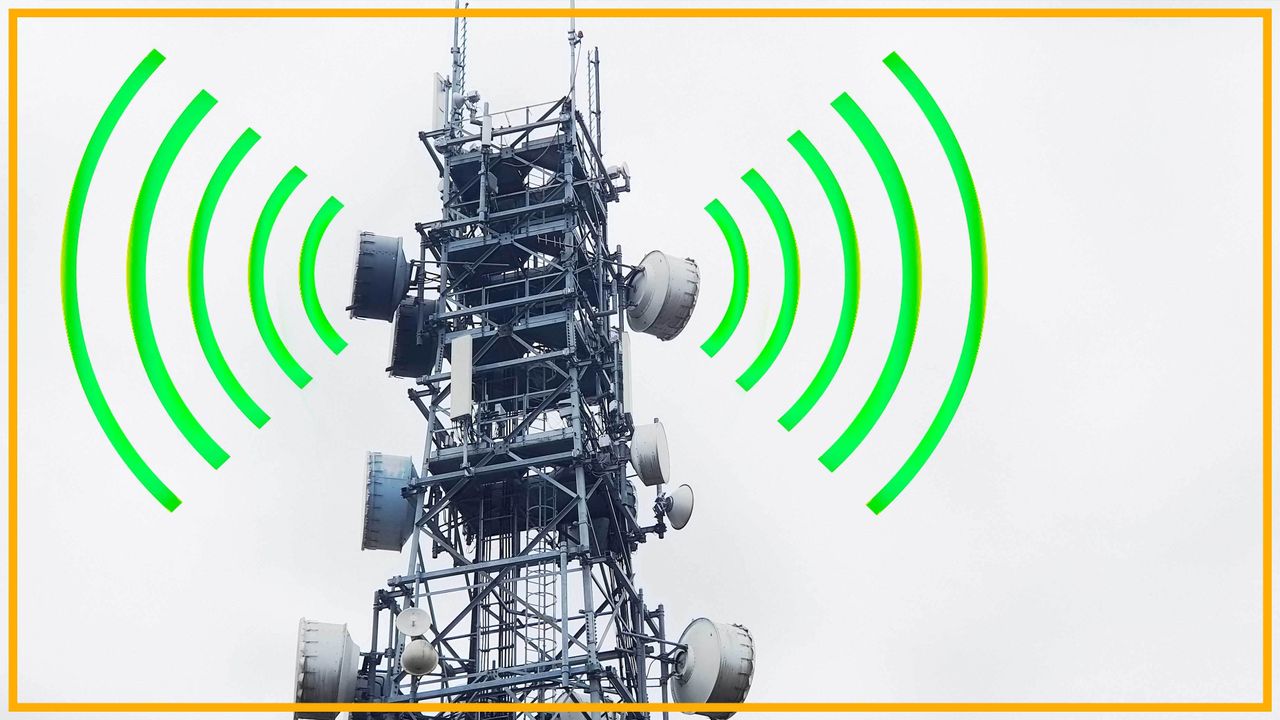
When the cocovio-19 pandemic broke out, a Weird conspiracy theory Salted through global social media: that the disease was caused by radiofrequency broadcasts of 5G mobile phone towers. Wild theories Distributed over social media platforms. The belief in this plot was so fervent that the media reported more than 100 criminal fire incidents and vandalism Against 5G (and 4G) infrastructure, as well as many cases of abusive or threatening behavior against telecommunications workers.
Why do weird events like this occur? In our recent review article, Published on May 19 in the journal Frontiers en CommunicationWe have shown that conspiracy theories and other widespread incorrect beliefs are emerging from complex interactions involving the cognitive limits of people, social influence in groups and the global dissemination of ideas on social networks.
This fatal combination of processes at different scales – individual, group and global – has led to the online problems that we see today. Their complexity makes social trends that result incredibly difficult to fight.
Prepared for bad thoughts and bizarre group behaviors
The deep cause of a bad thought lies in our evolution. Our ability to deal with complex information is limited, so our brains take shortcuts, such as confirmation – the tendency to notice things that correspond to our pre -existing beliefs and ignore those who do not. For example, we quickly forget to wait in a quick queue, but remember what extent a slow queue is boring and ask: “Why am I always in the slow queue?”
Another symptom of our inability to deal with complexity is the tendency to see a malicious intention in complex and unexplained events. This trend has planted seeds for many injustice, Hunting of witches to conspiracy theories. The reality is that unexpected events and behaviors often emerge through interaction networks, without any conscious incentive.
When people meet in groups, bizarre behaviors often emerge. Like epidemics, false beliefs can spread from person to person. Have you ever been afraid to ask a question in class? You think everyone understands, and you don’t want to look stupid, but sometimes nobody understands. Known as pluralist ignoranceThis problem underpins many social problems. For example, people who are generally useful often become passives in the presence of others and fail to help a victim.
In relation: Why do people believe in conspiracy theories?
A similar problem is group thought: everyone ceases to express their own opinion because they want to protect the reputation of their group, even if they do not agree and blindly follow the leader. Group thought has been involved in many famous calamities, including Loss of the Challenger space shuttle.
Another problem with the potentially disastrous consequences is polarization, where a group is divided into two camps with mutually opposite and irreconcilable views that become more and more separate over time.
Pluralist ignorance, group thinking and polarization are all known to be “emerging” effects which naturally occur in appropriate conditions. This self-organization behavior of groups is often not understood and frequently attributed to other causes. This is also why governments, the media and the public are often taken by surprise when groups suddenly emerge to promote strange agendas.
Group behavior above emerge Spontaneously when individual failures of cognition interact and lead to dysfunctional group behavior. They are motivated by a social walk for security in a group. This feeds errors in the way we think and lead people to take the “safe” road and follow the crowd.
Quick spread of extremist views
The problem today is that in the past would have been the murmur of a few voices now has the potential to trigger widespread chaos. Imagine living in a traditional village, hundreds of years ago. It’s a little world. Ideas distributed by word of mouth from one person to another. They move very slowly when visitors move from village to village. Even today, we always live in many types of “villages” – family, neighbors, colleagues, friends – and ideas spreading as we move between groups.
The advent of mass media has given some people a much wider scope than ever. He helped propaganda while amplifying extreme views. On the Internet, groups of people are connected, whatever the geographic distance, so that individual opinions can be reinforced by large support groups.
Communities of people sharing the same ideas emerge via social media. This includes the rapid spread of extremist views and conspiracy theories. The connection of individuals to extreme views via social media allows very large groups to share malignant views. Bizarre behaviors, such as 5G sabotage mentioned above, can surface, often very quickly.
Truth cannot compete with lies
Why are the misleading messages propagating well? They can be designed to seduce the public by exploiting known cognitive biases. This technique is widely used in the politically polarized media, social media and the verification of biased facts. It exploits the bias of confirmation and motivated cognition. True messages simply cannot compete with personalized counterfeits.
Another well -known cause is the propagation behavior of social networks, especially when connected by very fast and omnipresent digital networks. Studies have shown that misleading messages are generally propagated in a way that resembles the Models used by epidemiologists in medicine. Social media “influencers” often become “super-sponsors” False and deceptive contents.
The above behavior suggests that the authorities could delete the propagation of misleading messages by treating them as epidemics. These are generally defeated by making three steps: Remove the source, limit spread and increase the immunity from the exposed population. If the pathogen is digital, it suggests blocking or relaxing creators and spreaders of malignant messages, filtering malignant content on media platforms and educating or training the public to reject malignant content.
It’s easier to say than to do.
No outing
Creators and differences will take advantage of the legislation on freedom of expression and / or migrate between platforms and types of media. Meanwhile, the public can persist in believing malignant nonsense and is subject over time to forget what they are taught. Unfortunately, there is an immense diversity of ways of disseminating malicious messages.
The world is now confronted with the prospect of a perpetual “arms race” in tactical and technology between suppliers of propaganda and nonsense, and people who try to tell the truth, with an audience who often did not know enough to worry about the differences between fiction and facts.
The communities that choose not to play in this “arms race” will be flooded with lies and will undergo increasing social discord, because a consensus on any question of community concern will be disrupted by the paralysis point. The communities who choose to confront smart players will have to invest time and resources to play in the “arms race” and try to prevent or manage the effects of unwanted damage.
There is no simple panacea solution: expecting to find one is a wishful wish.
Notice We Live Science gives you an overview of the most important questions of the science that affects you, you and the world around you today, written by prominent experts and scientists in their field.


:max_bytes(150000):strip_icc()/Health-GettyImages-2182694388-6dfcecb13e64429c8f44315ae05664de.jpg?w=390&resize=390,220&ssl=1 "What Happens to Your Blood Sugar and Digestion When You Eat Gingerbread")