Former CDC official warns about changes to childhood vaccine schedule in hearing


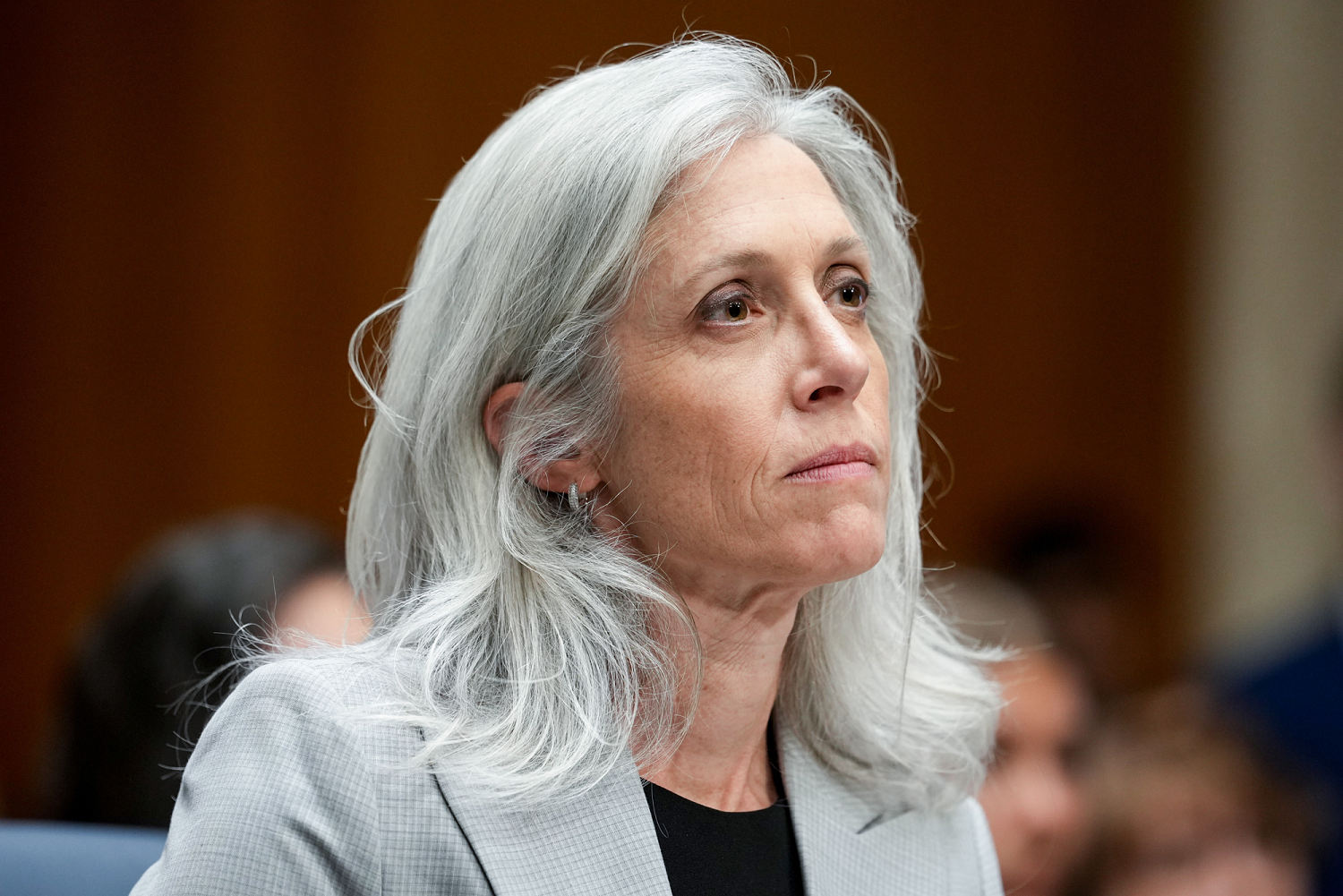
Washington – The future of access to critical childhood vaccines, including hepatitis B, became a flash point during a hearing of the Senate health committee on Wednesday, just a day before an influential vaccination committee meets.
At the Senatorial Committee for Health, Education, Labor and Pensions Audience, Susan Monarez, former director of Centers for Disease Control and Prevention, said the last meeting with the Health Secretary, Robert F. Kennedy Jr., who led him in August was tense.
Monarez said that she had refused two Kennedy requests: managers of the fire career agency and sign vaccine recommendations without seeing data.
“He said that if I didn’t want to do both, I should resign,” she said. “I replied that I could not approve recommendations without examining the evidence, and I had no basis for dismissing scientific experts.”
The senators interviewed Monarez for about three hours on his interactions with Kennedy, who said during a hearing of the Senate finance committee on September 4 that Monarez had been ousted because she was not trustworthy.
A major concern expressed mainly by the Democratic senators, who had voted against Monarez during his confirmation hearing in July, was that fewer vaccines for children could lead to more deaths by avoidable diseases – especially if new recommendations were not based on scientific data.
“The concern is Robert F Kennedy [Jr.] will make America more sick again, “said senator Ed Markey, D-Mass.” They will send us to more diseases, more death and more despair in our nation. “”
Senator Bill Cassidy, R-La., Chairman of the Committee, asked Monarez if Kennedy had told him that he was going to change the calendar of infant vaccination.
“He said that the infant vaccine calendar will change from September, and I had to be on board,” said Monarez.
Monarez added that she and Kennedy “entered an exchange”, where she expressed her desire to change the calendar of infant vaccines if there were sciences or evidence supporting such a change.
The Consultative Committee for Vaccination Practices (ACIP) will meet Thursday and Friday, when 12 members appointed by Kennedy should review and vote on measles, cocoat and hepatitis B.
The group will decide to change recommendations for hepatitis B, as well as the combination of the measles and chickenpox vaccine. Another voting on this fall is scheduled for this fall on Friday.
Dr. Debra Houry, the former head doctor of the CDC, who testified alongside Monarez, said that she expected the committee recommends delaying hepatitis B with children until the age of 4.
“There will probably be a discussion on the hepatitis B vaccine, very specifically trying to dislodge the birth dose of the hepatitis B vaccine and push it later in life,” said Housey Senators.
Hepatitis B shooting is given to infants as three doses series. As a rule, children are recommended to obtain the first dose within 24 hours of birth, the second dose a month old and the third between six and 18 months.
Houry said that before her departure from the CDC, she had not seen any data to support the modification of the recommendation.
“I am concerned about the future of the CDC and public health in our country,” she said. “If we continue on this path, we are not prepared, not only for pandemics, but for the prevention of chronic health diseases, and we will see children die of diseases preventable by the vaccine.”
Why change the timing for hepatitis B vaccines?
The CDC does not impose vaccination. He recommends a calendar so that children can be shot for transmitted diseases. The consultative group against vaccines regularly examines data and updates the calendar based on advice by doctors or scientists with expertise in matters, said Dorit Reiss, expert in vaccination policy at the University of California in San Francisco.
Kennedy’s push to change when children are immune and what vaccines are available to them in the middle of the agency by the public.
A August KFF survey, a research group on health policies, revealed that more than half of adults in the United States say they trust the health agencies and the CDC. But the percentage increased from 63% in September 2023 to 57% in July 2025, months after the withdrawal of Kennedy.
For more than 30 years, the ACIP of the CDC has recommended that children have obtained the first of three shots at birth. (The recommendations are important because they influence what insurers are ready to cover free of charge.)
Senator Cassidy, a gastroenterologist specializing in liver diseases, ended the audience by expressing herself in favor of hepatitis B for infants.
“Before 1991, up to 20,000 babies – babies! – were infected with hepatitis B in the United States of America, and that changed when the hepatitis B vaccine was approved for newborns,” said Cassidy. “Now, less than 20 babies per year is hepatitis B of their mother. It is an accomplishment to make America again healthy, and we must get up and greet people who made this decision, because there are people who would otherwise have died if these mothers had not had this option for their child to be vaccinated. “
Capturing children and infants, especially while they are young, with a hepatitis B vaccine is essential, said Michaela Jackson, director of the Program Prevention Policy at the hepatitis B foundation.
It is also important to “prevent cirrhosis, prevent liver damage, liver cancer-all the consequences of life with a virus for life,” he said.
“There is a direct correlation between the age of which you are infected with and your chances of obtaining a chronic infection,” said Jackson. “A baby born with hepatitis B has a 90% chance of developing chronic B hepatitis. They will take this with them throughout their lives,” said Jackson.
During his testimony, Houry said that many mothers did not know that they have hepatitis B and can involuntarily transmit their baby.
The change could put Kennedy – who previously criticized the CDC and its previous political decision – under a more meticulous examination.
Monarez said at the hearing that Kennedy had made a number of “derogatory” remarks on the agency.
“He said that the CDC employees killed children, and they don’t care,” said Monarez. “He said that CDC employees had been bought by the pharmaceutical industry. He said that the CDC had forced people to wear masks and a social distance as a dictatorship.”
In a statement sent by email, Andrew Nixon, spokesperson for HHS, said that Monarez was “roughly distorting the concerns of Secretary Kennedy concerning the CDC failure to respond to the Pandemic COVID-19.”
“The American people know that the CDC has failed its mission, and this failure has put children in danger,” he said.
Reiss, the expert in vaccine policy, said that the revision of this recommendation will directly put babies in danger.
“Revising it without a usual in -depth examination of the AIPI is irresponsible.”


