CBP officers at Florida airport discover human skull and bones in luggage, passenger claims ritual use


This started as a routine luggage verification at Tampa international airport ended with American customs agents that unpack something much darker – a bone packet wrapped in aluminum foil, including part of a human skull.
Customs and American border protection agents made the shocking discovery when a passenger declaring only 10 cigars was found with a bag containing human remains, officials announced on Thursday.
According to the Director of CBP operations, Carlos C. Martel, agricultural specialists have initially reported the personal effects of travelers for prohibited plants, unconcluded cigars and other articles. Inside a bag of aluminum paper bite, the police discovered bones, including part of a human skull, said Martel.
The passenger said that the human remains of the CBP were intended for ritual use
The passenger told the police that leftovers were intended for ritual use.
The photos shared by CBP showed what looked like a skull and vertebrae partially wrapped in aluminum foil. Other images have shown that the officers wearing gloves and inspecting luggage on a table, the articles seized placed in the evidence bags.
The CBP said bones posed serious health risks and have been destroyed.
Cbp 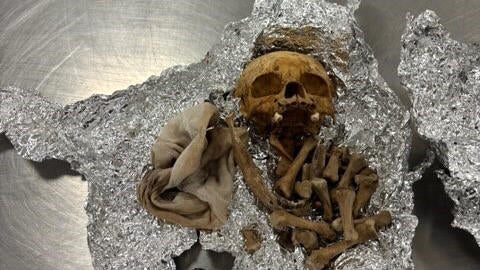
Martel stressed that the case highlights the unpredictable nature of international travel inspections.
“At CBP, we never know what luggage can contain, but smugglers should know that we will always have a bone to choose,” he said in an article on X.
No other details have been published on the passenger, including nationality or possible accusations.
The CDC establishes strict rules for the transport of human remains
Cbp 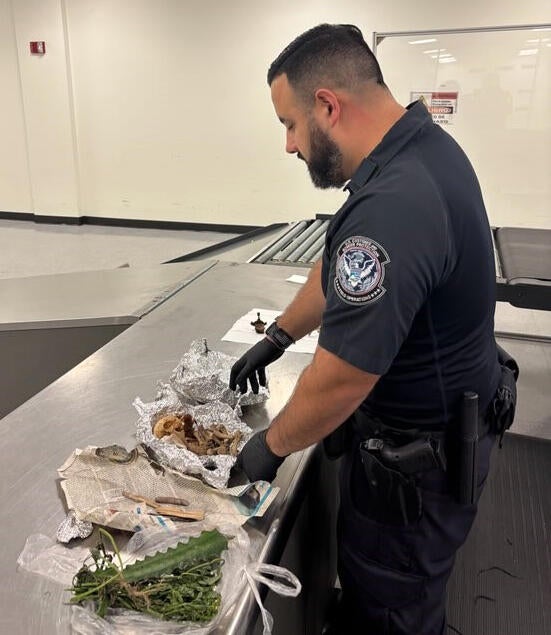
Disease control and prevention centers require specific documentation when human remains are brought to the United States, depending on whether it is embalmed, incinerated or if the person has died of an infectious disease.
In most cases, a death certificate indicating the cause of death must accompany the remains, as well as official export and import authorizations.
When an American citizen or a legal permanent resident dies abroad, the closest are invited to inform the American State Department, which provides consular assistance 24 hours a day. Consular officials help families to obtain documents required, including death certificates, mortuary certificates and permits, as well as transportation of airlines and local authorities.
The federal rules also require that the non -created remains be shipped in leaks to prevent the spread of potential pathogens. Even when infectious diseases are not listed as the cause of death, public health agencies warn that blood and bodily liquids can still present risks for managers.
The CDC notes that incinerated remains, embalmed bodies and clean and dry bones can generally be imported without a license. However, the remains of people who died of infectious diseases, if they are not embalmed or incinerated, are stricter regulations and may require a CDC import permit before entry.