These SSDs Weren’t Supposed to Last Long, but I Still Use Them 10 Years Later


At the beginning of the SSD PCs, skepticism was raised in heaven and not completely unfounded. When criticisms have deliberately tried to kill these discs, it often did not take much.
However, the resilience of the SSDs has quickly improved beyond what skepticism justified, and it turns out that even the lifespan ratings of manufacturers are most often quite conservative. Consequently, not a single SSD that I bought in the last decade has not died, and that includes the oldest.
My oldest SSDs are still trucking
The first SSD I never bought was a Samsung 850 Evo Sata SSD of 512 GB. It was for my PC based on Haswell Quad-Core, and I had to associate it with a larger mechanical reader. Fortunately, at the time, the games were a little smaller, so I never really felt in a hurry for space, even if I had just had a half-teraoctet of space. In fact, to think about it, my M4 MacBook Pro also has only 512 GB of SSD space, so I suppose that little has changed!

I used this SSD as the main PC player for five years, then it was time to switch to a new computer. I sold everything in this pc except For my SSD. It was at this stage that I went from Gaming Desktop to laptops of play, and my new Aorus Gigabyte machine had two SSD M.2 NVME locations and a 2.5 -inch SATA location. So I bought a second NVME training to fill this slit and moved my 850 EVO in a free hard drive slit.

Four years later, it was time for a new game laptop, and my secondary NVME moved to this computer, but there was nowhere where my 850 Evo goes, when doing? Well, you can use a USB reader with a PlayStation 5 to store and play PlayStation 4 games. So I put it in a USB 3 speaker.

These games do not benefit much from being on the fast internal reader of the PS5, which is the only place where you can play native games of the PS5. But they benefit a lot from being on an SATA SSD compared to a clumsy mechanical hard drive.
And so, in a somewhat ironic turn, my 850 EVO now does the same thing ten years later that it did when it was new – playing games from the PS4 era.
I am now on my third game laptop, but the previous one has been reused as a dedicated video editing system for my wife’s business, so that Drive has been absolutely hammered for more than half a decade at this stage. My last system has two 7 GB / s discs, but they are far too young for any amount of wear is important.

So, while we are only talking about a handful of SSDs here, and the experience of a single person, I have had years and years of service from my SSDs, and it turns out that it is the only “future” components in one of my computers, because they were the only ones who deserve to be kept!
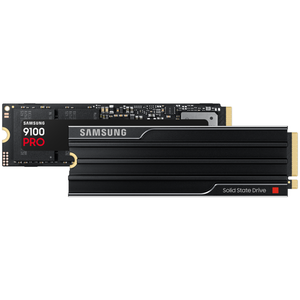

7/ 10
- Storage capacity
-
1 to, 2 to, 4 to, 8 to
- Hardware interface
-
M.2 NVME
- Brand
-
Samsung
- Transfer rate
-
14.7 GB / S Reading, 13.4 GB / S Writing
The sked skepticism was wild at first
It is difficult to imagine how much SSDS there was at the start of the SSDs. People trusted technology so much in mechanical hard drives, and I guess it was weird to trust what was essentially a flash reader to ensure the security of your data and your computer in progress. It doesn’t matter the fact that I personally threw hard mechanical discs during the year, and they would spontaneously stop working for no apparent reason. Goodbye data!
At the time, the PC forums were prey to people warning the use of SSDs, and that it was never going to be cheap or reliable enough to replace hard drives. Staying with these rotation rust journeys was the council.
The SSDs could legitimately wear out

A large part of this skepticism was based on examples of the real world of SSD reaching their writing limit and very quickly passing into reading mode alone. There were many reasons for this, and the quality of the SSD themselves was part of it. The biggest problem was that the operating systems of the time and the firmware which controlled the SSD, were simply not sufficiently sophisticated, or did the bad things to help the longevity of the SSD.
I remember being terrified that the small cheap SSD of 8 GB in the netbook which made me cross the third cycle would suddenly die, because several magazine reviews of this netbook noted that they could have killed the SSD in one day using a torture test. It never happened, and the only thing that is wrong with this netbook when I sold it four years later was the battery that needed replacement.
In practice, the problem was exaggerated
In the end, personally, I have not yet seen SSD PC die, and I do not know anyone personally who has experienced significant SSD failure. Curiously, the results of an SSD torture test managed by TechREPORT were released shortly after buying this 850 EVO. This test showed SSDS that were blowing, path Passing their writing numbers in writing. Sometimes striking on a petaoctet writings before throwing in the towel.
Ultimately, SSD Wear was already a non-problubme for normal users at the time, and it is even less a problem today. These are problems that arise more easily in data centers and other extreme use cases. A greater threat is the rot of the SSD bits which has just not Using your SSDs for long periods. Who knows, maybe the little 850 Evo will always be there for the PlayStation 6.


:max_bytes(150000):strip_icc()/Health-GettyImages-2190494267-9160fcbcd7cb40178395f783ea0f0311.jpg?w=390&resize=390,220&ssl=1 "16 Easy Ways to Add Turmeric to Your Diet for Better Inflammation Support")
