Reviving this African game reserve meant catching and transporting hundreds of wild animals

CAPE TOWN, South Africa (AP) — Fifty years ago, Mozambique’s Banhine National Park was a wildlife refuge, teeming with herds of giraffe, buffalo and antelope. Then it was almost completely exposed by decades of civil war and uncontrolled poaching.
But a project is underway to restore Banhine to its former glory. Fences were rebuilt and roads repaired. Finally, the trickiest part: getting the animals inside.
Private conservationists working with the Mozambique government moved nearly 400 animals – zebras, wildebeest and several species of antelope – by truck to Banhine. It is an attempt to revive a game reserve that is part of the Great Limpopo Transfrontier Park, a series of reserves in Mozambique, South Africa and Zimbabwe that form a wildlife corridor and key conservation area.
The animals that will reconstitute Banhine came from Maputo National Park, itself a success story after a similar rehabilitation 15 years ago.
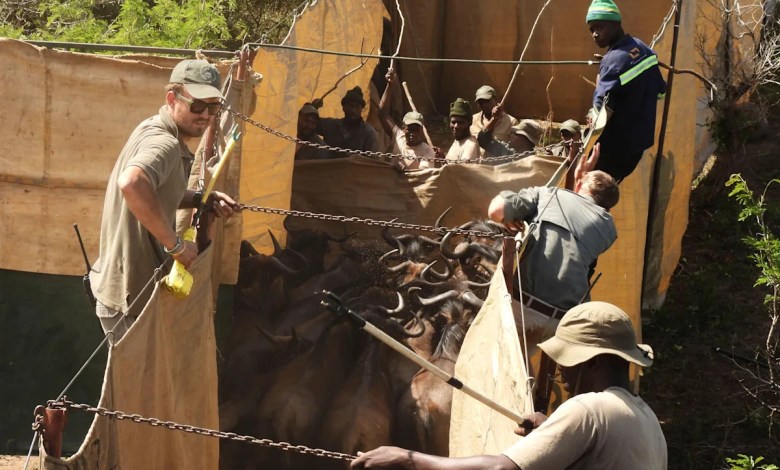
The process of getting the animals to Banhine was difficult and delicate. They were herded to a large funnel-shaped enclosure with a helicopter. From there, they were guided up a ramp and into crates on the back of trucks for an 18-hour journey north. In total, the operation lasted 12 days.
The 385 animals were introduced to an 8-square-mile “sanctuary” that will be expanded until they are fully acclimated and ready to roam the larger park, said Donald Sutton, operations and development manager at Banhine.
“We are now contributing to the biodiversity, the greatest biodiversity, of Banhine National Park,” he said. “Which hopefully means that, slowly but surely, as the numbers of animals here increase and we release them into the greater Banhine National Park system, our tourism will increase as well.”
Banhine is the latest reserve identified for rehabilitation in Mozambique, which once had some of the region’s richest wildlife resources, but the reserves were left desolate by poaching, drought and a bloody 15-year civil war between 1977 and 1992.
The Peace Parks Foundation works to restore cross-border conservation areas in southern Africa and was involved in the relocation of animals to Banhine.
He is also leading a project to repopulate Mozambique’s Zinave National Park, another reserve that is part of the Greater Limpopo Transfrontier Park and has been stripped of its wildlife over the years.
In Zinave, critically endangered black rhinos were reintroduced after being relocated from South Africa and now constitute the first black rhino population in Mozambique in decades.
Peace Parks says it has moved more than 18,000 animals to previously degraded conservation areas that are being rehabilitated.
Sutton said it took two and a half years of “backbreaking work” to get Banhine ready to welcome wildlife again, but he now hopes to see herds migrating in and out of the reserve again.
“I see the future of Banhine as it was over 50 years ago,” he said.
___
AP Africa News: https://apnews.com/hub/africa


