Corals are disappearing, pushing Earth to first major ‘tipping point’


Global temperature increases may seem gradual, but the changes they bring can be sudden, massive, and self-reinforcing. These changes constitute what scientists call tipping points. When a tipping point is reached, an Earth system changes abruptly and radically, often irreversibly, like the Amazon rainforest transforming into savannah – a point of no return already dangerously close.
But today, a group of 160 scientists from 23 countries announce that the planet has already reached its first major tipping point: the widespread death of warm-water coral reefs. This is mainly due to rapidly rising marine temperatures – the seas have absorbed 90% of the excess heat we have created – but also to acidification caused by the interaction of more atmospheric CO2 with water. (This interferes with corals’ ability to build the protective skeletons that form the complex structure of a reef.) Since the late 1980s, ocean surface warming has quadrupled. Thus, over the last half century, half of the planet’s living coral cover has disappeared.
“We’re no longer talking about future tipping points – there’s one right now,” Steve Smith, research impact fellow at the University of Exeter’s Global Systems Institute and co-author of the report, told Grist. “Even though our governments are used to planning for gradual, slow changes, things seem to be accelerating. »
The more corals die, the harder it is for a reef to bounce back, destabilizing it and pushing it into a spiral of disappearance. A quarter of all marine species depend on these bustling warm-water ecosystems – which cover some 350,000 square miles – but corals are bleaching as they release the symbiotic algae they need to harvest energy. Since 2023, more than 80% of the planet’s reefs have suffered from the most widespread and intense bleaching on record. Increasing acidification makes it even more difficult for corals to reproduce and regrow after this type of disturbance.
Warm-water corals are particularly vulnerable to climate change because they have made a compromise during their evolution. Being close to the ocean surface, their symbiotic algae absorb abundant sunlight to provide energy, meaning they don’t need outside nutrients as much. But this positioning also means that during marine heatwaves, warm water envelops the corals, stressing them to the point that they release their algae, causing them to bleach.
“It’s a trade-off. They have to find a balance,” said Gordon Zhang, senior scientist with the Reef Solutions group at the Woods Hole Oceanographic Institution, who was not involved in the new report. “If the water isn’t moving much and the place is very shallow, the water continues to warm.”
Beyond their essential role in supporting marine life, these reefs provide $9.9 trillion annually in goods and services, such as fishing and tourism, that support the livelihoods of a billion people. They also act as giant barriers for coastal communities, absorbing the impact of storm surges, the walls of water that hurricanes push onto shore: Mexico’s reefs, for example, reduced the damage caused by Hurricane Dean in 2007 by 43%.
Coral reefs are therefore essential both ecologically and economically, but civilization is woefully unprepared for them to reach this tipping point – let alone other impending tipping points, like glacier retreat. “We are now in a new reality, and we can no longer rely on institutions and policies designed for the old one,” Manjana Milkoreit, who researches global governance at the University of Oslo and co-author of the report, said at a news conference announcing the findings.
On the one hand, nations as a whole are nowhere near ambitious enough to reduce greenhouse gas emissions that are putting unprecedented pressure on coral reefs and other critical systems. Second, some tipping points could be so catastrophic that governments would struggle to cope with the society-altering consequences. A change in ocean currents in the Atlantic, for example, would plunge Europe into deep freezes and disrupt the monsoon rains that distant countries need for their crops. And third, these irreversible changes can reinforce and exacerbate other crises – droughts would worsen if the Amazon turned into a savannah, for example – a very unwelcome kind of synergy.
Basically, humans need to actively prevent tipping points, because there may be no going back once they start. Coral ecosystems cannot recover and stabilize if we continue to warm and acidify the oceans. “The key message here is: Don’t assume we already know what to do, or that we’re already doing everything we can,” Milkoreit said. “It’s not just about repeating the same thing or implementing existing policies: a different approach to governance is needed. »
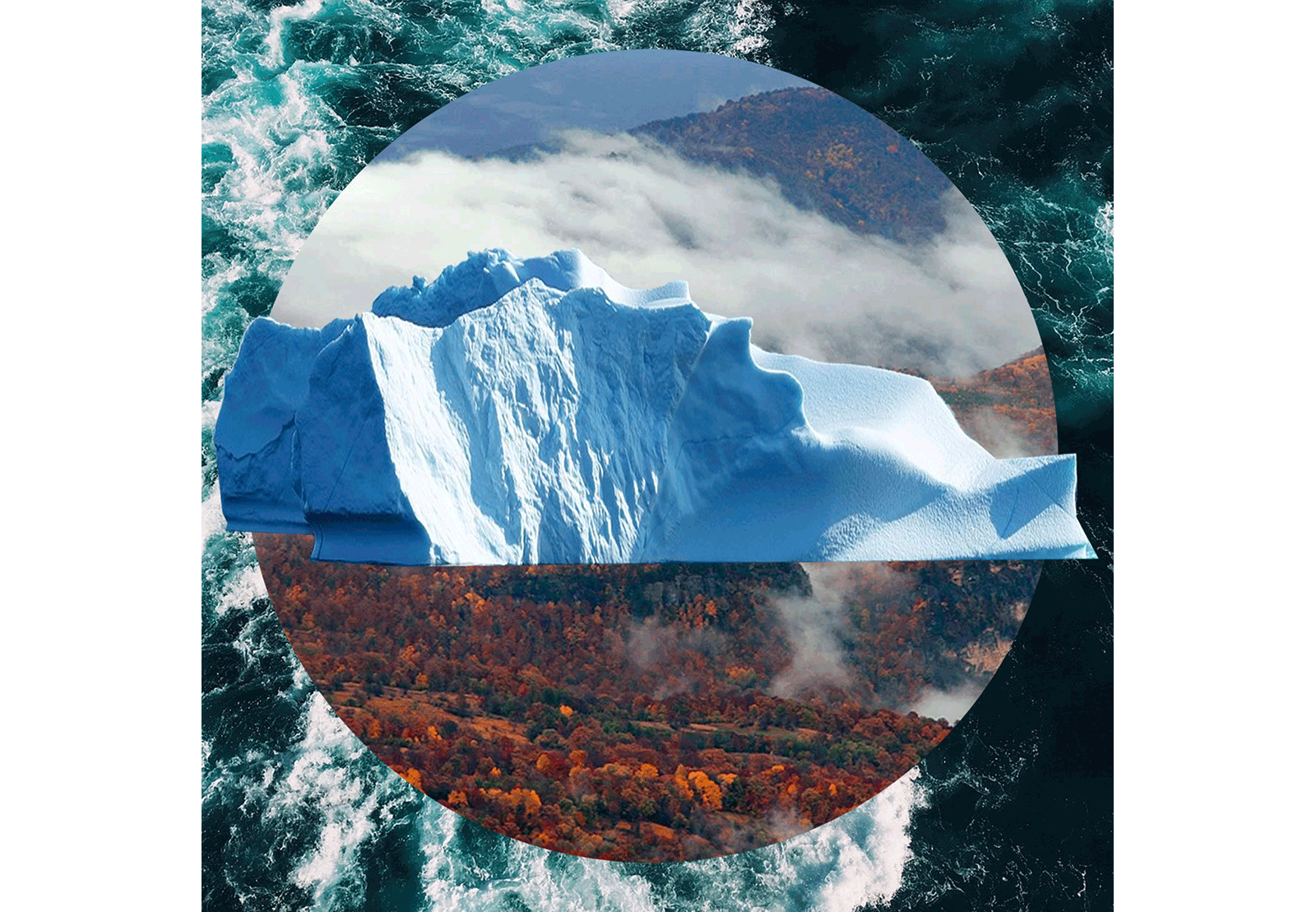
The 7 climate tipping points that could change the world forever
But when it comes to society’s response to these risks, the report’s authors actually see a positive tipping point, as the price of renewable energy technologies like wind and solar, and the batteries needed to store that energy, have exploded, making these cleaner options more economical than developing fossil fuel infrastructure. Texas, for example, produces far more wind and solar power combined than any other state — by 2023, a third of its electricity came from renewables — not because its Republican leaders are enthusiastic about clean energy, but because it’s a good deal. Yet the market can only shift so quickly, with the world poised to surpass the Paris Agreement’s goal of limiting warming to well below 1.5 degrees Celsius.
More locally, scientists and policymakers can buy time on coral reefs. Transforming them into protected marine areas, for example, preserves biodiversity and helps maintain the stability of these ecosystems. More voracious monitoring of overfishing prevents the collapse of fish populations. And reducing pollution from agriculture and wastewater in coastal areas removes a stressor that only makes reefs worse off.
The healthier the reef, the better it can withstand climate shocks like marine heatwaves, which will only become more frequent and more intense from here. “Like most natural systems, corals can be resilient – they can bounce back, but only a certain number of times,” Mike Barrett, chief scientific adviser to the World Wide Fund for Nature in the UK – who funded and co-wrote the report – said at the press conference. “What we’ve done is just pushed them beyond what they can handle.”
That’s why scientists are actively saving corals, bringing them to laboratories and learning how to breed these notoriously sensitive animals. By establishing populations in controlled environments, they can learn the basic science around coral biology and reproduction, as well as how species respond to different conditions. If a certain part of the ocean becomes inhospitable for corals, researchers could keep these species in captivity, or even return them to the wild if temperatures drop again.
Even in the shorter term, they could breed healthier, more genetically diverse and more heat-tolerant baby corals, then reintroduce them into the wild. “Increasingly, corals are being placed in human care, both as Noah’s Ark and as a genetic refuge,” said Rebecca Albright, director of the Coral Regeneration Laboratory at the California Academy of Sciences, who was not involved in the new report. “As ecosystem degradation increases and the situation continues to deteriorate, management typically takes a more risky approach, where you are willing to try more things.”
Yes, a tipping point may metaphorically be a cliff, but all is not lost for the world’s corals – if humanity accelerates the transition to clean energy. “The race is on,” Smith said at the press conference, “to transform society’s entire energy base within a generation – it has never been done before – away from fossil fuels and overexploitation and toward a cleaner, more secure future, in time to avoid new tipping points and the devastating consequences they will bring.”


