Mike Johnson slams Obamacare funds as a ‘boondoggle’ as shutdown drags on


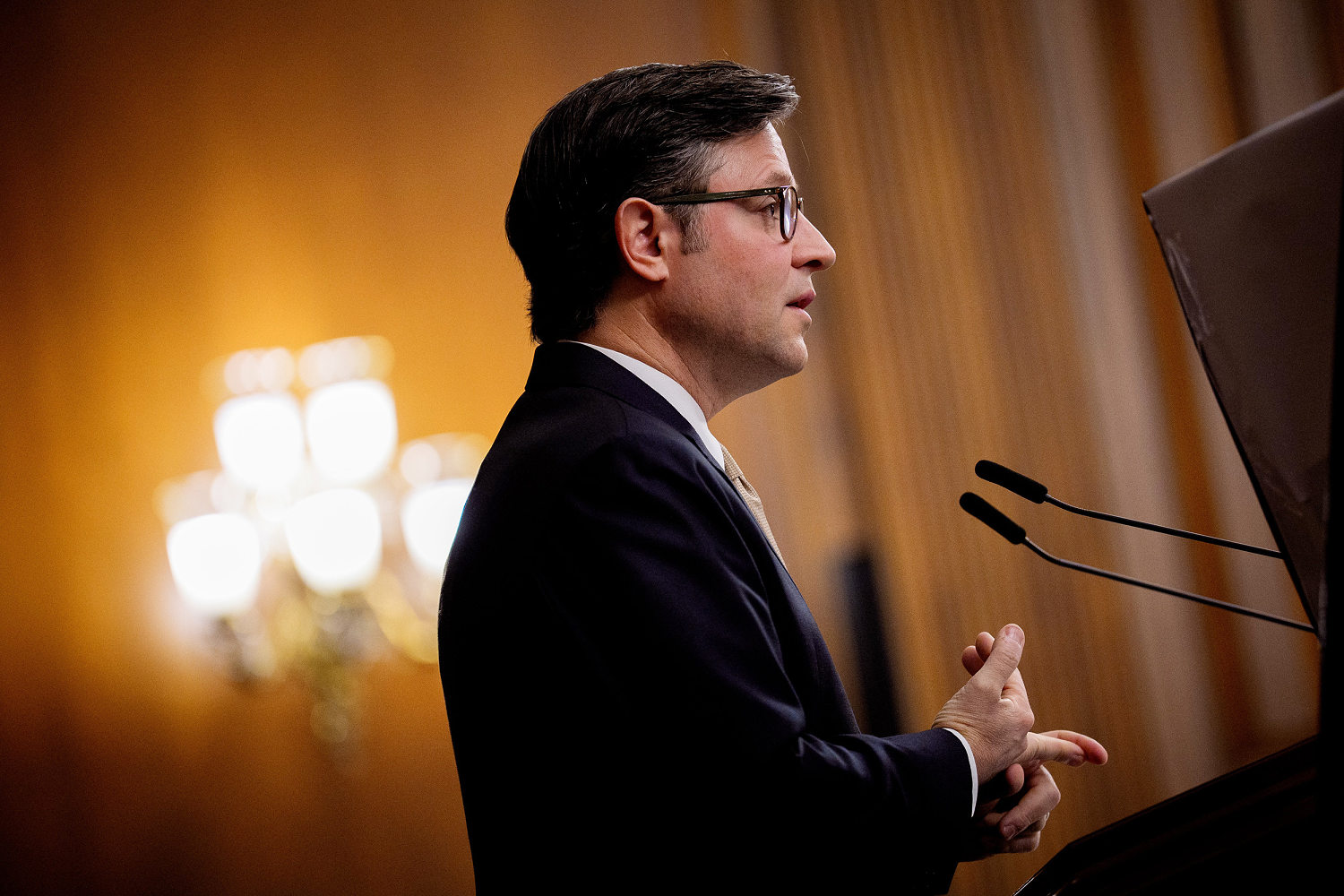
WASHINGTON — House Speaker Mike Johnson, Republican of Los Angeles, called the expiration of Obamacare subsidies, at the center of the government funding impasse, a “mess” as the shutdown approaches two weeks with no end in sight.
“The Covid-era Obamacare subsidy that they’re all talking about and that’s supposed to be the issue of the day is not going to expire until the end of December. And by the way, it’s the Democrats who created this subsidy, who set the expiration date on it,” he told reporters at a news conference Monday, the 13th day of the shutdown.
“They put an end date because they knew it was supposed to be Covid-related, and it became a mess,” Johnson added. “When you subsidize the health care system and pay insurance companies more, prices go up.”
Johnson’s comments intensify the battle a day before the Senate returns to Washington, even though there is no clear path to ending the shutdown. This will test the patience and resolve of both parties as federal employees – including law enforcement, air traffic controllers and TSA personnel – risk missing their paychecks.
Senate Minority Leader Chuck Schumer, D-N.Y., argued that Democrats won’t give in and support a short-term GOP funding bill through Nov. 21 unless it includes their priorities, including an expansion of health care funds. The money in question, first passed in 2021, limits premiums for a benchmark insurance plan to 8.5% of the buyer’s income.
“President Johnson chose a vacation over fixing this health care crisis,” Schumer recently wrote on
Johnson has kept the Republican-led House out of session since Sept. 19, and he continues his vacation until this week, drawing sharp criticism from Democrats and even some Republicans who say they want to return to work.
The speaker said Monday that at a minimum: “If indeed the subsidy is to be maintained, it requires real reform. But there are a lot of ideas on the table to make that happen.”
He didn’t get specific, but Republicans discussed a range of ideas such as an income cap on eligibility, requiring every Obamacare enrollee to pay into the system, phasing out after two or three years and stricter limits on abortion.
Sen. Jeanne Shaheen, D-N.H., author of a bill to permanently extend funds from Obamacare, or Affordable Care Act, said she is open to negotiation on the details.
“A number of changes can be made to the program to address some concerns,” she said. “One of the things, though, I think we need to be very thoughtful about is where to start making changes that show a dramatic decline in the number of people being helped. And that needs to be a longer discussion where people really need to look at some data and get some information before they make decisions on this.”
But Shaheen categorically ruled out any tighter restrictions on abortion, saying existing law already blocks Obamacare funding for abortion — despite some conservatives’ desire to make it stricter.
“It’s a failure,” she said. “It’s not a problem. We’ve already taken care of this problem.”
Shaheen, a longtime critic of the shutdowns who alongside Schumer opposes the GOP bill, said it was unsustainable to wait until the end of the year to act on funding for Obamacare because insurers are now setting rates for 2026.
“People are getting premium increases right now, and that’s a growing thing on top of the cost of food, electricity, rent, child care and all the other expenses that people incur,” she told NBC News.
Republicans control the Senate by a 53-47 margin, but they need 60 votes to break a filibuster and pass a funding bill. They are currently five Democratic votes short and have seen no movement since the shutdown began on October 1.
In response to Republicans who called it a “Schumer shutdown,” the Democratic leader responded: “Republicans control the Senate, the House and the White House.”
Schumer’s comments imply that Republicans can abolish the 60-vote threshold in order to reopen the government if they refuse to negotiate for Democratic votes. But Republican Party leaders are deeply reluctant to use the “nuclear option” to filibuster legislation because it would permanently alter the Senate and set a precedent that conservatives fear they will regret when Democrats return to power.
“The supermajority requirement makes the Senate the Senate,” Senate Majority Leader John Thune, R-S.D., told reporters Friday. “And honestly, if we had done that, a lot of bad things could have been done by the other side.”
“If the Democrats had gotten the majority, they probably would have tried to override the filibuster, and then you would have four new U.S. senators from Puerto Rico and the District of Columbia. You would have a crowded Supreme Court,” Thune said. “You would have an abortion on demand.”
Johnson also weighed in on growing calls from the right to repeal Obamacare, a longtime goal of conservatives, and said in a lengthy response to NBC News that “Obamacare has failed the American people” and that the system needs “radical reform.”
“Can we completely repeal and replace Obamacare? A lot of us are skeptical about it now, because the roots are so deep. It was really sinister, in my opinion, the way it was created,” he said Monday. “I believe Obamacare was created to implode on itself, to collapse on itself.”
His response came a day after House Minority Leader Hakeem Jeffries, D-N.Y., posted on


