‘We are inventing captivity medicine’



 BBC
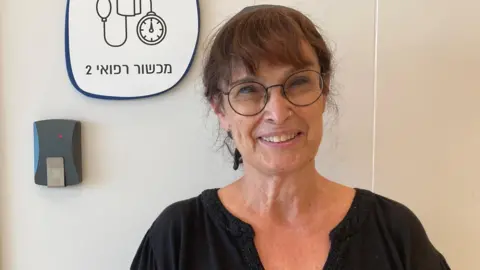
BBCWhen the first hostages are freed by Hamas in Gaza, taken to Israel and transferred by helicopter to Rabin Medical Center in Petah Tikva, Dr. Michal Steinman will take them to the sixth floor, open the glass door and see them reunited with their closest family after more than 700 days of captivity.
“It’s a privilege,” says the nursing manager. “It’s these moments, when I’m 70 or 80 years old, these are the two or three moments that I will remember. They symbolize so many values - as a nurse, as a mother, as a woman, as an Israeli.”
Twenty living hostages are expected to be released under the terms of the agreement between Israel and Hamas. Several of them will be brought to this hospital.
This will be the third time the hostage unit has been operational. The BBC visited the unit on Saturday, when the medical team learned the identities of the hostages they would be treating.
“There is no such thing as captive medicine and we are inventing it,” Dr Steinman told the BBC.
Staff learned two big lessons from the two previous hostage releases in November 2023 and January of this year, she said.
The first is to be “a medical detective”, trying to understand what happened during those long days and nights of captivity.
With the previous hostages, often emaciated, chained, beaten, “they had things in their blood tests, in their enzymes, that we couldn’t understand.”
They also learned that symptoms may not appear for days or weeks.
“Captivity does things to your body that your body remembers. You see all these layers. It takes time to see what happened to their body, to their soul,” she said.
“We are still dealing with the hostages who returned in January and February, and every week we discover new things.”
 Reuters
The other lesson is to take time. There are a very large number of professionals from different disciplines: nutritionists, social workers, mental health specialists, not to mention the whole range of medical personnel.
But there is also a “Do Not Disturb” card on the door of each freed hostage’s private room. The echoes of a hotel are deliberate, as are the treatment offerings, soft furnishings and dim lighting that accompany the hospital bed and monitors. There is an additional single bed prepared for hostages who do not want to be left alone overnight, so that a partner or parent can sleep alongside them. Their closest family will also have their own room right across the hall from the hostage’s room.
“You know doctors are task-oriented. There’s a timeline,” says Dr. Steinman. “Here you have to give them a lot more space. You have to decide what is urgent and what can wait two more days. You have to be humble and flexible, without giving up your medical responsibility.”
Among those responsibilities is determining what the hostages, some of whom may have lost more than half their weight in captivity, can eat and how quickly.
Their physical recovery is only part of the story. Karina Shwartz is the director of social work at Rabin Medical Center. She is another key member of the team, with responsibility not only for the hostages but also for their next of kin. They have to learn their own delicate calibration of family dynamics — knowing when to speak up and when not to, she says.
“The most important thing is what we don’t say,” she says. “Because if we’re sitting in the room and someone tells us something very difficult about how they almost died in captivity, and we stay silent: that’s a very strong silence.”
But at the same time, you have to hold back. “We can’t talk about two years in a week. The hostages need space and time. They also need calm. We have to listen. Listen to their story.”
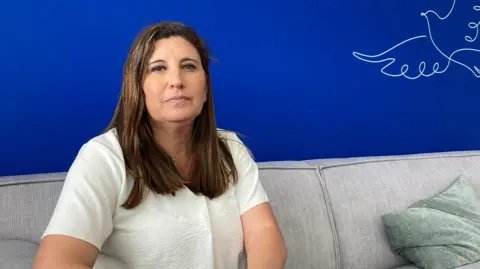
Staff at the Hostage Returns Unit emphasize that their work does not end when hostages return home. Medical and psychological rehabilitation will continue and the hostages must also be prepared, Ms. Shwartz said, for “the moment the real world returns.”
The message she and her team are trying to send to the hostages and their families is that everyone will want to see them. For two years, they have been public figures.
“Everyone will want to be friends. We tell them: It’s okay to say no. It’s safe to say no.”
For now, the nervous impatience of the staff is palpable.
“You should see my WhatsApp messages,” says Dr. Steinman, a very Israeli nursing director with her nose piercing and multiple tattoos.
Nearly every one of the medical complex’s 1,700 nurses volunteered, she said, to work extra shifts on the unit.
“You find hope again,” she said. “Working here, you realize that life and human beings are good. You realize the strength of the human spirit.”
And yet, the greatest pleasure, she says, will be that this work is finished.
“This is the third time we’ve opened the unit. To know that this is the last time: that when we close this place and say the mission is complete. Then we will know the nightmare is over.”


