The viral ‘Chicago Rat Hole’ wasn’t actually made by a rat, scientists claim


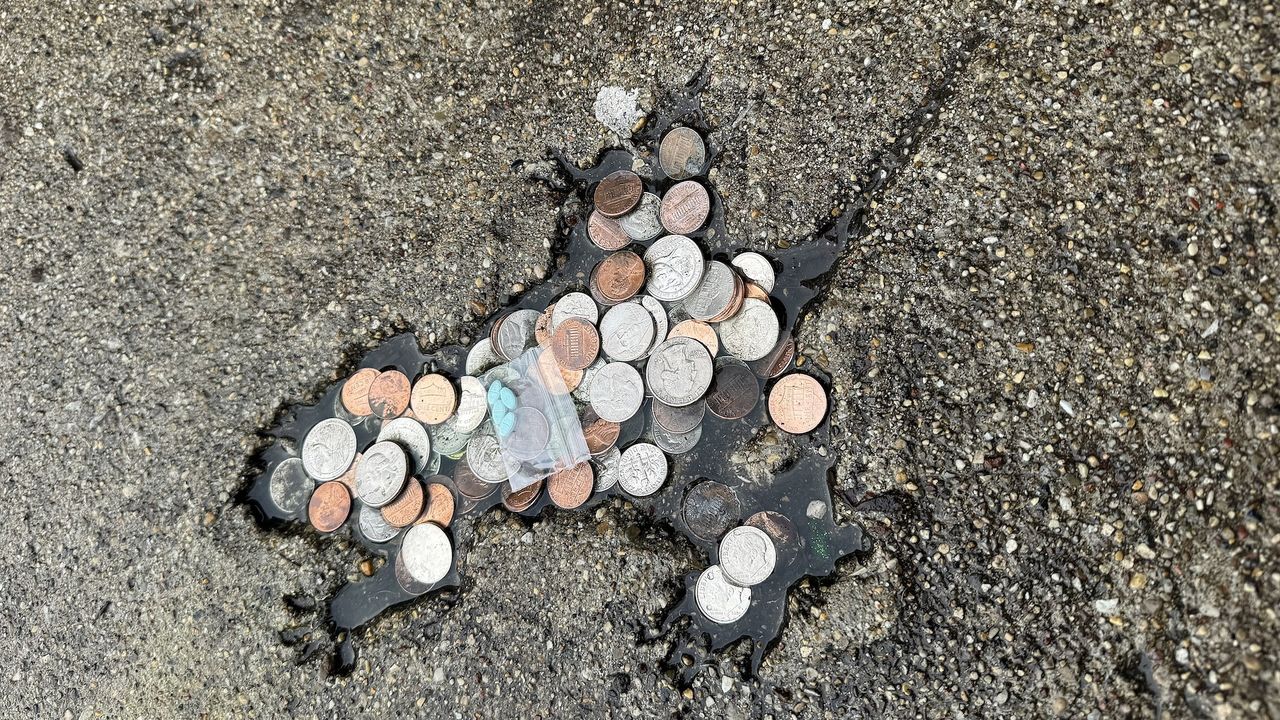
A rat-shaped footprint on a Chicago sidewalk went viral early last year, with crowds of people venturing to the hole carrying coins and other offerings. However, a new study suggests that the so-called “Chicago Rat Hole” wasn’t actually created by a rat – it was likely the footprint of a squirrel.
By comparing the hole’s characteristics with information about local rodent populations, the researchers determined that a squirrel most likely made the impression. The study was published Wednesday October 15 in the journal Biology letters.
The hole, a well-preserved imprint of a rodent’s death in wet concrete, existed for decades before going viral. It became a tourist attraction in 2024 thanks to Chicago-based artist and comedian Winslow Dumaine. job about its existence on the social platform
Had to make a pilgrimage to the Chicago Rat Hole pic.twitter.com/g4P44nvJ1fJanuary 6, 2024
“Squirrels are much more willing to watch TV than rats,” Dumaine told Live Science. “But I think the fact that it was called a shithole is a big part of why it became popular.”
When researchers discovered photos of the hole on social media, some felt it didn’t look like “a super rat,” the study’s lead author said. Edwin Dickinsonarchaeologist at the University of Calgary, told Live Science. It also seemed unlikely that a rat could have made such a throw on wet concrete without leaving footprints all the way to it. These suspicions prompted researchers to analyze the hole in more depth.
Using the citizen science app iNaturalist, which catalogs local wildlife, the study authors identified possible animals that might have dug the hole. They knew from the removal that it had to be an animal with four legs, five claws and a tail.
Then it was all a question of proportion. The study authors did not have a chance to measure the hole itself, which city officials removed in April 2024, citing the unrest the crowds were causing in the Roscoe Village neighborhood. However, they were able to obtain precise measurements thanks to the many published photos of the footprint next to coins and other objects.
The researchers compared their measurements to specimens from the American Museum of Natural History. A statistical analysis of this data showed a 98.7% probability that the hole was made either by an eastern gray squirrel (Sciurus carolinensis) or a fox squirrel (Sciurus niger) .
In light of this discovery, scientists suggested renaming the rat hole the “Windy City Sidewalk Squirrel” to better represent its origins.
The authors hope the study will help people see the fun side of science.
“The rat hole may be the medium, but the idea we hope to perpetuate in this study is that there is nothing too complicated or inherently scary about following the scientific method,” Dickinson said. “It’s something we can all use in our lives.”


