Sharm El-Sheikh Shows That the US Has Learned Nothing From Gaza


The Palestinians are expected to accept the same deal that led to October 7: permanent subjugation under the guise of “prosperity.”
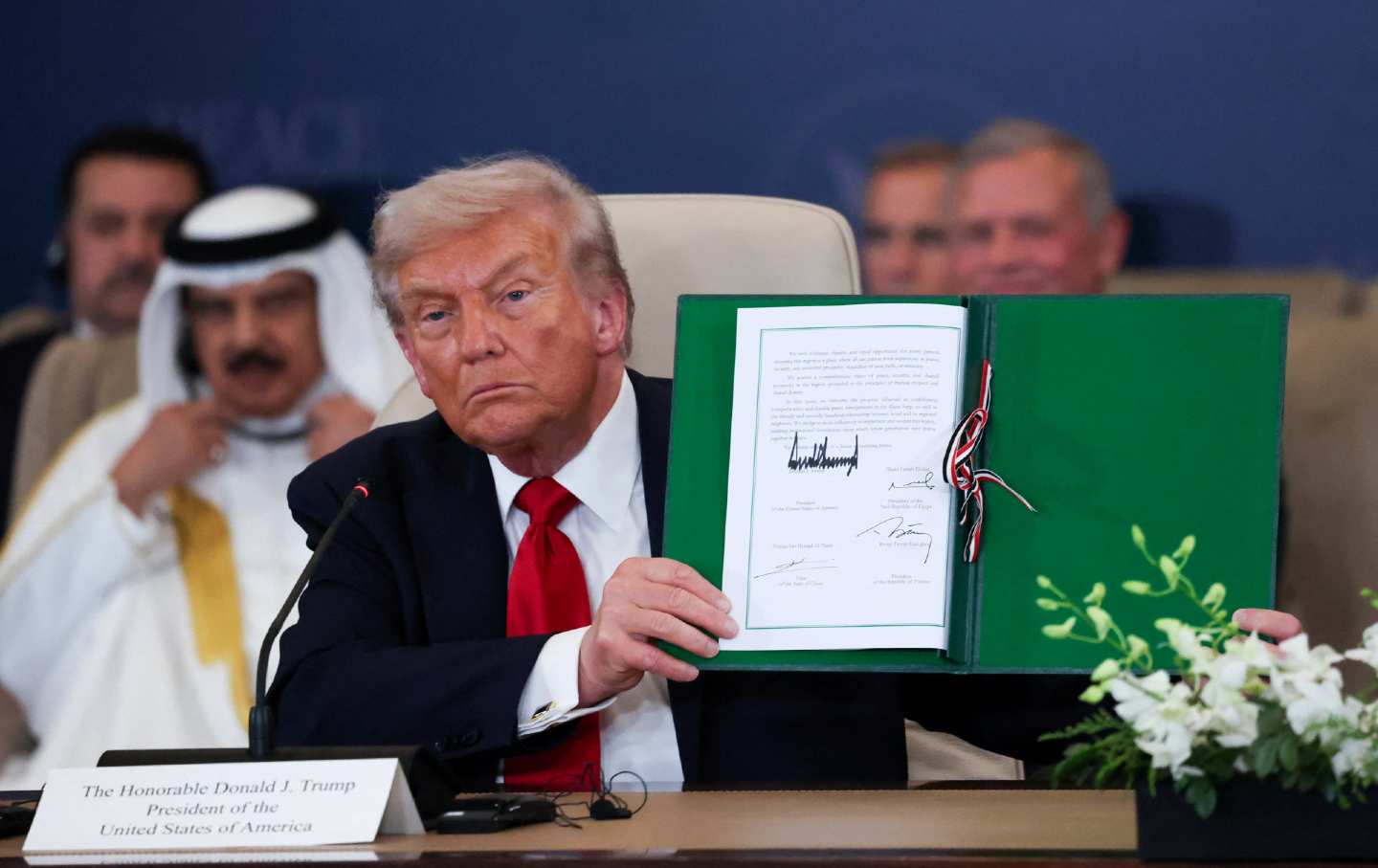
President Donald Trump presents the Gaza agreement approved by regional leaders in Sharm el-Sheikh, Egypt.
(Suzanne Plunkett – Swimming Pool / Getty Images)
The weapons are silent; the Palestinians, of course. Israel did not wait 24 hours after President Donald Trump declared the Gaza genocide “over” before killing at least six Palestinians in the occupied territories in airstrikes; including five in Shujawiya and one east of Khan Younis.
Israel’s nightly violations of the third post-October 7 ceasefire bring an undeniable feeling of déjà vu. In addition to breaking the first two, he has broken his ceasefire with Lebanon hundreds, if not thousands, of times. But they also reflect the reality behind the pomp of Monday’s Sharm el-Sheikh conference. Two years of incessant atrocities in Gaza are not giving the Palestinians the “historic dawn of a new Middle East” promised by Trump, but the resurgence of the very thing that American hegemony has always offered: permanent oppression that they are supposed to quietly accept.
After the Israeli strike on Qatar last month, much of regional diplomacy was devoted to securing a ceasefire and hostage exchange. Now that these interim goals have been achieved, no one can answer the more difficult question of what comes next. The Sharm el-Sheikh summit circumvented Trump’s plan for a “Peace Council”, chaired by the US president and led by Tony Blair, echoing the British mandate of a century ago. But the summit communiqué, signed by most of the diplomatic intermediaries of the last two years of Israeli-Palestinian negotiations, remains deafeningly silent on the central question of Palestinian freedom.
Released Monday by the White House under the typically self-aggrandizing title “Trump Declaration for Lasting Peace and Prosperity,” the statement places the key to “lasting peace” in combating “extremism” and “promoting education, opportunity and mutual respect.” It defines lasting peace as “a peace in which Palestinians and Israelis can prosper with the protection of their fundamental human rights, guaranteed security and respect for their dignity.” It solemnly affirms that a “comprehensive vision of peace, security and shared prosperity in the region” will be based on “the principles of mutual respect and shared destiny”.
Nowhere does the document refer to a Palestinian state. Nowhere does it suggest responsibility for countless war crimes committed by the Israeli government, still led by a man facing an arrest warrant issued by the International Criminal Court. And it never comes close to establishing a diplomatic mechanism to respond to legitimate Palestinian demands for freedom from Israel. One way or another, Palestinians are supposed to consider that their “dignity is preserved” through continued subjugation by the Israeli army that remains inside Gaza. The statement was little more than a repetition of the endless assurances given by the administrations of George W. Bush and Barack Obama after the Second Intifada that Palestinian material prosperity could serve as a functional substitute for independence.
Current number
The other Sharm el-Sheikh signatories followed the same evasive line. The regional leaders who approved the communiqué were Abdel Fattah El-Sisi, the Egyptian dictator; Tamim bin Hammad al-Thani, the Emir of Qatar; and Recep Tayyip Erdogan, the autocrat of Türkiye. Sissi at least recognized the need for a Palestinian state, but only outside the confines of the communiqué. Instead, he gave Trump an award.
Sissi’s actions sum up the cowardice of Sharm el-Sheikh. The conference did not pave the way for peace; it showed a desire for calm. And while Trump’s ostentatious treatment as a man of history is a spectacle not usually necessary for American presidents, it reflects the decades-old bargain between the United States and beneficiaries of its largesse like Egypt. Under this pact, tyrants disconnected from their people receive advanced military technology in exchange for political and economic prerogatives satisfactory to the United States. Even as Israel engaged in its U.S.-backed genocide, military ties between it and ostensible critics like Egypt and Qatar actually expanded as Israel engaged in its U.S.-backed genocide. The Washington Post recently revealed.
The Gaza genocide exposed this arrangement – generally understood as US hegemony and more recently as the “rules-based international order” – as bankrupt and predatory in ways even surpassing the US occupation of Iraq. The genocide also opened the U.S.-backed order to unprecedented challenges, such as the ICC’s indictment of an American client instead of an American adversary and the recognition, however cursory, of a Palestinian state by European powers firmly under American control. This is what Trump referred to in his speech to the Israeli Knesset, warning Netanyahu that Israel cannot fight the whole world.
Yet Trump is not about to let belated recognition of the truth get in the way of a convenient and lucrative illusion. This illusion is known as the Abraham Accords, a massive US arms deal that the first Trump administration negotiated in 2020, cementing normalization between Israel and Arab powers over the heads of the Palestinians. When the Sharm el-Sheikh Declaration announced “strengthening ties between nations” and “friendly and mutually beneficial relations between Israel and its regional neighbors,” it signaled a desire to return the momentum of those agreements.
But if the Hamas attacks of October 7 proved anything, it is that substituting regional normalization with Israel for Palestinian freedom is a path into a nightmare, not out of it. A people who have survived 75 years of expulsion, massacre, apartheid and now genocide will not accept being relegated to the margins of a regional order. The US coalition claims the loyalty of many governments in the region, but the last two years have proven once again that the Palestinian cause deserves the loyalty of the people of the region.
By pursuing the Abraham Accords, Trump and Joe Biden have confused the calm of the Palestinians with their tranquility. When Israel’s supporters claimed peace had been restored on October 6, they succumbed to the same illusion. This only led to October 7 and the genocide. The horrors of the past two years should have taught Israel and its declining superpower that the only path to peace is through a free Palestine. Instead, he chose the image of illusory stability over the lives of at least 67,869 Palestinians, and probably tens, if not hundreds of thousands, more buried in the ruins of Gaza. Unless they learn the real lessons of the genocide and what preceded it, another October 7 is inevitable.
More than The Nation
The use of air power to try to subdue or at least rein in the inhabitants of the Middle East dates back more than a century.
Juan Cole

A so-called precept in the practice of media coverage is that “if it bleeds, it leads.” Well, apparently if a Palestinian bleeds, that’s not true.
Alex Colston
You would be forgiven for having some skepticism about what happens next.
Hadar Susskind
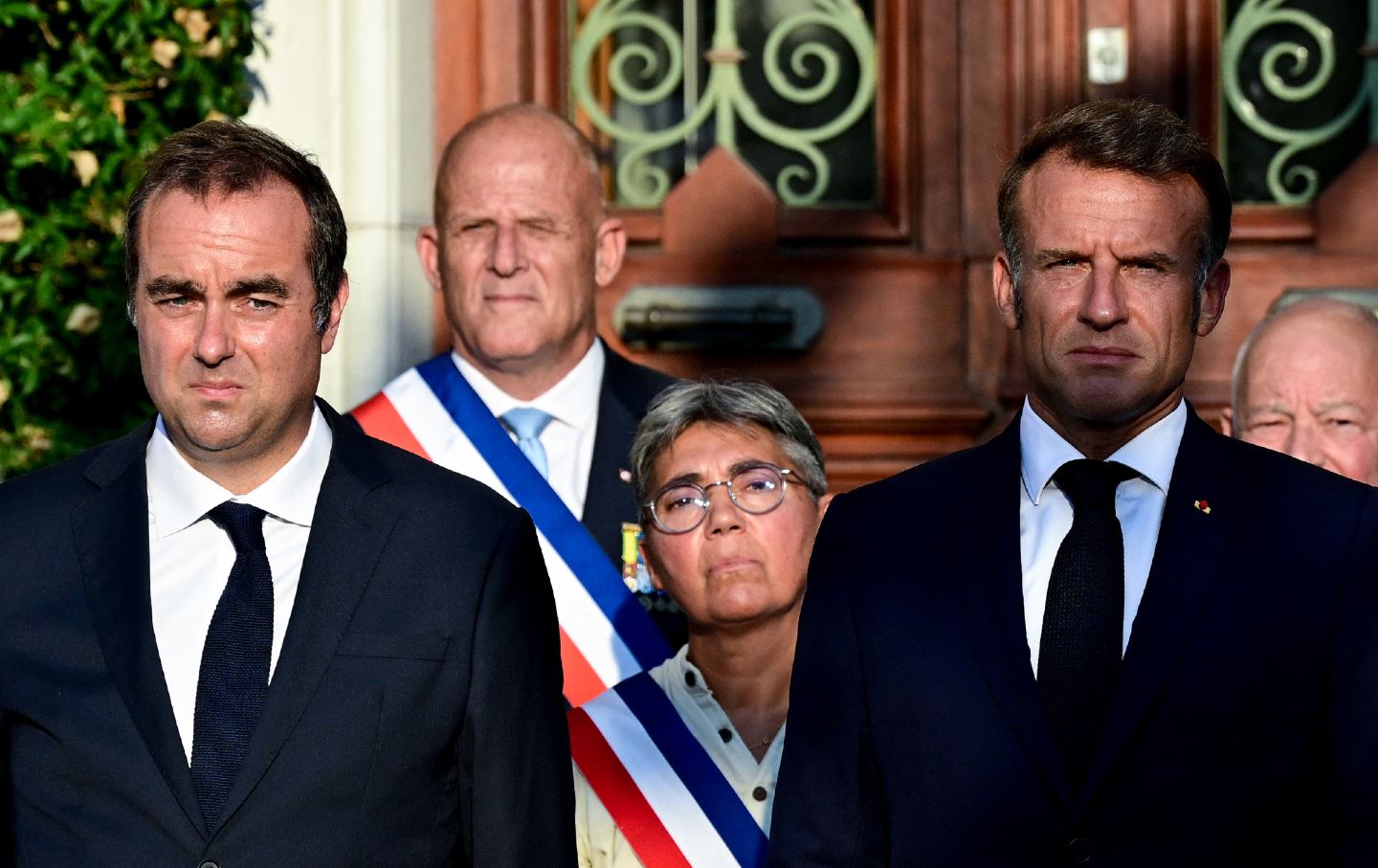
In the midst of an ever-worsening political crisis, the French president is forced to backtrack on his flagship reform.
Harrison Stetler

An industry built on addiction and loss now wields enormous political and cultural influence, from NFL stadiums in Philadelphia to soccer stadiums in São Paulo.
Harrison Berger

Machado’s record makes a mockery of the idea that she is a committed champion of peace, a promoter of democracy or a unifying figure.
Gabriel Hetland