I swapped my $1,000 desktop for a $300 mini PC and regret nothing


Earlier this year I purchased a small, inexpensive desktop computer for research purposes. I didn’t expect this to change my entire computer setup.
But here I am now, using the $319 Beelink SER5 mini PC as my daily workhorse, powering a 1440p 100Hz ultrawide monitor and smoothly handling every productivity task I threw at it. This little computer has been so enjoyable to use that I relegated my full-size desktop tower computer to the TV in the basement, where it now serves exclusively as a gaming rig.
Consider this a lesson in technological overkill. Outside of some specialized use cases, the computing power required to get things done may be much less than you think.
Further reading: 5 reasons to buy a mini PC instead of a laptop
Size the mini PC
Beelink sells a line of miniature computers, but the one I purchased currently costs $319 with the following specifications:
- AMD Ryzen 5 5825U processor
- 16 GB of RAM (DDR4)
- 512 GB storage (M.2 NVMe)
- Windows 11 Pro
- Wi-Fi 6, Bluetooth 5.2
- Front ports: two USB-A 3.2, one USB-C, 3.5mm audio
- Rear ports: one USB-A 3.0, one USB-A 2.0, two HDMI 2.0, Gigabit Ethernet
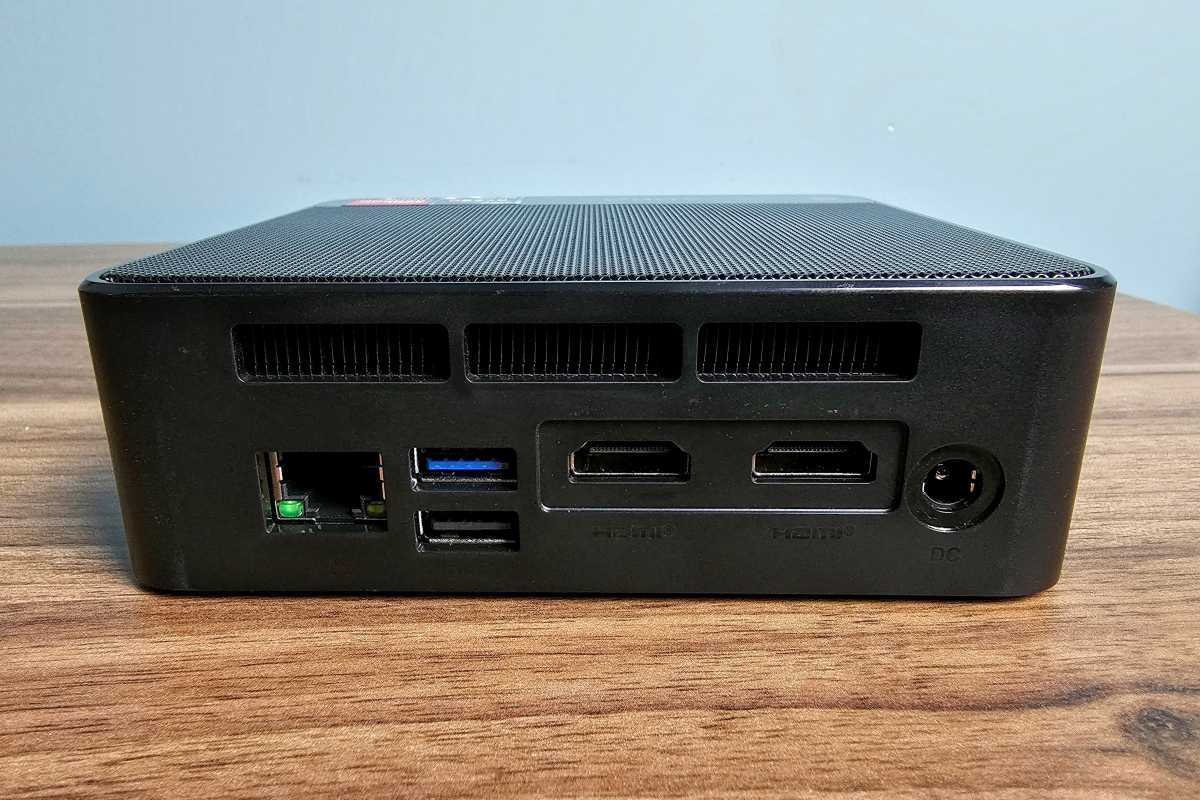
Jared Newman / Foundry
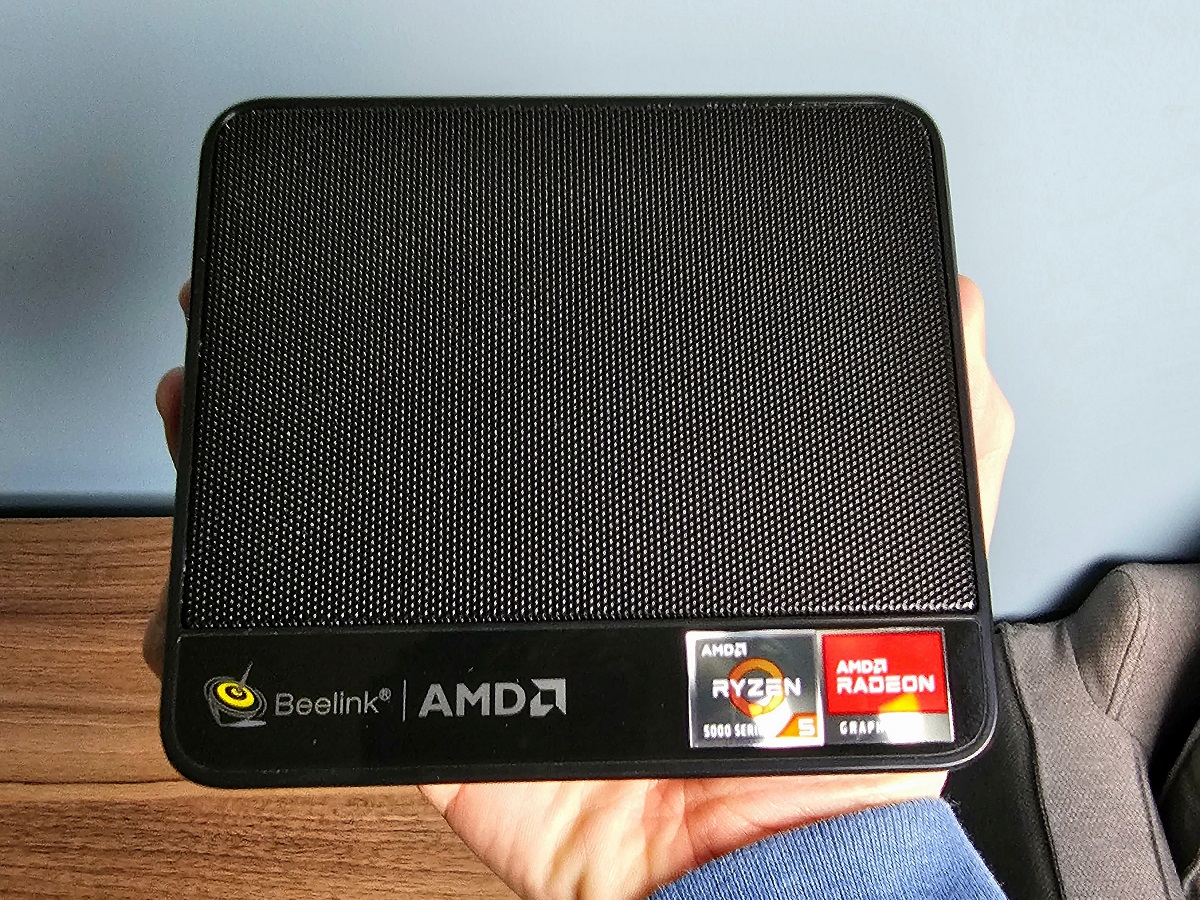
In terms of specs, it’s about on par with laptops in the $500 to $700 price range, except of course you’ll have to supply your own mouse, keyboard, and display. The 5×5-inch frame is small enough to grip with one hand and comes with VESA mounts for mounting the computer to the back of a monitor or TV.
Further reading: The best monitors we tested
The Beelink SER5 also hides a nice feature on its underside: removing the bottom plate reveals a slot for a 2.5-inch storage drive. I bought a 1TB SSD to store all my OneDrive files locally, and the PC recognized it without a problem. (The device’s RAM and M.2 storage drive are also upgradeable.)
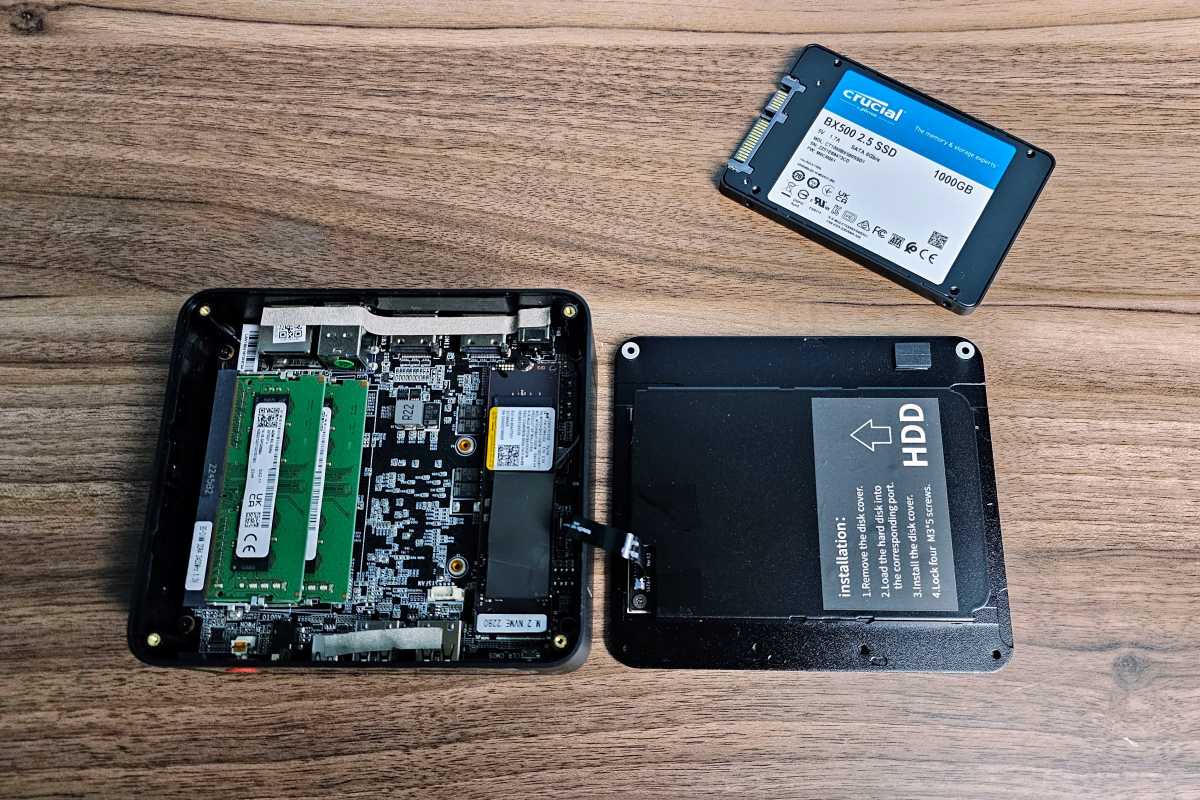
There is room for a 2.5-inch SSD in the bottom cover.
Jared Newman / Foundry
How does it happen
My plan at first was to briefly play with the SER5’s default Windows 11 Pro installation before returning to my regular desktop to work. Although I didn’t use the mini PC regularly, I figured it would be useful for experimenting with other operating systems like Linux or Chrome OS Flex.
In the end, the transition back to day work was so smooth that I never went back to my old computer at all.
As a tech journalist, my job typically involves writing in Obsidian, chatting in Slack with colleagues (and my newsletter readers), juggling a few dozen browser tabs in Brave, and participating in video calls in Zoom or Google Meet. The Beelink SER5 handled all of these tasks without ever noticeably slowing down, and it’s much quieter than the full-size desktop I was using before.
I also tackled more ambitious tasks on the mini PC, such as digitizing old VHS tapes, recording streaming video sources via PlayOn Home, and running a Plex media server. Even with Plex’s commercial detection and PlayOn’s recording engine running in the background, I continued working without any noticeable performance drop.
And while the integrated Radeon graphics aren’t up to par with a dedicated graphics card, the Beelink SER5 does well as a low-end gaming device. Yakuza Kiwami runs at a smooth 60 frames per second at high settings at 1080p, and both Fortnite and the post-apocalyptic cat simulator Wander are playable at 1080p with frame rates closer to 30 frames per second. I also used it to play less demanding games like Earthquake II remaster and The Elder Scrolls III: Morrowindwhile relying on Nvidia’s GeForce Now for a more intensive price.
All of this led me to realize that my massive desktop computer was just wasting space while being excessively noisy and power-hungry, and after a few weeks I removed it from my desk for good. I factory reset it, set it up exclusively for basement gaming, and now only turn it on when needed.
Lesson learned
Jared Newman / Foundry
When shopping for computers, it’s always tempting to buy for every potential use case, real and perceived, now and in the future.
The $319 Beelink SER5 is a reminder that we’ve reached a point of diminishing returns for most computing use cases. Even though I only had a mid-range processor (designed for laptops, at that), I never wanted more power or wanted to splurge on a more expensive computer.
But mostly, I’m just happy to have a quieter office and a better place for the gaming PC that once occupied it.
This story first appeared in Advisorator, Jared’s weekly tech advice newsletter. Sign up to learn new tech tips every Tuesday.


