Sora 2’s AI videos of Robin Williams and others put Hollywood on alert : NPR

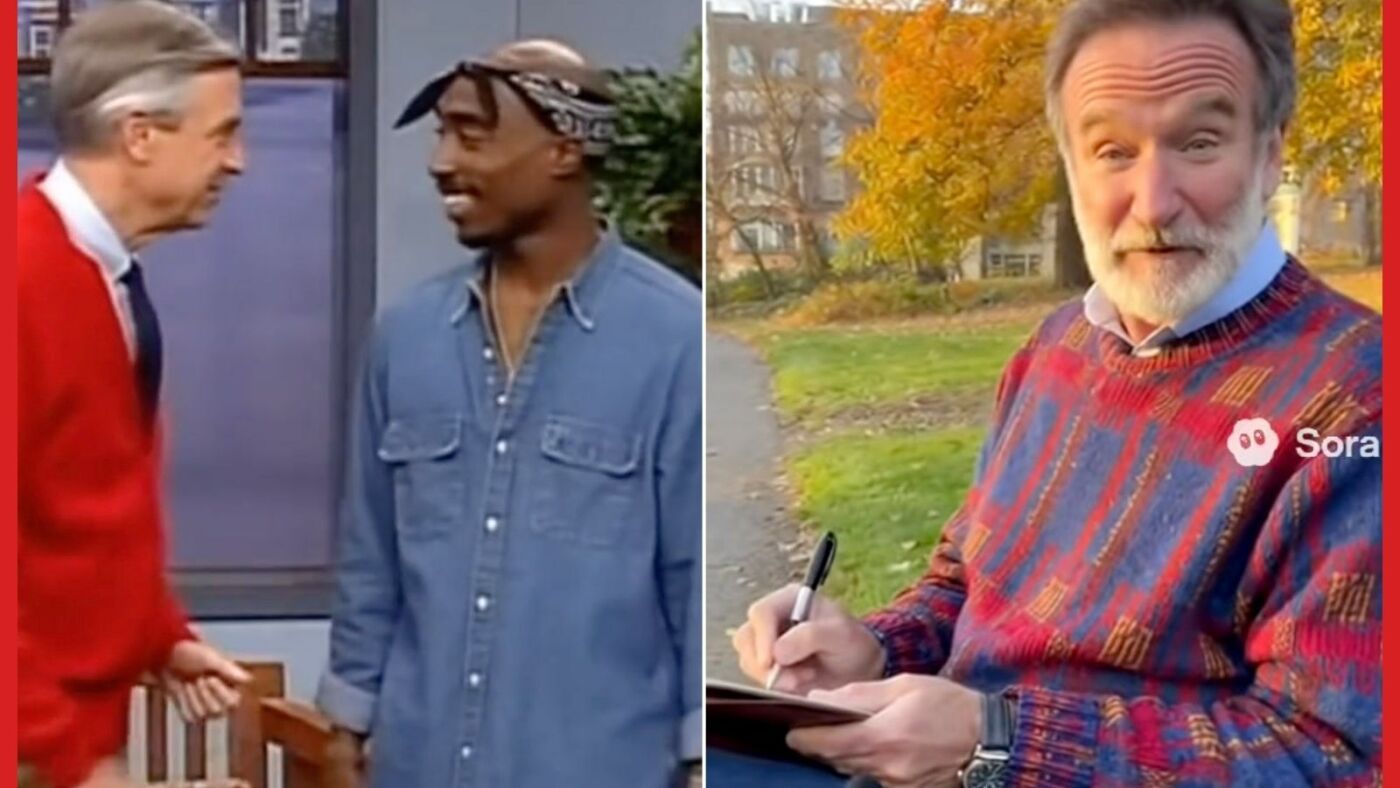

Entertainment industry figures including the late Fred Rogers, Tupac Shakur and Robin Williams have been digitally recreated using OpenAI’s Sora technology. The app’s ability to do this easily has deeply concerned many in the industry.
Sora/Open AI/Annotation by NPR
hide caption
toggle caption
Sora/Open AI/Annotation by NPR
OpenAI says it has released new policies for an artificial intelligence tool called Sora 2, in response to concerns from Hollywood studios, unions and talent agencies.
The tool allows users to create high-quality, realistic audio and video files using text and image prompts.
“It’s about creating new possibilities,” OpenAI promised in a promotional video for Sora 2. “You can visualize the power of entering any world or scene, and letting your friends throw you into theirs.”
But with Sora 2, some creators also made fake AI-generated videos of historical figures doing things they never did. For example, Martin Luther King Jr. changing his “I Have a Dream” speech, Michael Jackson rapping and stealing someone’s chicken nuggets, or Mr. Rogers greeting rapper Tupac Shakur in his neighborhood.
Some videos reimagined the late Robin Williams speaking on a park bench and other locations. His daughter Zelda has begged her fans to stop sending her AI-generated content, calling it “horrible slop”.
“You’re not making art,” she wrote on Instagram, “you’re making disgusting, overly processed hot dogs from the lives of human beings.”

Actress Chaley Rose is one of many people in the entertainment industry who have concerns about OpenAI’s video generation technology.
Karolina Turek/Chaley Rose
hide caption
toggle caption
Karolina Turek/Chaley Rose
“It’s pretty cool, it’s pretty scary,” says actress Chaley Rose, best known for her role in the TV series. Nashville. “People can borrow from actors, our vulnerability and our artistry to teach the characters they create how to do what we do. I would hate for my image to be released without having given permission or being the one playing the role and controlling the performance.”
Hollywood’s top talent agencies were the first to sound the alarm.
“There is no substitute for human talent in our business, and we will continue to fight tirelessly for our clients to ensure they are protected,” United Talent Agency wrote in a statement last week. “When it comes to OpenAI’s Sora or any other platform that seeks to profit from our customers’ intellectual property and image, we stand with the artists. The future of industries based on creative expression and art rests on controls, protections and legitimate compensation. Use of such property without consent, credit or compensation is exploitation, not innovation.
The Creative Artists Agency issued a similar warning last week.
Last year, California Governor Gavin Newsom signed a bill requiring consent from actors and performers to use their digital replicas.
Now, talent agencies and SAG-AFTRA (which also represents many NPR employees) have announced that they and OpenAI support similar federal legislation, called the “NO FAKES” Act.
Until now, some of the videos created using Sora 2 have relied on copyrighted material. For example, there is a video that shows the animated character SpongeBob preparing illegal drugs.

Unauthorized AI-generated video shows SpongeBob preparing illegal drugs.
Sora/Open AI/Annotation by NPR
hide caption
toggle caption
Sora/Open AI/Annotation by NPR
The Motion Picture Association, which represents major Hollywood studios, said in a statement that since the release of Sora 2, “videos that undermine our members’ films, shows and characters have proliferated on the OpenAI service and on social media.”

Duncan Crabtree-Ireland, national executive director of the SAG-AFTRA union, told NPR last week that it’s not possible for rights holders to find every possible use for their material.
“This is a time of real concern and danger for everyone in the entertainment industry. And it should be for all Americans, all of us in fact,” says Crabtree-Ireland.
SAG-AFTRA says actor Bryan Cranston alerted the union to possible abuse. Today, the union and talent agencies say they are grateful that OpenAI listened to these concerns.
The company announced an “opt-in” policy giving all artists, performers and individuals the right to determine how and if they can be simulated. OpenAI says it will block the generation of well-known characters on its public feed and remove any existing non-compliant material.
Last week, OpenAI agreed to remove fake videos of Martin Luther King Jr., after his estate complained about “disrespectful depictions” of the late civil rights leader.

:max_bytes(150000):strip_icc()/Health-tylenol-recall-b4942ad44d544ba294a09bca73268bd6.png?w=390&resize=390,220&ssl=1 "FDA Announces Nationwide Tylenol Recall—Thousands of Bottles Affected")


