The Trees That Remember the Pyramids


Explore
SSome trees alive today were saplings when the Egyptian pyramids were still under construction. Individual Great Basin bristlecone pines are scattered across the rocky slopes of Nevada, and Lañilawal, an Alerce cypress growing in Chile, a tree so large it has earned its own mononym. Many others are younger, but even older, having emerged from the earth at the same time as humanity entered the Common Era, around 2,000 years ago. Pedunculate oak growing along the Silk Road in China, Bosnian pine clinging to the marble hills of Mount Olympus, residence of the ancient Greek gods.
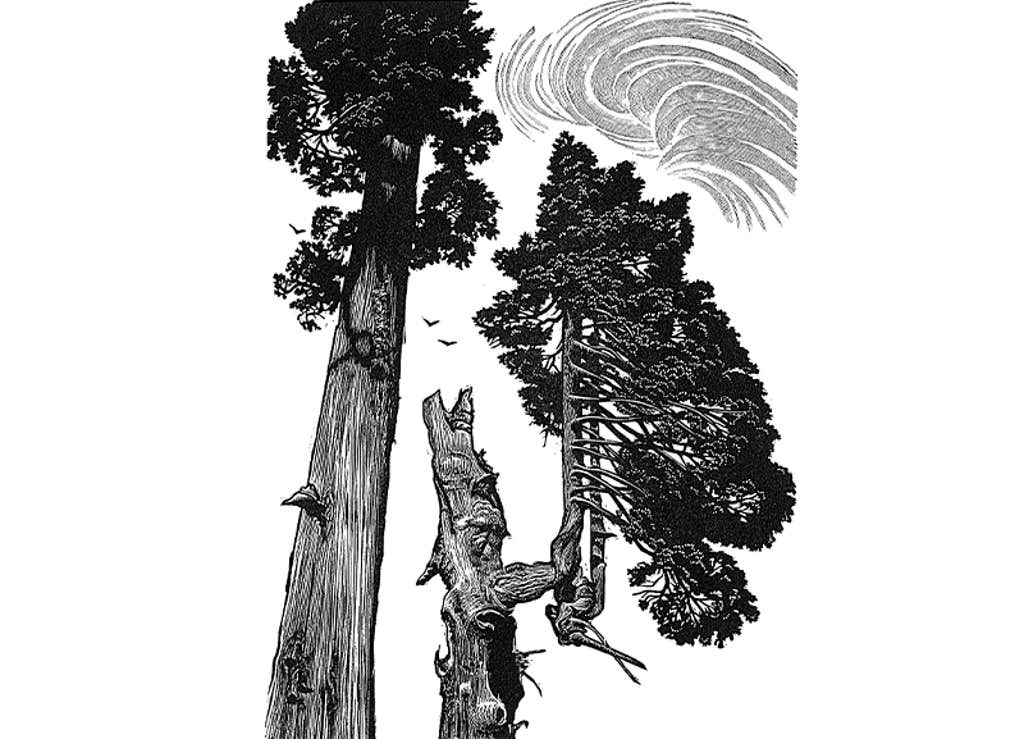
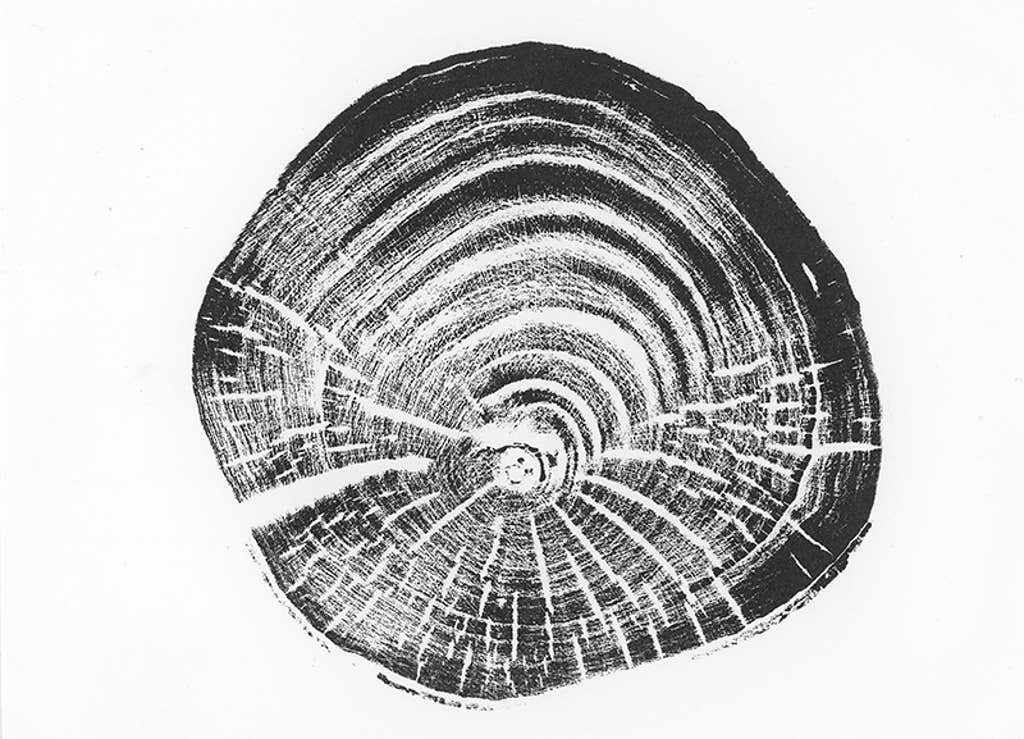
The bodies of these trees bear a trace, imprinted in their rings, of lives lived in one place, in changing weather and climate, through adversity and prosperity, fire and snowstorms, and contact with humans.
Once you know where to look, you can learn to spot these elders in the landscape. Often they have sturdy, twisted bark, a thick trunk and heavy branches, and a cushioned, twisted top. This is because once they reach a certain age, trees only grow in girth, and no longer in height, and the crown begins to die back as it becomes more difficult to deliver nutrients to these more distant branches. And yet, many of these trees will continue to live long into an uncertain climate future.
Renowned dendrochronologist Valérie Trouet recently put together a collection of essays written by the scientists who study these great ones, titled In the circle of century-old trees. Each essay focuses on one of 10 tree species from distant geographies and what their tree rings can tell us about Earth’s past and future. Nautilus spoke with Trouet ahead of publication about what tree rings can tell us about archaeology, Renaissance furniture, climate change and William Blake.
ADVERTISEMENT
Nautilus members enjoy an ad-free experience. Log in or register now.

What is dendrochronology?
Dendrochronology comes from Greek words dendron And chronostherefore tree and time. And that’s what we do as dendrochronologists. We read time through the rings of trees, we read history through trees. But it’s not just the number of rings that gives us information, it’s also the width of the rings, the density of the wood, all kinds of characteristics that tell us about what happened during the lifespan of these trees. This is information about climate, but also about how we as humans interact with trees and about fires.
Forest fires, when they don’t kill the tree, leave scars. And thanks to tree ring research, we can date the exact years and sometimes even the season that these trees were scarred. We can thus construct a whole story about the years when the big fires occurred and the causes of these fire years.
ADVERTISEMENT
Nautilus members enjoy an ad-free experience. Log in or register now.
This is therefore of great value, particularly for climate change research.
Worldwide, reliable measurements of even basic weather conditions, like temperature and precipitation, date back to around 1900. So we only have about 100 years of data, which isn’t bad. But at the same time that we started measuring these climate variables, we started changing our climate. Around 1850, with the Industrial Revolution, we began large-scale burning of fossil fuels, which influenced the entire period in which we measured climate.
So if we want to get a sense of how natural climate change works, how the climate system works under natural conditions, we need to go further back in time than our actual measurements. We need to find other ways of looking at climate. Tree rings are a great way to do this.
ADVERTISEMENT
Nautilus members enjoy an ad-free experience. Log in or register now.
How does dendrochronology integrate with other climate sciences, including a geological perspective on climate?
I think that’s a really good question because I think that’s what makes tree rings so valuable as a method. When we use tree rings to study past climate, we look broadly at the last 2,000 years. We can go back further but it is rare. And so, relatively speaking, for many geoscientists who are looking at millions of years, hundreds of thousands of years, that’s a very short period of time. But it is a very important period because it is also the one about which we know the most in the history of humanity. So we can really look at the relationship between climate history and human history, if there is a relationship, and how that relationship works. This is one.
And secondly, these are deadlines that matter to humanity and our individual lives, but they are also deadlines that we can impact with our current policies. Who knows what our climate will be like in a million years? I mean, will we still be here? But we can determine what our climate will be like in 1,000 years. The CO2 that we release into the atmosphere today will still be present in the atmosphere 1,000 years from now. It is therefore also the political deadlines which are really relevant.
ADVERTISEMENT
Nautilus members enjoy an ad-free experience. Log in or register now.
Forest fires, when they don’t kill the tree, leave scars.
Is a trend emerging?
Well, it’s similar to what we know from instrumental data [direct measurement of Earth’s climate from instruments such as thermometers and satellites]. As for the temperature, it’s quite simple. In terms of temperature, we are currently in unprecedented terrain where it is warming and it has not been this hot in the last 2,000 years. This image is very clear. But really, the goal is to add information to what we know about the instrumental period. [which only came into full swing in the 1980s, when satellite coverage covered the whole globe]rather than saying, yeah, everything is fine, or everything is bad. This adds a level of nuance and detail to what we know.
I was surprised to learn that many of the authors have a background in archaeology. They love trees, but they come to the field because they are interested in the past. They use tree rings to date the ancestral ruins of the Pueblans of the American southwest, or Maori cultural treasures, even Renaissance artwork and English oak furniture.
ADVERTISEMENT
Nautilus members enjoy an ad-free experience. Log in or register now.
Many people come into this field of science from an archaeological background, because it’s not just about trees, but also about wood. The information that trees store in their rings remains even when the trees die. When they’re cut down, when they’re made into wooden buildings or wooden beams or even charcoal, we can still use that wood and the rings of that wood to extract information. This allows us to date this archaeological material with the exact year.
Is there a shared property that causes some trees to age incredibly? What is their secret?
ADVERTISEMENT
Nautilus members enjoy an ad-free experience. Log in or register now.
There are rules, and then there are exceptions to the rules. Typically, you’ll find very old trees in remote locations where people haven’t had easy access to wood for thousands of years. Very often at altitude and in dry environments, which causes trees to grow very slowly. The “live fast and you die young, or you live slow” paradigm is the same for trees.
Isolated, austere areas are also much more difficult for organisms that can commonly attack trees. So you have fewer insects, you have fewer grasses and shrubs that can fuel wildfires. But as I mentioned, there are exceptions.
One of the chapters in the book is about a bald cypress tree that grows in the southeastern United States. They can be up to 2,800 years old, so very old. But they literally grow up with their feet in the water. They live in swamps, so they are very unexpected. This is not the kind of environment where you would expect to find these very old trees.
The book really focuses on the connections between trees and people. The people who tell these stories are those most connected to trees. It reminded me of some of William Blake’s writings. In a letter to a friend, he wrote: “The tree that makes some cry with joy is in the eyes of others only a green thing that stands in the way. » What else can we do to make people more connected to nature?
ADVERTISEMENT
Nautilus members enjoy an ad-free experience. Log in or register now.
That’s a very good question. On the one hand, there is growing movement and fear. If you look at how many books have been published about trees in recent years – very good books, very beautiful books, fiction and non-fiction – you know, we’ve come a long way. 100 or 150 years ago, much of North America was deforested without even thinking about it. So we have come a long way.
I think what this book – and the dendrochronological community – can add, and what people perhaps don’t think about enough, is the temporal component. You know, some of these trees are 3, 4, 5,000 years old. They were there when we were building pyramids, weren’t they? And they are still there. They are still alive. They transcend our individual lives and most of them will still be here a thousand years from now. They are therefore witnesses not only to our past but also to the future. And they don’t lie.
Enjoy Nautilus? Subscribe for free to our newsletter.
Blaze Cyan is an artist working in the fields of drawing, printmaking, woodcut and woodcut. Blaze is a Fellow of the Royal Society of Painter-Printmakers, a member of the Society of Wood Engravers and also of the Arborealists. She lives in London.
ADVERTISEMENT
Nautilus members enjoy an ad-free experience. Log in or register now.