Food banks and community groups brace for spike in demand as shutdown continues


WASHINGTON — As the government shutdown continues, the impact on ordinary Americans grows.
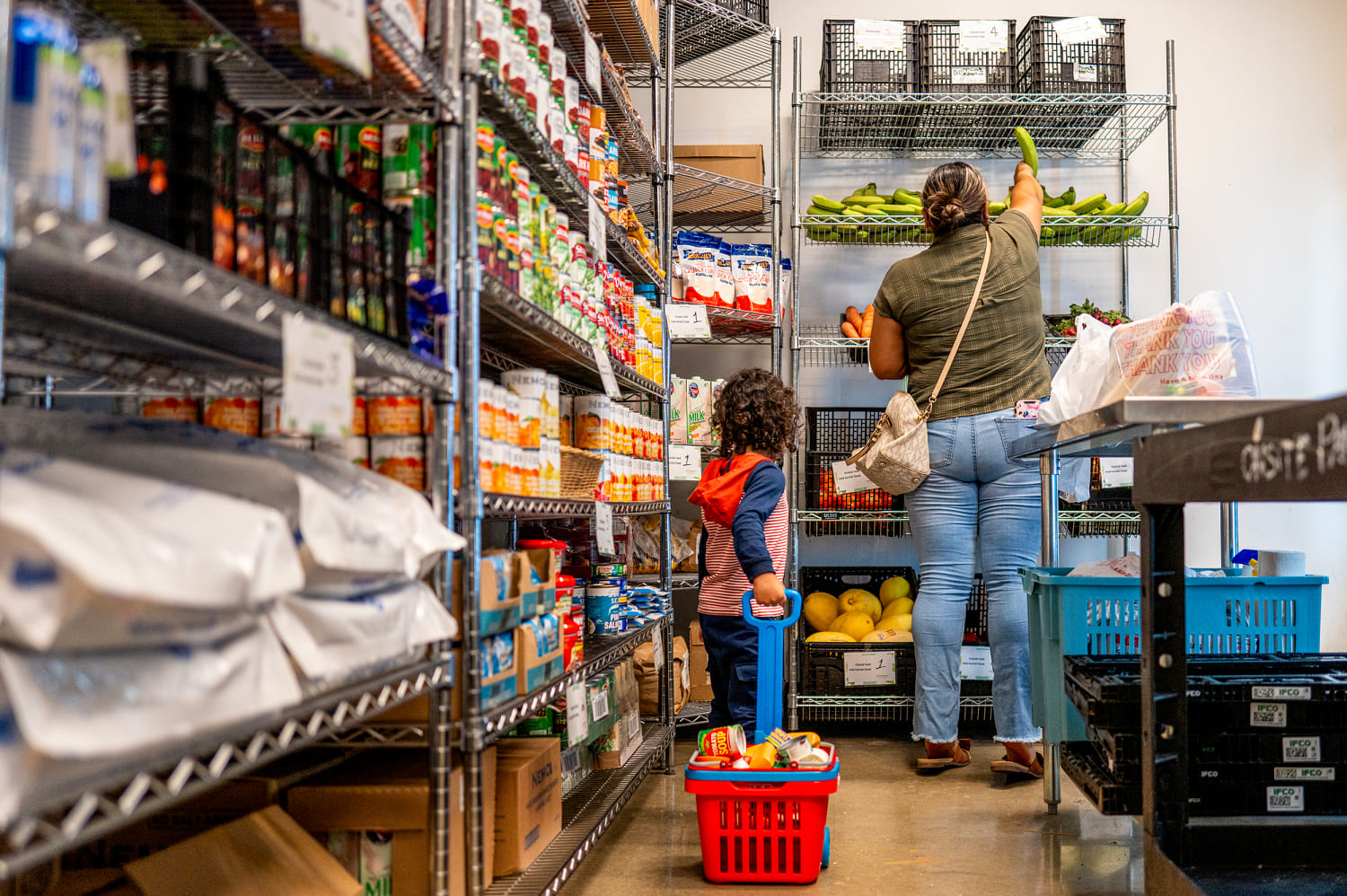
This creates additional pressure on social service programs, which are now preparing to meet increased needs, especially from people who do not normally rely on their support.
Food banks from coast to coast were already seeing an increase in visits from federal workers who were furloughed or working without pay. Now, they’re bracing for an additional influx of Americans who rely on federal food assistance programs, which are expected to run out of funding at the end of the month, like the Supplemental Nutrition Assistance Program, known as SNAP or food stamps, and WIC, the Food Program for Women, Infants and Children.
“When food banks serve families, the ratio is typically 1 to 9, so one meal provided by food banks versus nine provided by SNAP dollars. If those SNAP dollars are cut in half, that would mean a local food bank would quadruple its production just to meet that need,” Craig Rice, CEO of the Manna Food Center in Maryland, told NBC Washington.
Manna Food Center serves a large federal workforce, and the ongoing closure has required it to make additional preparations to meet increased needs.
“We’re going to add emergency bags so that federal government employees can come and ask for emergency assistance, and we’ll be able to help them,” Rice said.
Federal workers will be reimbursed when the government shutdown ends, under a law passed by Congress in 2019. But Congress has made no progress toward reopening the government, leaving federal employees uncertain about when they will be paid again.
In Nevada, the Clark County Aviation Department is reaching out to the public to ask for help for its employees who are working without pay and will soon need basic necessities to get through the day.
“We’re going to open it up for our federal employees to come pick up the essential items that they need. From non-perishable food items, we’re accepting gift cards for retail, for gas, for groceries, baby supplies, whatever they need to help them survive during this government shutdown,” Luke Nimmo, the department’s public information officer, told 3 News in Las Vegas.
And it’s not just about food and hygiene items; Counties across America will also face the possibility of a child care crisis. Programs like Head Start may soon no longer receive funding. In Kansas City, 17 Head Start-supported child care centers are at risk of closing at the end of the month, forcing families to quickly find alternatives that may not be available.
“I think families need to be prepared and not rely on things that can just be taken away from them,” Demetria Spencer, owner of Delightful Learning Center daycare in Kansas City, told KSHB.
In some areas, state and local governments are finding ways to fill the federal funding gap to continue providing the services that millions of Americans depend on. Officials in Johnson County, Missouri, for example, have mobilized funds to help cover WIC administrative costs if federal funding runs out. But even that would only be a temporary reprieve.
“We’re going to continue to operate and provide services as long as we can,” Charlie Hunt, director of the Johnson County Department of Health and Environment, told KSHB.


