Senate Democrats: Get Your Stories Straight!


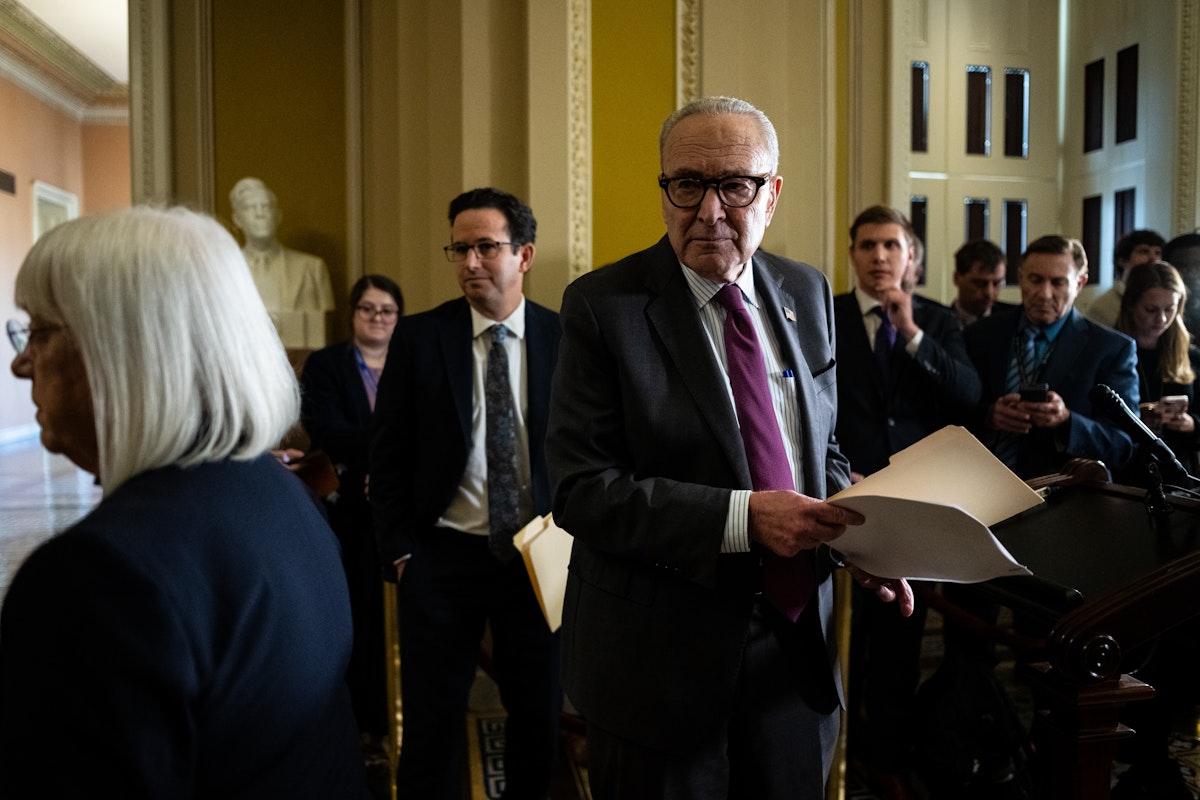
On Tuesday evening, Democratic Senator Jeff Merkley entered the Senate to begin a marathon speech that extended into Wednesday. The subject of his remonstration was most urgent: “I came to the Senate this evening to sound the alarm. We are living in the most perilous moment, the greatest threat to our republic since the Civil War. President Trump is destroying our Constitution.” For Merkley, the matter touches us literally: “President Trump wants us to believe that Portland, Oregon, in my home state, is full of chaos and riots. Because if he can tell the American people there are riots, he can say there is a rebellion. And if there is a rebellion, he can use it to strengthen his authoritarian grip on our nation.”
The president should not be expected to be moved by Merkley’s admonitions. And many Senate Republicans are unlikely to be swayed by his overtures. But there were plenty of people in attendance who needed to hear what the Oregon lawmaker had to say, especially his fellow Senate Democrats, who haven’t been singing the same pro-democracy anthem lately. Merkley’s speech comes at a time when some pillars need stiffening.
The American Senate: it has long been where the ambitions of the Democratic Party have been, with democracy itselfhave slipped. There are structural reasons for this: Much fewer voters are represented by the Republican majority, and this problem of maldistribution is exacerbated by demographic developments which could one day allow 30 percent of Americans will elect 70 of its senators. But Republicans learned long ago that their agenda — giving tax breaks to the rich and breaking up the government — mostly requires only 51 votes. Democratic governance – which involves building, repairing, regulating, preserving and improving – almost always requires 60.
One might have expected Democrats to recognize how the Senate obstructswhich obliges them to regularly convene these supermajorities, is a sort of suicide pact. Or that it is a recent innovation that is easily dismissed. Or it turns therefore contrary to the ideals of the Founders that its very existence should be offensive. But few Democrats have taken this step. And the reason is that too many of them suffer from what The New Republic contributor Christopher Sprigman calls “Degenerative senatorial brain.”
Having observed the operation of this unaugust body over the past several years, I think the main problem with many of our Democratic senators is that they believe their own hype. They all think they have joined an austere debate club – the “greatest deliberative body in the world”, the “refreshing saucer” of government. They do not seem to have noticed that when it comes to deliberation or maintaining a reputation for judgment and equanimity, everyone must agree to participate in these ideals. And this is not the case with the Trumpist Republicans: they shut down the government. They willingly ceded the power of the purse. They rarely, if ever, question the Mad King’s wishes. Remember Louisiana Republican Bill Cassidy’s public angst over Robert F. Kennedy Jr.’s Health and Human Services nomination? And then Cassidy ended up meekly supporting him, much to Cassidy’s chagrin? That’s about as robust as GOP deliberations get.
The state of the GOP means it’s not really possible to have a Senate anymore. Unfortunately, the Senate’s smartest Democrats still naively believe they can resurrect this moribund body, through actions that, at best, send mixed messages and, at worst, directly undermine the work of Democrats like Jeff Merkley.
Case in point: This week, amid the government shutdown, 13 Democratic senators joined forces with all but one Republican to advance the nomination of Harold Mooty for a judgeship in the Northern District of Alabama. Some Fun Facts About Mooty The New RepublicEllie Quinlan Houghtaling collection: He went to great lengths to dance questions about the January 6 riots and who was guilty; he practically invented new verb tenses to avoid directly saying that Joe Biden was the legitimately elected president.
When it comes to deal-breaking, everyone has their own opinion, but I find it surprising that these aren’t purple flags for Senate Democrats. But even if that weren’t the case, everyone should understand that the only role a Republican judicial nominee plays in American life is to serve Trump as if he were their personal legal client and support his savage corruption. For this reason alone, no Democratic name should ever be signed on for Trump’s judicial advancement.
Why would 13 Democrats (and independent Angus King from Maine, who I find too boring to explain to people) do such a thing? My theory is this: according to their own biased worldview, that of the Senate, getting these kinds of votes helps strengthen democracy. That is, whenever there is a small window in which they can make a gesture of civility and bipartisanship, they believe the right thing to do is to seize it — the better to demonstrate that the old ship of state continues to run, that normal business and regular order are possible, and that we are not that far from recovery. Democrats leave the door open for deliberation. They keep this saucer on ice.
My friends, I would like to believe that a small opening could give rise to a future rapprochement of polarized parties. But if watching schoolchildren get shot to pieces several times a year doesn’t foster that camaraderie, then we certainly won’t achieve it by throwing the other side a bone in the form of Harold Mooty. The government is paralyzed, there’s a hole in the White House, the president is ordering extrajudicial killings in Latin America as part of a war of regime change, and citizens are being snatched from the streets by Brett Kavanaugh-inspired goons. The system so beloved by the brains of the Senate is currently offline! And these votes to approve a judicial nominee are just small enabling acts that only help fuel the disorder.
Is democracy in great danger? This week, it appears Merkley and her allies agree, and 13 other Democrats aren’t quite ready to believe it. But as the midterm elections approach, everyone in the party needs to agree on the issue so as not to sow confusion among critical voters. And if they all really agree that Trump poses a unique threat, we can’t let double-digit numbers of Democrats sign their names to support his agenda — not now, not ever.
This article first appeared in Power Mad, a weekly TNR newsletter written by Associate Editor Jason Linkins. Register here.


