
If you go check the back of your TV, games console, soundbar, or Blu-ray player, you’ll almost certainly see a little port with red light coming from it. That’s TOSLINK or “Toshiba Link”.
It’s been around for decades, so why is this 1980s technology still around in the age of OLEDs and 4K TVs?
The Little Red Light That Never Died
Originally developed by Toshiba for connecting its then-new CD players to digital audio receivers, TOSLINK became part of the S/PDIF (Sony/Philips Digital Interface) standard.
What makes TOSLINK special is that it uses pulses of visible light transmitted down a clear plastic filament to send digital audio data. Now, you might think that this is a smart idea because optical signals can’t be influenced by electromagnetic interference. However, S/PDIF signals can be (and are) exactly as good when sent as electrical pulses down a copper cable.
In truth, there’s no reason TOSLINK should have become popular instead of simply using the same cables that carry composite video and analog audio, but history went its own way, and TOSLINK did become popular and stuck around.
How TOSLINK Works—and Why It’s Still Useful

With a TOSLINK connection, the device sending the S/PDIF signal converts electrical impulses into light by flashing a red light. The light travels down the plastic fiber and a photosensor at the other end reverses the process.
TOSLINK was indeed marketed as the better choice back in the day because of its optical nature, but again, this only makes sense if the signal was analog. One argument is that it prevents hum that can occur from issues with electrical grounding, but again, when it comes to the actual signal, the level of interference to corrupt the data would have to be quite significant. It also wouldn’t cause audio degradation like an analog signal. It would make the audio skip or not play at all.
What I will say, is that TOSLINK is highly reliable, the cables are cheap, and it’s a great way to get clean uncompressed stereo audio, and it can even handle compressed 5.1 surround sound.
Why It Never Took Over
TOSLINK is basically the baseline for digital audio today, but it simply doesn’t have the bandwidth for more modern audio standards. Uncompressed surround sound of any kind is out of the question. Though I will say that if you have a basic 5.1 speaker system, Dolby Digital or DTS sound perfectly fine and that’s what TOSLINK can handle.
Also, with the advent of HDMI, which can handle everything through a single cable, the need for TOSLINK has been reduced. However, HDMI can be finicky, and TOSLINK has always been the rock-solid fallback.
Why Manufacturers Still Include It

If you look at, for example, entry-level soundbars, you may find that, apart from Bluetooth, the only connection they offer is TOSLINK. That’s a clue about why TOSLINK is still in everything—cost. It’s extremely cheap to include it, and there are millions of devices out there that use it. My PlayStation 2 has a TOSLINK connection, and I can use that with any audio gear from 2025. In fact, it’s the best way to get a clean audio signal using a TOSLINK headphone adapter, since my PS2 has buzz on its analog audio outputs.
None of my current TVs have analog composite video connections anymore, but they all have TOSLINK, and that’s going to keep decades of AV gear compatible at some basic level for years to come.
The Enduring Connector That Refuses to Die
Ironically, if anyone tried to evolve the TOSLINK standard to support more modern audio formats, it would make it worse. In the end, uncompressed stereo is as good as it gets for stereo audio quality anyway, and having a guaranteed way to always get that pristine basic playback is valuable.
HDMI and whatever its successor may be, is free to chase the cutting edge, break compatibility with older standards, and be a general pain when trying to make two random pieces of gear work together. In the end, reliable old TOSLINK will probably still be in the robots that inevitably take over civilization.
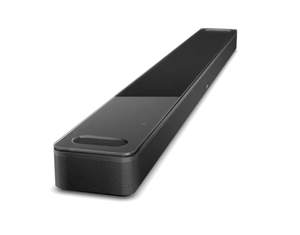
- Integrations
-
Amazon Alexa, Google Assistant
- Ports
-
HDMI, Optical, Ethernet
- Audio Format
-
Dolby Atmos, Dolby Digital, Dolby Digital Plus, Dolby TrueHD
- Speaker Arrangement
-
5.1.2
- Dimensions
-
41.14 x 2.29 x 4.21in
- Colors
-
Black, white


