New York man confesses to Virginia cold case murder, claiming he’s “a serial killer who’s only killed once”


When Stephan Smerk called Fairfax County Police Detective Melissa Wallace on September 7, 2023, she was shocked to hear what he had to say.
“He says, I’m at the police station to turn myself in,” Wallace told “48 Hours” correspondent Anne-Marie Green in “Closing the Cold Case of Robin Lawrence,” now streaming on Paramount+. “And I said, turn yourself in for what?”
Smerk, a 52-year-old married man and father of two living in Niskayuna, New York, was calling to confess to the 30-year-old’s murder in a cold case. Robin Warr-Laurent.
“A million things come to mind,” Wallace said. “The adrenaline was pumping so hard because the reality hit us…of what this means and the fact that we’re getting ready to close this case.”
Warr Lawrence family 
Robin Warr Lawrence, artist and mother, was brutally murdered in her Springfield, Virginia, home in 1994. For two days, her daughter Nicole, then just 2 years old, wandered the house alone before her mother’s body was discovered. And for three decades, detectives tried to determine who could have done this to Robin.
“Who would do such a thing? Why?” » said Mary Warr Cowans, Robin’s sister. “I remember thinking at the funeral that Robin’s killer might be in this room with us. We didn’t know that.”
It took decades, but the family finally got answers. DNA evidence – in the form of blood left on a washcloth – was found at the crime scene in 1994, and at the time found no matches when investigators ran it through CODIS, the FBI’s national database. As years passed, new techniques were developed, including a process called genetic genealogy.
Fairfax County Police Department 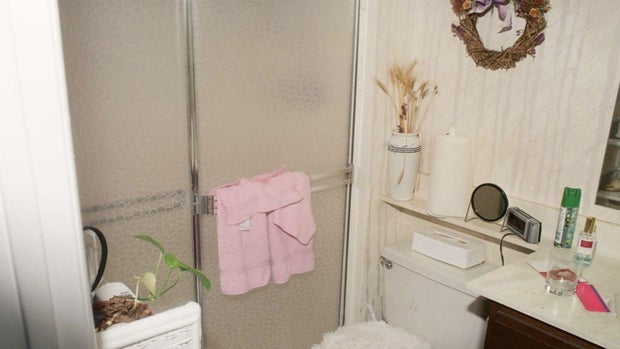
In genetic genealogy, a suspect’s DNA is used to find his or her relatives. Then, investigators search the family trees of these relatives until a potential person of interest is found – someone who would have been the right age and in the right place at the right time to commit the crime. Parabon NanoLabs, a DNA technology company that often works with law enforcement, didn’t have high hopes of solving Robin’s case using this technique because the matches in the database were so far off.
“Parabon gave us a solvency rating of zero on this deal,” Wallace said.
Liz, a volunteer with the Fairfax County Police Department, who asked that her last name not be used, figured she would try anyway. The process proved difficult. “I was ready to give up a few times,” Liz told “48 Hours.” “But I kept thinking, well, I’ll just finish this or just do one more thing.”
After three years of doing one more thing, Liz found a possible suspect. He had lived in Virginia in 1994 and would have been about the age required to commit the murder. His name was Stephan Smerk.
“I didn’t have much hope at the time,” Wallace said. “I was just looking at this guy’s background. I think there is no way.”
Smerk had a completely clean record, without even a speeding ticket. He worked as a computer programmer in suburban Niskayuna.
Even though they had doubts, Detectives Melissa Wallace and Jon Long made the trip to Niskayuna to talk to Smerk. Their goal was to get his DNA, to see if he was related to the person who left his DNA at the crime scene – or if he was that person.
“He comes to the door immediately,” Wallace said. “All we said was that we are detectives from Fairfax County, Virginia, and we are investigating a cold case from the 1990s.”
Smerk, detectives say, had no reaction. “Stone faced,” Long said. Smerk gave his DNA voluntarily, and Wallace and Long returned to their hotel. Then Wallace got this call.
“I was panicked,” Wallace said. “I run towards [Long’s] room, while I’m still on the phone, and I knock on his door, and he comes to the door, like, what’s the problem? I’m like, we have to go to the police station.”
When they met Smerk at the Niskayuna Police Department, officers had him arrested and he was ready to talk. Wallace and Long sat him in an interrogation room and, without much prompting, Smerk confessed to the murder of Robin Warr Lawrence. He had gone to Robin’s house that night in 1994, he told them, for no reason other than wanting to kill someone.
“I knew I was going to kill someone,” Smerk told detectives. “I didn’t know who I was going to kill.” At the time, Smerk was in the military and stationed at a nearby base. He knew Robin Warr Lawrence’s neighborhood because a friend had stayed there. He said he had no idea who lived in Robin’s house.
“There could have been 50 people in that house. I don’t know. They could have all had guns and shot me. I didn’t even think about it.” All Smerk thought about, he told detectives, was killing. He said he had compulsions he couldn’t control.
“I honestly believe that without my wife and children, I would probably be a serial killer,” Smerk said. “I’m a serial killer who’s only been killed once.”
Fairfax County Police Department 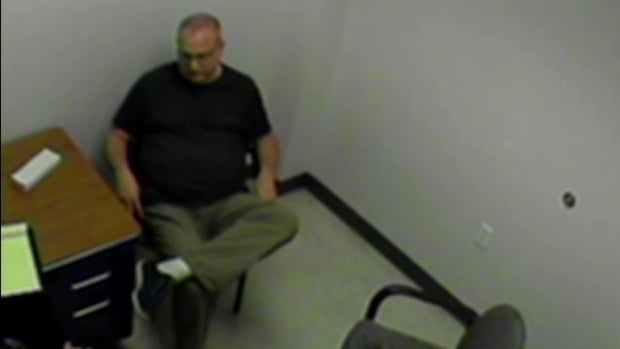
“It’s such a shocking statement,” Wallace told “48 Hours.” “It doesn’t make any sense. You know, if you’re a serial killer, you don’t kill just once. But, on the other hand, he was very frank and open and honest throughout the interview. So it could be that he only killed one person.”
Is it possible for someone with the impulses of a serial killer to kill just once? Mary Ellen O’Toole, a former FBI profiler, says it can happen.
“We have learned over the years with cases like BTK and the Golden State Killer and other cases where they stop,” she explained. “The compulsions don’t go away…they tell us they redirect them. They put him in a different activity. So this activity may be something less than murder, but it may involve, for example, voyeuristic behavior, autoerotic behavior… but you don’t just shut off those urges. Something has to replace them.”
Smerk has had no incidents to his credit. O’Toole says it’s possible he never committed another crime, but she doubts the ideas in his head are gone. She said she would like to know more about his ideas to determine whether he could pose a threat in the future.
“This idea that actually led to the murder in the first place, that would trouble me until I knew a lot more.
In his interview, Smerk expressed no remorse for what he had done. When asked if he had anything to say to Robin’s family, he responded, “How can I say this? I know you’re recording… I don’t feel anything for the family. … I feel bad for doing it because I knew that one day my personal freedom would be affected.”
Smerk pleaded guilty and was sentenced to 70 years in prison. He will be eligible for parole in 2037, when he turns 65. Robin’s family says they are happy with this closure as long as Smerk spends the rest of his life behind bars, but the consequences of his actions will never leave them.
“It helped to know that someone was found and held accountable,” Warr Cowans said in his statement to the judge at Smerk’s sentencing, “but it didn’t help to know what he did to [Robin] and how much she suffered…it doesn’t help and it doesn’t bring her back. She would have been in our lives for the last thirty years. But that was taken away from us. »
She told “48 Hours” that for a long time she lived in fear, not knowing who had committed this horrible crime.
“I was actually scared at home, in my bed,” she said. “Thinking about someone who comes from nowhere could appear from anywhere and kill you in your house…It’s just a scary thought that you’re not safe anywhere.”
“It’s scary,” Long repeated. “From a community perspective, it’s like your worst nightmare. He’s the reason you tell your loved ones to make sure your doors are locked at night. He’s the bogeyman.”


