Sir David Attenborough backs bid to buy Rothbury Estate


Lake EvieNorth East and Cumbria

 The Wildlife Fund/PA
Sir David Attenborough has defended a bid by conservationists to raise £30 million to buy the entirety of a vast highland estate.
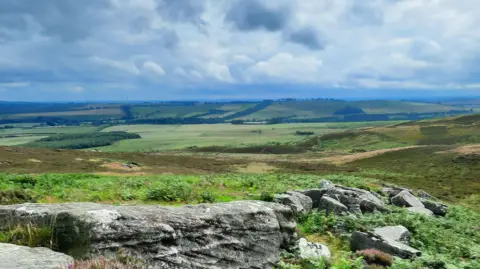
The Wildlife Trusts and Northumberland Wildlife Trust are trying to complete the purchase of the Rothbury Estate, a 15 square mile (38.8 square km) expanse of former heath, woodland and grouse farmland, with plans to boost wildlife, restore peatlands and promote nature-friendly farming.
With a year left to raise the £30 million needed to secure the entire estate or risk it being dismantled and sold, Sir David urged people to support the bid.
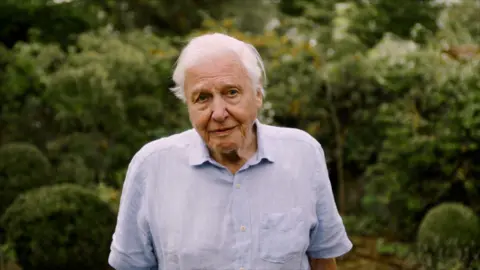
In a video, the naturalist and broadcaster said time is running out to save the Rothbury Estate.
 John Millard
It is the largest area of land put up for sale in England in decades and is at the heart of what nature experts believe is a 40-mile “wilderness” corridor, stretching from the coast to Kielder and the Scottish border, and including the Simonside Hills.
Who owns the Rothbury Estate?
Rothbury Estate was owned by the Duke of Northumberland’s youngest son, Lord Max Percy, and had been in the family for around 700 years.
The partnership between Northumberland Wildlife Trust and Wildlife Trusts has been given two years in October 2024 to raise the £30 million needed to purchase the entire estate.
 Wildlife Trusts
Sir David said: “People know and love the Simonside Hills that rise here, they walk the ridges and listen to the calls of the curlew, they watch for red squirrels and admire the views while climbing among the rocks.
“They travel its remote paths and marvel at the astonishing rock carvings left by our distant ancestors, who lived here.”
He said the Wildlife Trusts would work with the farmers and local communities who lived and worked in Rothbury to care for the area, breathe new life into its habitats and create a place where people and nature could thrive side by side.
“Please help us make this vision a reality,” he added.
Around £8 million, in donations ranging from £5 million to £5 million, has already been raised, but the race is on to secure the remaining two-thirds. A call for donations was launched online.
 Pierre Cairns
Northumberland Wildlife Trust chief executive Mike Pratt said the purchase was “a unique opportunity” to do something meaningful for nature on a large scale by restoring and protecting habitat and increasing access to the countryside.
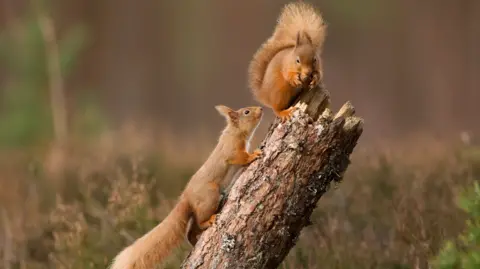
The estate is home to rare wildlife including curlew, mountain bumblebees, lapwings, red squirrels, cuckoos and merlins, as well as endangered Atlantic salmon and eels, but conservationists say nature could be even richer.
Their plans include introducing large herbivores, including ponies, hardy cattle and possibly even bison, to naturally graze the land, and it is hoped that pine martens, beavers and golden eagles could recolonize the landscape.
“A superb canvas”
Speaking to BBC Radio 4’s Today programme, Craig Bennett, CEO of Wildlife Trusts, said the Rothbury estate was the largest land to come on the market in England in more than 30 years – and it was bigger than the City of York.
“That’s why this is such a unique opportunity,” he said.
“We know that the UK is one of the most nature-poor countries in the world and I have had enough in my life of looking at lots of graphs that show nature is going downhill.
“We want to reverse the curve and start bringing nature back on a large scale.”
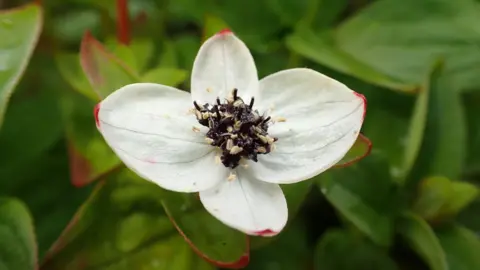 The Wildlife Fund/PA
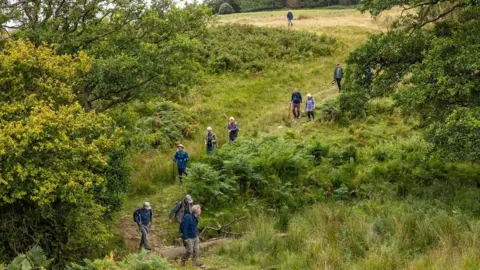
The trusts said local people would benefit from better access to the estate, with the opportunity to build new trails, develop a visitor and education center and create new jobs.
Mr Pratt described the Rothbury estate as being located in an area which could be a “special area for nature recovery” – the only opportunity of this scale in England.
“There is already a fantastic and interesting landscape, but when you look in detail, a lot of the finer biodiversity, like everywhere else, is not there as it should be,” he said.
“This represents a superb canvas for restoring nature to this magnificent landscape.”


