Shedding light on an age-old tradition


Credit: Pixabay/CC0 Public domain
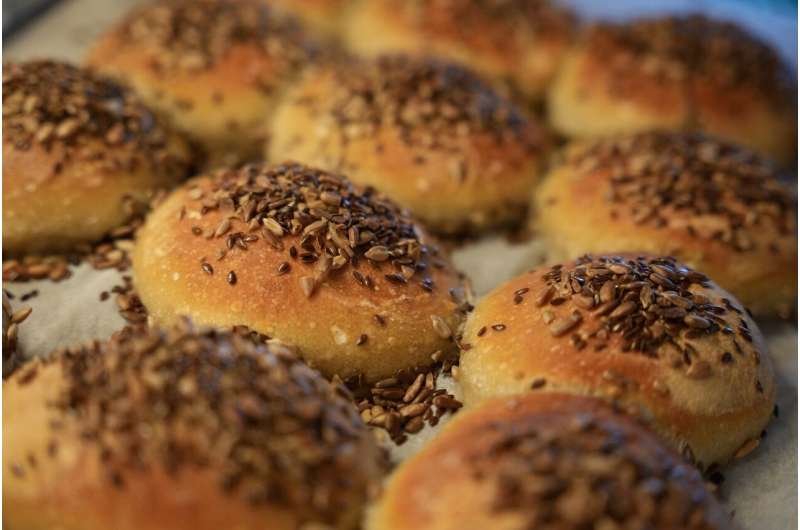
Bread has been a staple food for thousands of years, and in recent times, sourdough bread is making a comeback. It is considered natural, nutritious and full of flavor. But what exactly happens during this complex fermentation process? And how does wheat fiber influence the quality of bread? These questions were at the heart of the doctoral research carried out by Víctor González Alonso, researcher at the Vrije Universiteit Brussel (VUB). He studied the role of arabinoxylans, a specific group of dietary fibers in wheat, during sourdough fermentation.
“Wheat provides a large share of the calories and fiber consumed in Europe,” explains González Alonso, “and arabinoxylans play an important role in this. They help determine the structure and quality of bread.”
Arabinoxylans (AX) come in two forms: water-extractable (WE-AX), which have a positive or neutral effect on dough, and non-water-extractable (WU-AX), which can reduce bread quality. Until now, it was unclear how sourdough microorganisms interact with these fibers. González Alonso analyzed the fermentation process of different types of flour, some enriched with additional AX. He monitored microbial communities using advanced DNA techniques and metabolite analyses.
“We observed that sourdoughs transform into stable microbial ecosystems, with lactic acid bacteria and yeasts in a complex balance,” he explains. “Higher fiber content did little to change this process, although we clearly demonstrated that sourdough fermentation converts some WE-AX to WU-AX.”
Strikingly, this degradation is not primarily caused by the bacteria themselves, but rather by enzymes already present in wheat, which become activated in an acidic environment. As a result, fiber molecules become smaller, which can affect the digestibility and texture of the bread. Additionally, some bacteria produce interesting flavor compounds: Lactococcus lactis creates buttery flavors, while Limosilactobacillus fermentum generates sugar alcohols that can give bread a subtly sweeter note.
Research did not remain confined to the laboratory. On a pilot scale, real bread was baked with high AX wheat flour. The result: sourdough breads that are not only more nutritious, but also offer new dimensions of flavor.
“Sourdough remains a fascinating interaction between biology and craft,” concludes González Alonso. “And our research shows that sourdough fermentation influences wheat fiber to a greater extent than previously thought.”
More information:
Thesis: cris.vub.be/ws/portalfiles/por … lonso_PhD_thesis.pdf
Provided by the Free University of Brussels
Quote: What wheat fibers do in sourdough bread: Shedding light on an age-old tradition (October 30, 2025) retrieved October 30, 2025 from https://phys.org/news/2025-10-wheat-fibers-sourdough-bread-age.html
This document is subject to copyright. Except for fair use for private study or research purposes, no part may be reproduced without written permission. The content is provided for informational purposes only.


