Giant pumpkin growers face off for world gourd domination


The pumpkin’s name was Muggle and it weighed as much as a bull elk. Weighing 2,819 pounds and measuring over 21 feet in circumference, this enormous gourd claimed the dual titles of “heaviest pumpkin” and “largest pumpkin by circumference” in the world. Guinness Book of World Records on October 4, 2025.
For British twins Ian and Stuart Paton, it was a hard-won victory 51 years in the making. “When we were 13, we were given seeds,” says Ian Paton. “One of them grew into a 54-pound pumpkin and that was it. Once you grow one, you get pumpkin disease.”
Several of the twins’ pumpkins, many of which are named after Harry Potter characters like Hagrid have grown painfully close over the years. In 2022, they took the title of the UK’s heaviest pumpkin – an honor, sure, but not quite comparable to beating the Americans for world pumpkin domination. You’d think that decades of near misses would permanently deter anyone from playing the giant pumpkin. Yet the Patons never considered stopping. Even now, even though Stuart has announced he will retire after this year, Ian plans to continue.
“I think it’s just their size: these objects are the size of a small car,” he says. “It’s like James and the Giant Peach. You plant the seed and you produce a monster.”
Today, “pumpkin disease” is a global scourge, although its roots are very American. In 1992, the Great Pumpkin Commonwealth was founded in Indiana as the governing body for the world of giant fruits and vegetables. If pumpkins are their reason for being, they also preside over watermelons, tomatoes and long squash. Today, he oversees more than 70 officially sanctioned giant pumpkin weigh-off sites, in countries as far afield as South Africa, Japan and Australia. The competition is fierce, the stakes high and often lucrative. But there’s real science behind growing unusually sized squash, and a little bit of luck, too.
A Brief History of Giant Pumpkins
Growers fighting over giant vegetables is nothing new. The Western Alaska State Fair has been holding monster cabbage weigh-offs since the 1920s. The Half Moon Bay Pumpkin Festival competition, the ultimate crown in the world of giant pumpkins, began in 1974. At the time, the champion weighed a paltry 132 pounds, a figure that has grown exponentially since.
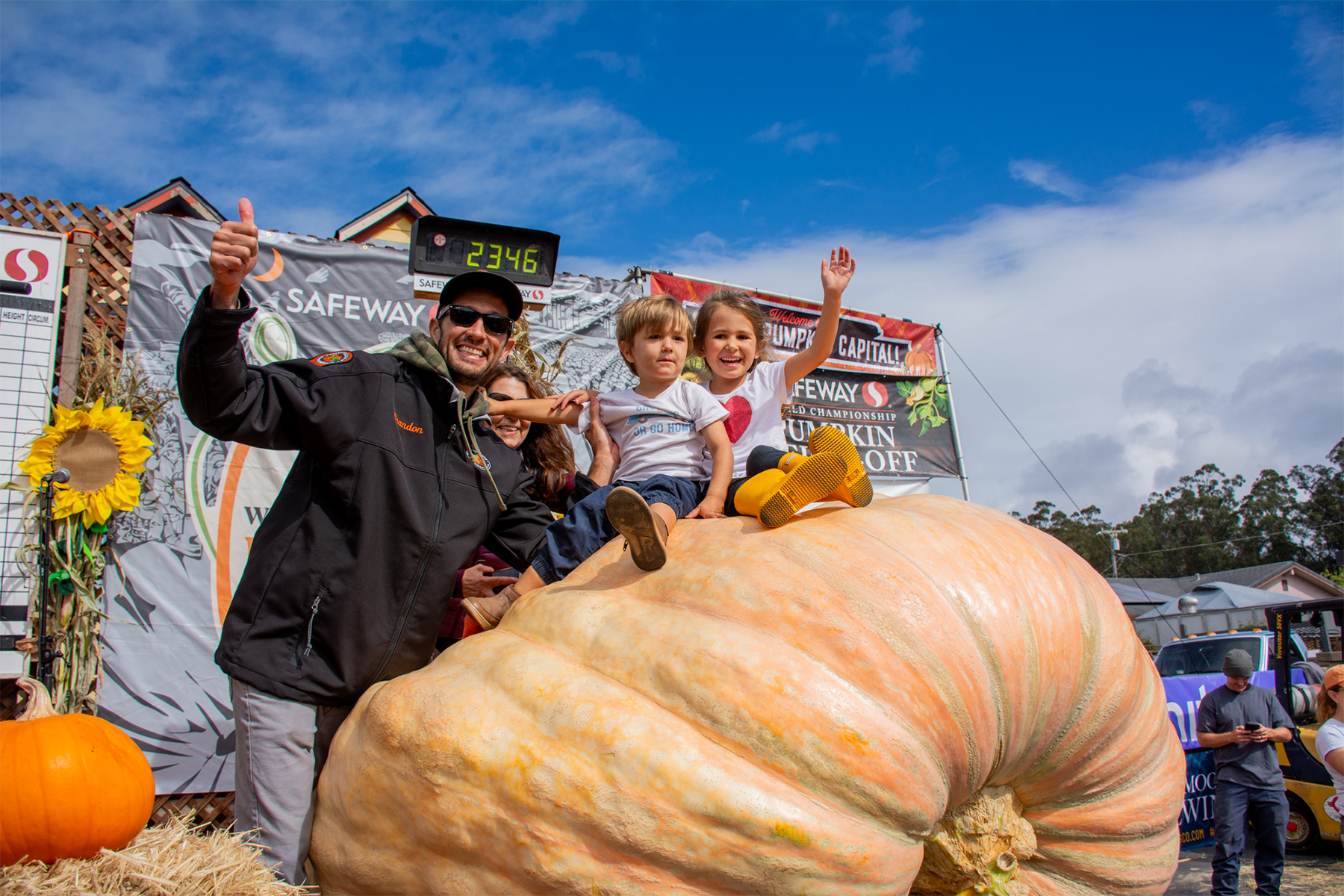
“At one point, no one thought we would ever have a one-ton pumpkin, but we got there and we’re going beyond,” says Steve Reiners, a professor in the School of Integrative Plant Sciences at Cornell AgriTech. In 2012, Ron Wallace of Rhode Island broke pumpkin’s glass ceiling with a specimen weighing 2,009 pounds. Since then, pumpkins have grown to Brobdingnagian proportions, with the 3,000-pound threshold gradually approaching.
“I read a few years ago that an engineer estimated it could reach almost 20,000 pounds before collapsing in on itself,” Reiner says. The exterior of a giant pumpkin is often a foot thick and tough enough that you need to use a chainsaw to cut through it. “I think what limits us now is the season. You only have a short time to grow this.”
Muggle, the Paton twins’ pumpkin, grew from a seed to the size of Cinderella’s carriage in just 131 days.
It all starts with a seed
As with many world records before it, the Patons’ prize-winning pumpkin was an Atlantic giant, a variety of Cucurbita maxima first developed in the 1970s. The seeds of these giants are only slightly larger than those of a regular Halloween pumpkin and grow at alarming rates. Once the plants are started, the vines spread a foot per day in all directions. From the start, the grower must choose his fighter from among the baby pumpkins on the vine. By eliminating the smallest ones, they force the plant to concentrate all its energy on just one.
“Our pumpkins can weigh 70 pounds a day, so 700 pounds in 10 days,” Paton says proudly, then slyly adds, “People say, what do you feed them and I say, ‘A little kid every day!’ » »
All joking aside, pumpkin growers feed these monstrosities an alarming amount of water – in the case of the Patons’ pumpkins, about 130 gallons per day. “They’re thirsty,” Paton said. “They no longer need fertilizer [per square foot] than your normal tomato plant – just swollen, since it’s about 1,200 times your tomato plant.
Related Hobby Stories
While growing giant pumpkins is certainly an art, champions insist there are no quick fixes or secrets. Travis Gienger, a horticulture professor at Anoka Technical College in Minnesota, attributes his success to genetics, patience and careful plant management techniques. Each year, he carefully hand-pollinates his plants to combine the genes of the large-girth pumpkin with a pumpkin with an exceptionally thick shell.
“You need a thick shell to win,” Gienger says, citing the fact that champions are usually ranked based on weight. He would know. A four-time winner of the Half Moon Bay Pumpkin Festival competition, Gienger set the North American record in 2022. In 2023, his 2,749-pound goliath nicknamed Michael Jordan set the previous world record.
Like the Patons, Gienger was obsessed most of his life. “My dad raised little pumpkins, say, about 100 pounds, which we put in a wheelbarrow when we were kids,” he says. “Then I went to the state fair and saw some big ones, and I thought, ‘I wonder if I can do that.’ Nearly three decades later, I had the world record.
Glory and wealth of the gourd
The path to pumpkin fame and fortune is strewn with pitfalls. This year, a single, small hole on the side of Gienger’s potential entrance allowed air to enter the main cavity. The whole gourd has rotted. “There are many factors that are out of your control,” says Gienger. “The weather, obviously, is the biggest problem. If the rain smokes us, it’s not good. If we get too hot or too cold, too cold is usually the problem here. Hail storms, that’s your enemy.”
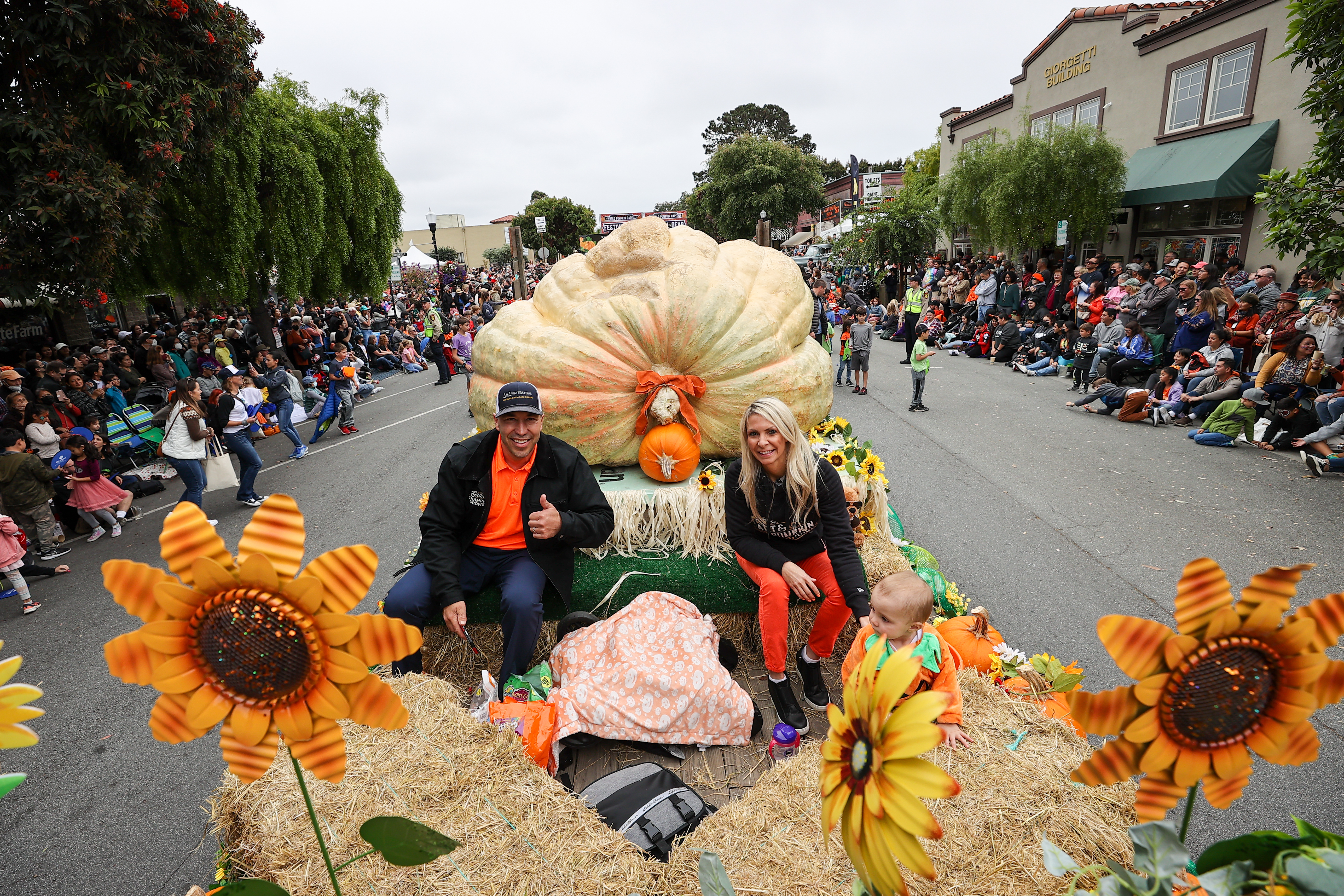
Even once pumpkins mature, there are still hurdles to overcome. Simply hoisting a fruit weighing more than 2,000 pounds requires a special harness. Last year, Gienger drove his winning pumpkin more than 2,000 miles in 35 hours to California for the weigh-in. After the competition, it had to travel to New York, where it took three producers five days to dismantle it.
But it was all worth it. A single seed of Michael Jordan costs $349. Gienger also won $30,000, plus a weekend at the Ritz-Carlton in Half Moon Bay. “It’s a very good deal,” he said. “You get a coat and an engraved ring. And they put you on a pumpkin float for the big parade.”
For most producers, the pride of winning far outweighs the money. As Paton points out, just growing these pumpkins costs a small fortune. “We call it the friendliest sport in the world, because we all help each other,” says Paton. “Ultimately, your competition is yourself. A battle of wits against Mother Nature.”
For decades, popular science has highlighted the work of amateurs. If you or someone you know is a DIYer working on a project, we’d love an introduction. Fill this form and tell us more.

House of the Future Prize 2025


