China solves ‘century-old problem’ with new analog chip that is 1,000 times faster than high-end Nvidia GPUs


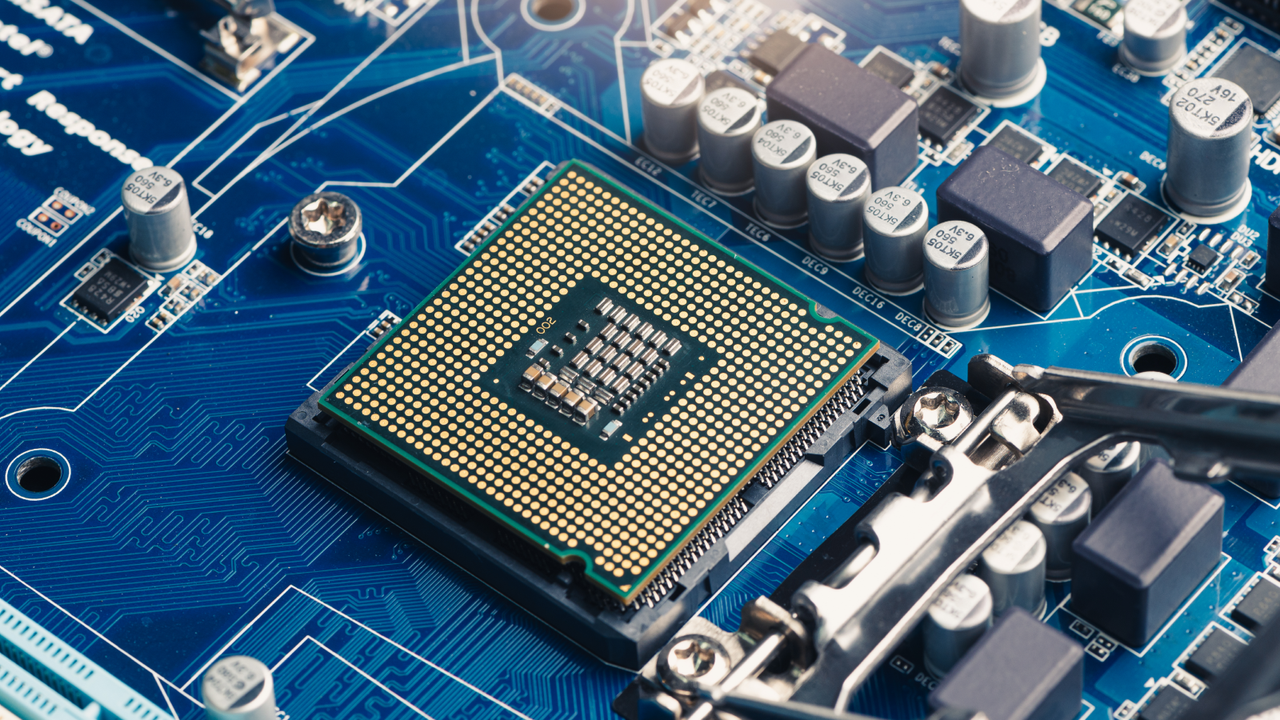
Chinese scientists have developed a new chip, with a twist: it is analog, meaning it performs calculations on its own physical circuits rather than via the binary 1s and 0s of standard digital processors.
Additionally, its creators claim that the new chip is capable of outperforming high-end graphics processing units (GPUs) from Nvidia and AMD by up to 1,000 times.
When used to solve complex communications problems, including matrix inversion problems used in massive multiple-input, multiple-output (MIMO) systems (a wireless technology system), the chip matches the precision of standard digital processors while consuming approximately 100 times less power.
By making adjustments, the researchers said the device then outperformed high-end GPUs like the Nvidia H100 and AMD Vega 20 by up to 1,000 times. Both chips are major players in training AI models; Nvidia’s H100, for example, is the most recent version of the A100 graphics cards, which OpenAI used to train ChatGPT.
The new device is built from tables of resistive RAM (RRAM) that store and process data by adjusting the ease with which electricity flows through each cell.
Unlike digital processors that calculate in binary 1s and 0s, the analog design processes information as direct electrical currents through its array of RRAM cells. By processing data directly within its own hardware, the chip avoids the energy-intensive task of shuttling between itself and an external memory source.
“With the rise of applications using large amounts of data, this creates a challenge for digital computers, especially as scaling traditional devices becomes increasingly difficult,” the researchers said in the study. “Benchmarking shows that our analog computing approach could deliver 1,000 times higher throughput and 100 times higher power efficiency than state-of-the-art digital processors, for the same accuracy.”
Old technology, new tricks
Analog computing is not new, quite the contrary. The Antikythera Mechanism, discovered off the coast of Greece in 1901, it is estimated to have been built over 2,000 years ago. It used interlocking gears to perform calculations.
For most moderns computer historyHowever, analog technology has been considered an impractical alternative to digital processors. This is because analog systems rely on continuous physical signals to process information, for example voltage or voltage. electric current. These are much more difficult to control precisely than the two stable states (1 and 0) that digital computers must work with.
Where analog systems excel is in speed and efficiency. Because they don’t need to break down calculations into long strings of binary code – but represent them as physical operations on the chip’s circuitry – analog chips can handle large volumes of information simultaneously while using much less power.
This becomes particularly important in data- and power-intensive applications like AI, where digital processors face limits on the amount of information they can process sequentially, as well as future 6G communications — where networks will have to process huge volumes of overlapping wireless signals in real time.
Researchers said recent advances in memory hardware could make analog computing viable again. The team configured the chip’s RRAM cells into two circuits: one that provided a fast but approximate calculation, and a second that refined and refined the result over subsequent iterations until it resulted in a more precise number.
By configuring the chip in this way, the team was able to combine the speed of analog computing with the precision normally associated with digital processing. Importantly, the chip was manufactured using a commercial production process, meaning it could potentially be mass-produced.
Future improvements to the chip’s circuitry could improve its performance even further, the researchers said. Their next goal is to build larger, fully integrated chips that can handle more complex problems at faster speeds.


