Rare footage shows sucker fish as they whale-surf in the ocean’s wildest joyride

WELLINGTON, New Zealand (AP) — There are easier ways to cross an ocean, but few are as sleek and stylish as the Remora’s whale surf ride.
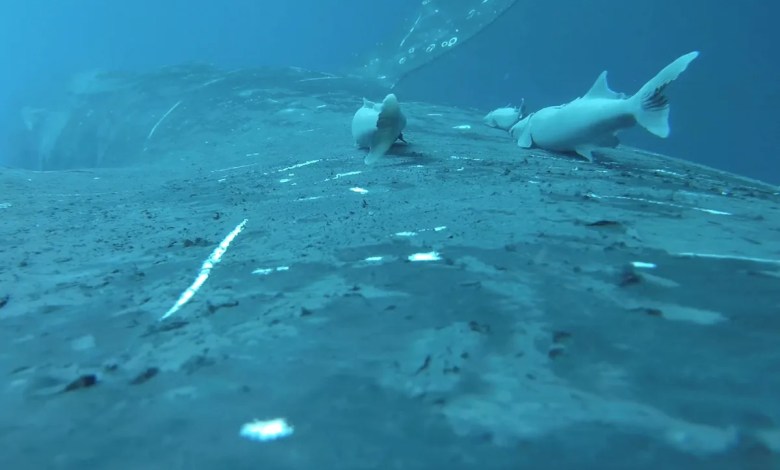
Scientists tracking humpback whales off the coast of Australia have captured rare footage showing broods of free-ranging fish racing away from their host in what looks like a high-speed game of chicken, just moments before the whale breached.
As the humpback whale dives back below the surface, the remoras, also known as sucker fish, return to the whale, making their landings with the timing and precision of Olympic gymnasts. It’s an elegant job for a hitchhiking fish that lives upside down and survives on flakes of dead skin.
Remora australis spend their lives aboard whales or other large marine mammals, which they ride like giant cruise ships, breeding and feeding across stretches of ocean. The species has an adhesive plate on its head that helps create a sort of vacuum seal, allowing the fish to grab a whale and hang on for the ride.
On whale cameras, sticky fish steal the show
The marine scientist who recorded the accidental close-ups of the remora whales’ high-speed surfing had placed suction cup cameras on humpback whales during their annual migration from Antarctica to the waters off Australia’s Queensland state. Olaf Meynecke had planned to study whale behavior, but his video feeds were regularly filled with dozens of photobombing remoras, which came up in groups of up to 50, clinging to the same places where his cameras were fixed.
“Every time the whale breached and made particularly rapid movements, it seemed like the sucker fish responded very quickly to the movements,” said Meynecke, of Griffith University’s Whale and Climate Research Program. “They knew exactly when to release the whale’s body before it rose above the surface of the water, then returned to the same spot a few seconds later.”
A hitchhiker with good instincts
Remoras are harmless to the 40-ton (44 US ton) ocean giants, feeding on dead whale skin and sea lice in a mutually beneficial arrangement – or at least that’s what scientists say. Meynecke said his images suggested the whales found their parasites annoying.
“We had individuals with large numbers of these remoras and they were continually raping and there were no other whales that they were communicating with,” he said. “It seems like they were just trying to get rid of some of these remoras and they were checking to see if they had fewer after their violation.”
The end of the journey remains a mystery
Australia’s Humpback Highway is a migratory corridor crossed by 40,000 mammals, bringing them closer to the country’s eastern shores for months each year as they move from the icy waters of Antarctica to the balmy seas off the coast of Queensland and back. How long the 10,000 km (6,000 miles) journey taken by the free-loading fish, which only live about two years, remains an enigma, Meynecke said.
“I suspect the majority would probably leave at some point, perhaps to temperate waters, but then where do they go? he said. “Are they finding other species that they can then use as hosts and wait for the humpback whales to return?”
In the absence of whales, sucker fish avoid predators by looking for other large creatures to latch onto, including manta rays, dolphins and unlucky divers.
“Much to the chagrin of the divers, of course,” Meynecke said. “It’s not easy to get rid of.”