Powerful earthquake rattles northern Japan, tsunami advisory lifted after 3 hours


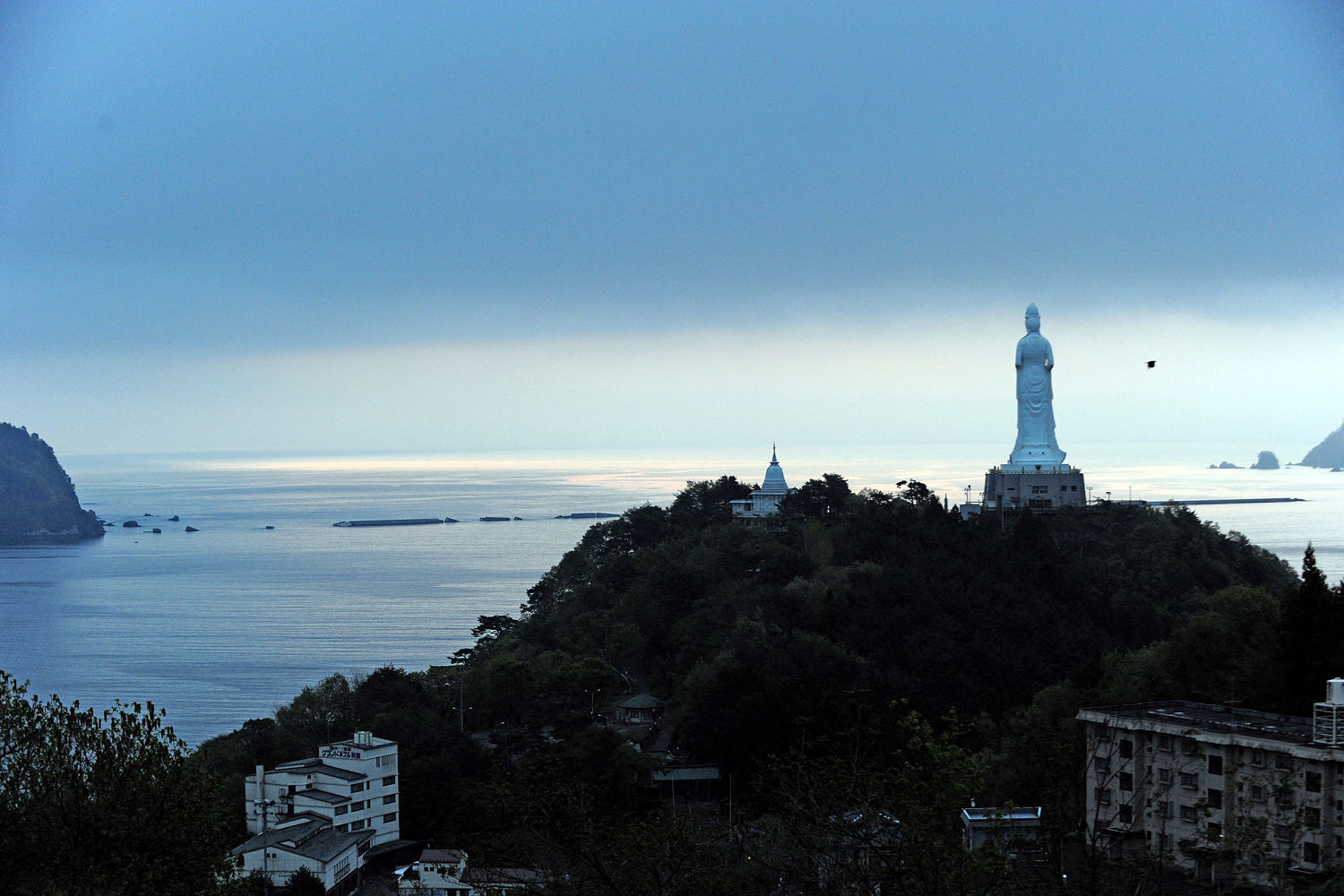
A powerful earthquake shook northern Japan on Sunday evening, followed by several other tremors, according to the Japan Meteorological Agency. A tsunami warning has been issued.
The earthquake, with an enhanced magnitude of 6.9 and a depth of 16 kilometers (10 miles), struck off the coast of Iwate Prefecture at 5:03 p.m. Japan time.
No injuries or damage were immediately reported, nor were there any anomalies at the two nuclear power plants in the region.
The agency issued a tsunami warning of up to 1 meter (3 feet) along the northern coastal region, and later said water could reach up to 3 meters in some places.
A tsunami of about 10 centimeters (4 inches) was detected in the town of Ofunato in Iwate Prefecture, Ominato Port, Miyako and Kamaishi, and then up to 20 centimeters (8 inches) in the coastal area of Kuji. The ensuing tsunami in Ofunato also reached 20 centimeters (8 inches), according to the agency.
Tsunami waves that follow earthquakes can continue for a few hours, hitting the coast several times, and can eventually get worse over time.
While the advisory was in effect, people were warned to stay away from the ocean and coastal areas and were told that more shaking could follow in the region.
The tsunami warning was lifted about three hours after the initial quake, but the weather agency told reporters the area was prone to strong earthquakes for about a week, particularly the next two or three days.
Other earthquakes were recorded in Iwate Prefecture, and the northernmost large island of Hokkaido was also rocked by a series of quakes.
Northeast Japan is prone to earthquakes, including a triple disaster of an earthquake, tsunami and nuclear meltdown at Fukushima, just south of Iwate, in March 2011, which killed nearly 20,000 people, mostly from the tsunami, and severely damaged the Fukushima Daiichi nuclear power plant.
More than a decade later, people are still being displaced from the restricted area. Demonstrations are still held periodically, as recently as Saturday, to protest what is seen as a lack of recognition by authorities of the serious risks associated with nuclear energy.
An agency official, speaking to reporters Sunday evening, said there was no indication the latest quake was directly linked to the 2011 quake, except that the region was generally at risk of major quakes, including another that struck in 1992.
High-speed trains in the region were temporarily delayed, according to rail operator JR East. Japan, located on the Pacific “Ring of Fire,” is one of the most earthquake-prone countries in the world.

:max_bytes(150000):strip_icc()/Health-GettyImages-1259023842-1a722e1843544f5584280fde00b4c944.jpg?w=390&resize=390,220&ssl=1 "What Happens When You Add Magnesium to Your Coffee")


