Europe wants to make space food out of thin air and astronaut pee

When you purchase through links on our articles, Future and its syndication partners may earn a commission.

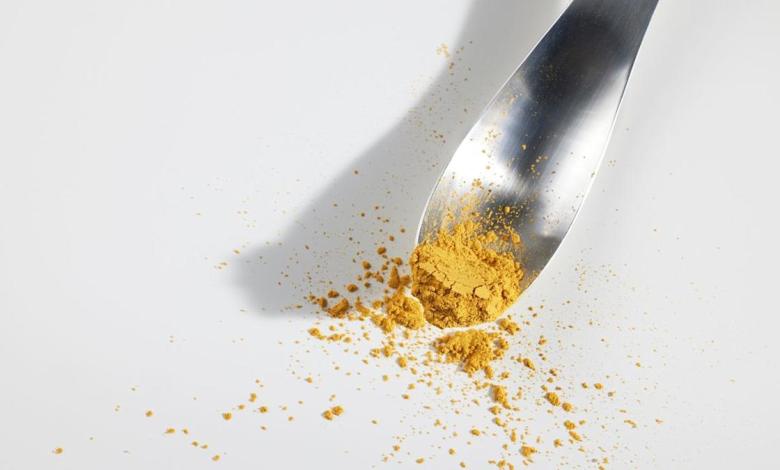
Solein, a protein developed by Finnish company Solar Foods, could become a key food source for astronauts on long-duration missions to the Moon, Mars and beyond. | Credit: Solar Foods
As space agencies have their eyes set on astronaut missions to the Moon, Mars and beyond, many obstacles stand in their way, and one of the biggest is food.
As things currently stand, food is produced on Earththen transported to International Space Station (ISS). Although this is feasible for missions in low earth orbitit is impractical (at best expensive, and at worst technically infeasible) for more distant destinations.
So the European Space Agency (ESA) launched the HOBI-WAN (Hydrogen Oxidizing Bacteria In Weightlessness As a source of Nutrition) project, part of its Terrae Novae exploration program, to test a protein powder called Soleine that can be manufactured in space with very few resources.
“This project aims to develop a key resource that will allow us to improve the autonomy of human spaceflight, the resilience as well as the well-being of our astronauts,” said Angélique Van Ombergen, scientific manager of exploration at ESA, in a press release. statement. “So that human beings can implement long-term missions on the moonor even one day to go there Marchwill require innovative and sustainable solutions to survive with limited supplies. »
Solein could be one of these solutions. This is a highly versatile protein powder from Finnish food technology company Solar Foods, made using microbes, air and electricity, via a gas fermentation process.
While Solar Foods demonstrated the technology on Earthslightly different techniques will need to be used in the space. For example, on Earth, ammonia serves as a source of nitrogen for protein synthesis. But in space, the source would be urea, an organic compound found in urine.
Over the next eight months, Solar Foods will work on the ground with prime contractor OHB System AG to develop the technology needed to test Solein production in space. If successful, Solein production would then be tested on board the ISS.
“The goal of the project is to confirm that our organism thrives in the space environment as it does on earth, and to develop the basis of gas fermentation technology for use in space – something that has never been done before in human history,” Arttu Luukanen, senior vice president of space and defense at Solar Foods, said in a statement.
“The behavior of gases and liquids in microgravity is very different due to the lack of buoyancy, which can significantly affect the transport of nutrients and gases for Solein microbes,” added Luukanen.