Leonids 2025: One of the year’s last meteor showers could peak with bright ‘fireballs’ this week


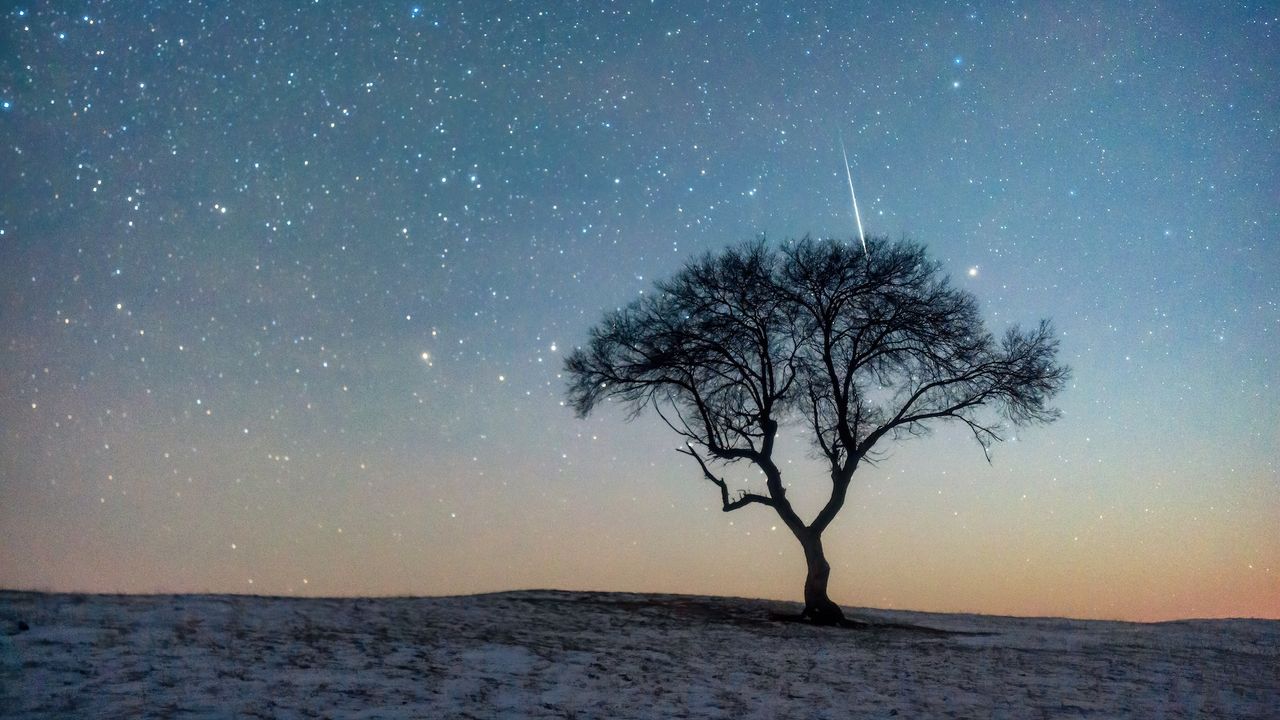
The annual Leonid meteor shower will peak in the early morning Monday (November 17), and if you’re willing to get up early (or stay up late), you could spot up to 15 meteors per hour in a moonless night sky.
The Leonids are active from November 6 to 30, but the nighttime peak – when Earth passes through the densest part of the meteor stream – will occur between midnight and dawn on November 17.
This year’s Leonids offer one of their best viewing windows in recent years, thanks to a nearly moonless night. According to the American Meteor SocietyA waning crescent moon – only 9% illuminated – will rise late in the pre-dawn hours, leaving the main viewing hours clear of moonlight.
Leonid meteors are known for their speed, hitting Earth’s atmosphere at around 44 miles per second (70 kilometers per second). This speed often produces bright meteors, or fireballs, some of which leave persistent trails.
The Leonids are caused by tiny particles from comet 55P/Tempel-Tuttle that burn up in the atmosphere, producing meteors. The comet orbits the sun every 33 years and is expected to return to the inner solar system in 2031.
Historically, the Leonids are known for producing spectacular meteor storms. These rare events, where the frequency exceeded 1,000 meteors per hour, were recorded in 1833, 1866, 1966, 1999, 2001 and 2002. The Leonid meteor shower of 1966 is considered the finest in recorded history; so many meteors were seen in 15 minutes that they seemed to fall like rain, according to NASA. However, no dense debris encounters are expected this year, so a meteor storm is unlikely.
For the best experience, go out between 2 a.m. and dawn on November 17. Find a spot away from city lights, lie down with a wide view of the sky, and give your eyes about 20 minutes to adjust to the darkness.
The Leonids appear to radiate from the constellation Leo, which rises in the eastern sky after midnight. However, meteors can be seen in any part of the sky, and binoculars for stargazing or a telescope can help you spot them. As Leo sits on the celestial equator, this meteor shower can be seen just as easily in both hemispheres.
After the Leonids, the next major meteor shower will be the Geminids, the most prolific meteor shower of the year. During this event, which will peak on December 13 and 14, approximately 140 “shooting stars” per hour could be visible.