Teen designs and builds a robotic hand with only LEGOs


In October, a student demonstrated a robotic hand made entirely from LEGO at the IEEE/RSJ 2025 International Conference on Intelligent Robots and Systems in Hangzhou, China. But Jared Lepora is not in graduate school, at university: he is a teenager.
Nonetheless, research co-authored by the 16-year-old was recently published on arXiv with colleagues including his father Nathan Lepora, professor of robotics and artificial intelligence at the University of Bristol. Jared used LEGO MINDSTORMS, a LEGO robotics kit, to build a LEGO version of SoftHand-A, a 3D-printed anthropomorphic robot hand featured in an earlier study.
“My father is a professor at the Bristol Robotics Laboratory (BRL). He designs robotic systems with complex mechanisms that have many real-world applications,” Jared wrote in his presentation, slides of which were emailed to Popular science. “My goal was to create an educational design that shows professional mechanisms in a simple educational way” and understandable by children.

The hand is a LEGO version of SoftHand-A, a 3D printed anthropomorphic robot hand. CREDIT: University of Bristol/Jared Lepora.
He first designed the hand digitally and it has two motors and four fingers with two tendons each. The most difficult part of the design was passing the tendons around the rotating bearings of the fingers, which allows the joints to bend and the finger to flex or extend when the tendons are pulled. In total, the hand includes more than 100 bearings – components involved in rotation – and Jared even found a way around the fact that, unlike the 3D printed SoftHand-A, the LEGOs don’t have springs.
“In total, this design results in an anthropomorphic hand capable of adaptively grasping a wide range of objects using a simple actuation and control mechanism,” the researchers write in the paper. “Since the hand can be built from LEGO pieces and uses cutting-edge design concepts for robotic hands, it has the potential to educate and inspire children to discover the frontiers of modern robotics.”
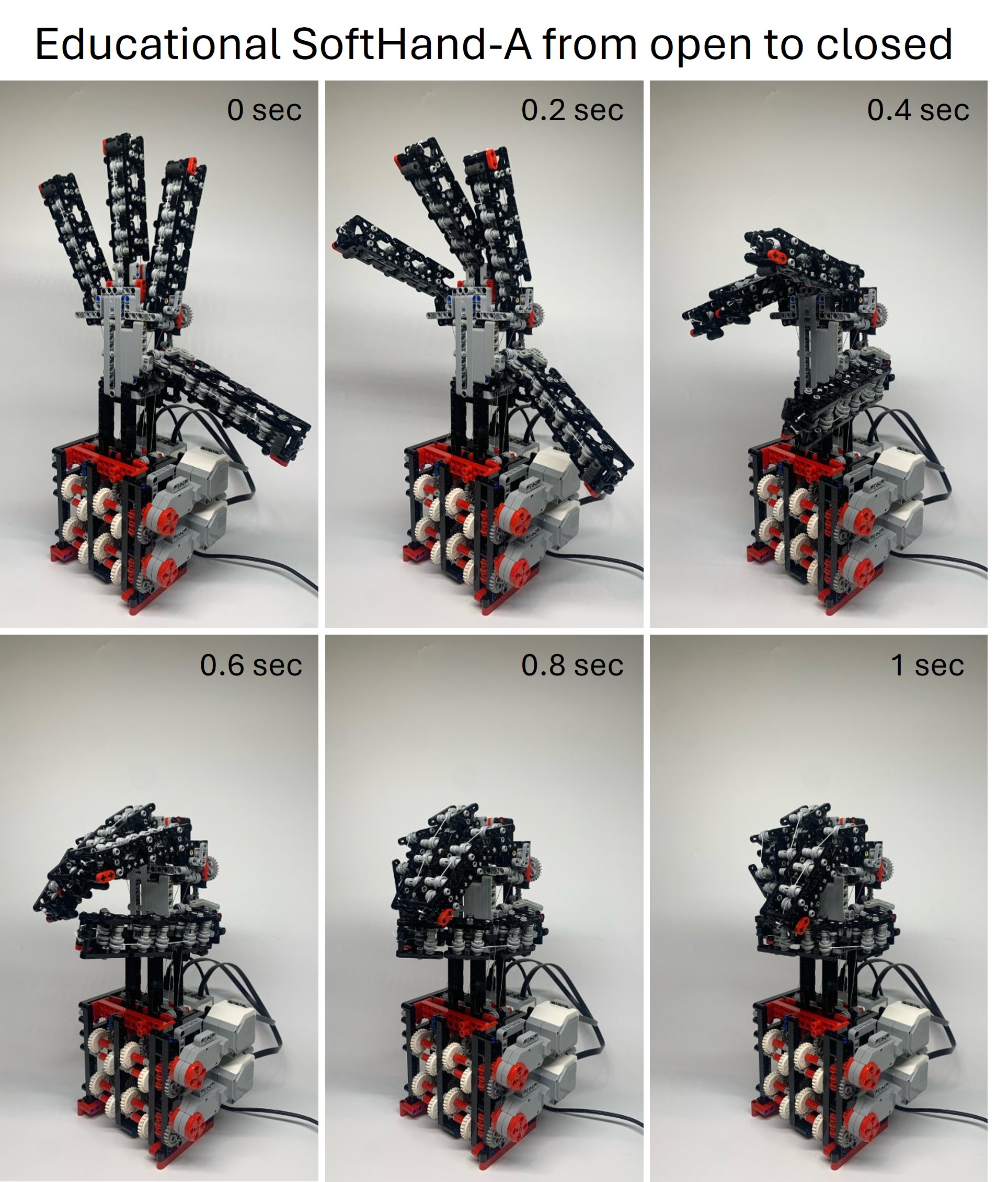
Additionally, Jared claims that the LEGO Hand is as good as the SoftHand-A, as demonstrated in tests on response times, bearing capacity, pushing capacity and closing force. In fact, the tests shown in the presentation show that the LEGO SoftHand-A had slower response times and lower bearing capacity, pushing capacity and closing force, but not significantly so.
“My generation (and the younger ones) is the future or [of] “Robotics, so it’s critical that we understand and be interested in that field,” Jared says. “Building a robot hand with your own hands is a great way to learn about robotics.”

Holiday Gift Guide 2025


