With an upcoming vote in the House, an end to the shutdown is in sight : NPR


Senate Majority Leader John Thune, R-S.D., speaks to reporters as he visits his Capitol Hill office Monday.
Tom Brenner/Getty Images
hide caption
toggle caption
Tom Brenner/Getty Images
On the 41st day of a record government shutdown, the U.S. Senate voted 60-40 to approve a continuing resolution to reopen the government. The measure would fund much of the government through Jan. 30 and provide funding to some agencies through the end of next September.
But the shutdown won’t end right away. The US House of Representatives must also pass legislation, which is not guaranteed, before President Trump can sign it into law.
House leaders have asked lawmakers to return to Washington for a vote as early as Wednesday afternoon.
Seven Democrats and one independent senator voted with nearly all Senate Republicans to approve the stopgap funding bill after a more than month-long standoff that resulted in missed paychecks for millions of federal workers, delayed food aid benefits and disruptions to air travel.
Sen. Rand Paul, R-Ky., was the only Republican to vote no.

The funding package includes language to reverse the Trump administration’s federal employee cuts during the shutdown, protections against further layoffs through the end of January, back pay for federal employees and a trio of appropriations bills, including one that will fully fund the Supplemental Nutrition Assistance Program, or SNAP, through September 30, 2026.
“This is a big victory for the American people, and it shows that the Senate can work,” said Sen. Susan Collins, R-Me.
A deal without Democrats’ health care demands
But the deal does not include an extension of the Affordable Care Act’s health insurance premium subsidies, which are set to expire later this year. Most Democrats refused to vote for a funding measure that did not include concrete steps to preserve the subsidies.
Republican Senate Majority Leader John Thune, R-S.D., said Sunday he would hold a vote by mid-December on a Democratic-picked bill to extend the expiring subsidies. Thune said throughout the shutdown that Republicans would only negotiate subsidies once the government opened.
“There was no guarantee that waiting would give us better results, but there was a guarantee that waiting would impose suffering on more ordinary people,” Senator Tim Kaine, Democrat of Virginia, told NPR.

But the majority of Senate Democrats disagree that it is the best possible deal, doubting that Republicans would agree to extend the subsidies without the pressure of an ongoing shutdown. After Democrats won on election night last week, some senators said it was a mistake to back down.
“A handshake agreement with my Republican colleagues to reopen government and no guarantee of real cost reductions is simply not enough,” Sen. Tammy Baldwin, Democrat of Wisconsin, said before the vote. “The people I work for need more than that. They need affordable health care, not a token vote.”
Over the weekend, a bipartisan group of senators reached an agreement to end the shutdown after holding a series of on-and-off talks over the past few weeks. Sen. Jeanne Shaheen, D-N.H., who helped lead the bipartisan negotiations, told reporters Monday that more than eight members of the caucus initially pledged to support the deal, but some withdrew before the vote.
On the way home
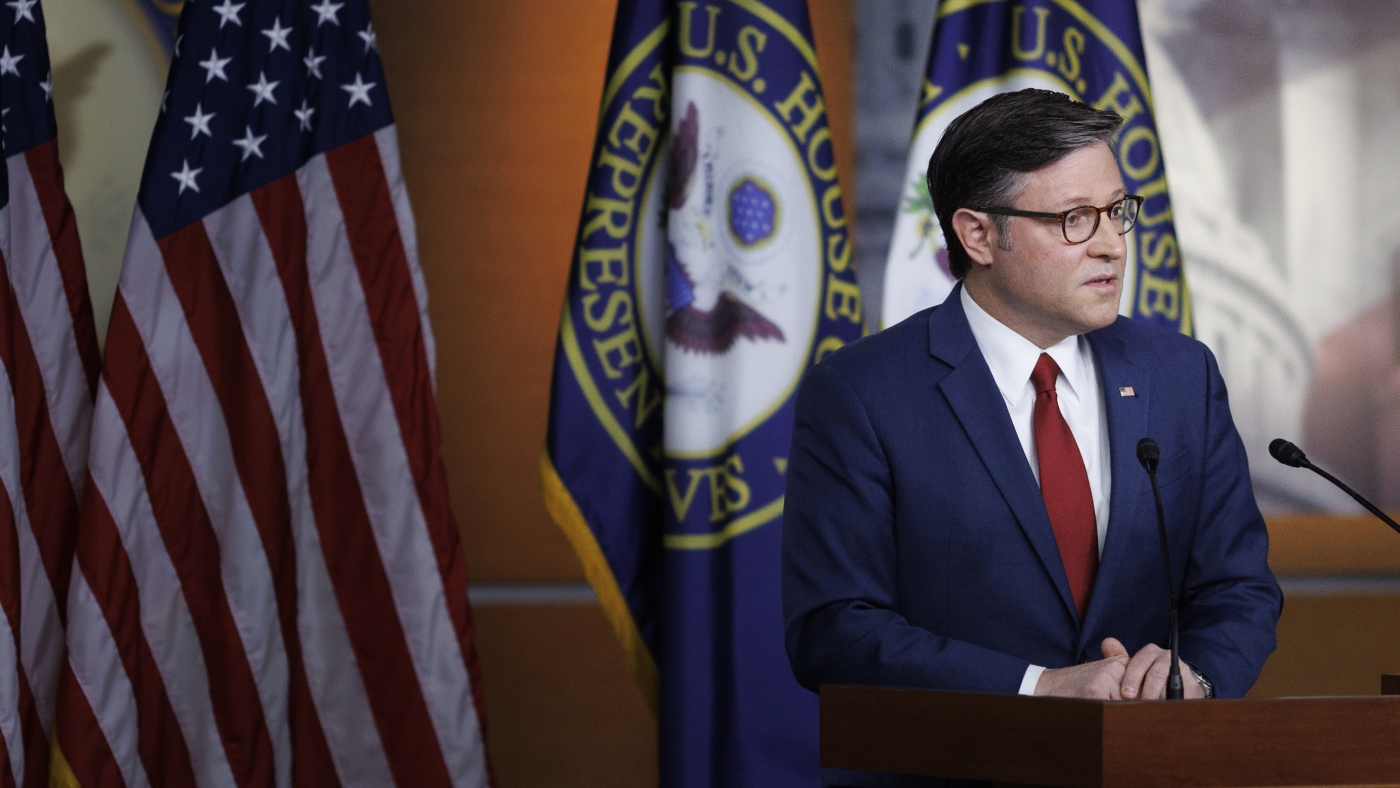
House leaders alerted lawmakers Monday morning that they would have 36 hours’ notice to return to the Capitol to vote. The House has not conducted any formal business since passing its version of a continuing resolution in mid-September. While President Mike Johnson has held near-daily news conferences at the Capitol, many rank-and-file members have not been there in weeks.
“Just as they take that final vote, I will call on all members of the House to return as quickly as possible,” Johnson told reporters Monday and, noting air travel delays related to the shutdown, told members: “You have to start now to return to the Hill.”
Getting the measure through the House might take some pushing. Many Democrats have indicated they will not support the deal, and some hardline Republicans may also be disinclined to vote for it.
But Johnson expressed confidence Monday that the measure could pass and said Trump was ready to sign it.
Upcoming health care debate
Democrats must now propose health care legislation that can gain support from enough Republicans. Some Republicans in the House and Senate have expressed their interest to prevent the Affordable Care Act’s premiums from skyrocketing, but many have also cited the need for reforms such as income capping and fraud prevention.
A few weeks isn’t a lot of time for an overhaul, and people are deciding now whether they’ll keep their insurance plan next year.

“If we want to get a bill that has bipartisan support, we need to address some of these issues,” Shaheen told reporters Monday. “I think the White House is going to engage on this because the president understands, and his pollsters have been very clear, that this is more of a problem for people in red states than for people in blue states. [doesn’t]well, shame on him.
President Johnson, however, told reporters Monday that he would not guarantee a vote on the ACA in the House if a bill passed the Senate.
The public funding situation is also not entirely resolved for the year. The full-year funding measures passed by the Senate include money for agriculture, military construction, veterans affairs and the Legislature. Congress must still pass nine more appropriations bills before the continuing resolution becomes available again at the end of January.
NPR’s Barbara Sprunt and Deirdre Walsh contributed reporting.