The Leonid Meteor Shower Returns This November — How to See It


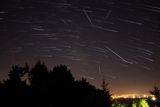
Grab your lawn chair, your sleeping bag, and your cup of hot chocolate, because the Leonid meteor shower, one of the most famous and unpredictable aerial displays, will peak in the early hours of November 17, 2025. Between midnight and dawn, skywatchers could spot 10 to 15 meteors per hour streaking across the sky.
But this shower is not just a pretty showcase. It’s also a cosmic time capsule with a dramatic story.
Learn more: Taurid meteor showers of 2032 and 2036 could bring larger Halloween fireball debris to Earth
Where do Leonid meteor showers come from?
The Leonids were born from the periodic comet Tempel-Tuttle, which orbits the Sun every 33 years. Every time the comet approaches our star, it releases icy debris. When Earth passes through this dusty trail, these tiny fragments burn up in our atmosphere and create bright flashes that we call meteors.
As EarthSky explains, the shower’s name comes from its apparent point of origin, or “radiant,” in the constellation Leo. A common misconception is that you have to find the radiant in the sky to benefit from a meteor shower. In reality, the meteor shower will appear all over the sky and appear brighter the further you get from the radiant.
The Leonids are also among the fastest meteors, racing at speeds of up to 44 miles per second. They are often bright, colorful and sometimes emit dazzling fireballs or meteors that travel through the atmosphere and leave long trails of light near the horizon.
How to see the Leonids
To get the best view, head to a dark location and away from city lights. The ideal viewing window begins after midnight, when the radiant rises higher in the sky. For viewing positions, NASA suggests the best position is to lie on your back with your feet pointing east. Also try to be patient! Give your eyes about 30 minutes to adjust to the darkness, as you will start to see more meteors as your night vision comes into play.
If the moon is up, try to protect yourself from its brightness by placing yourself near a house, a tree or a vehicle.
Why are the Leonids so special?
The Leonids are legendary for a reason. The Leonid meteor storm of 1833 is considered the first major meteoric event in modern times, surprising observers with hundreds of thousands of meteors per hour.
Then came 1966, when the Leonid meteors fell so frequently that they looked like flaming raindrops – a once-in-a-lifetime sight that saw thousands of meteors per minute blaze across the predawn sky.
Even though 2025 won’t bring this kind of storm, the legacy of the Leonids continues to inspire astronomers and casual skywatchers.
Learn more: An asteroid has just passed by Antarctica, becoming the second closest flyby ever recorded
Article sources
Our Discovermagazine.com editors use peer-reviewed research and high-quality sources for our articles, and our editors review the articles for scientific accuracy and editorial standards. See the sources used below for this article:


