Four Lease Sales Planned for Alaska’s Coastal Plain – RedState


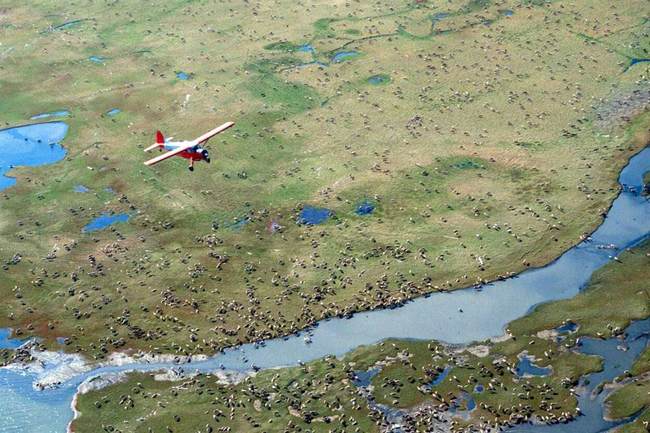
It’s final: On Thursday, Interior Secretary Doug Burgum announced that Alaska’s Arctic National Wildlife Refuge (ANWR) would be the site of at least four oil drilling leases over the next several years. But as is always the case, there may be some opposition.
The Trump administration finalized plans Thursday to open the coastal plain of Alaska’s Arctic National Wildlife Refuge to possible oil and gas drilling, renewing a long-running debate over whether to drill in one of the nation’s environmental gems.
U.S. Interior Secretary Doug Burgum announced the decision Thursday that paves the way for future lease sales in the refuge’s 1.5 million-acre (631,309-hectare) Coastal Plain, an area considered sacred by indigenous Gwich’in people. The plan fulfills commitments by President Donald Trump and congressional Republicans to reopen this portion of the refuge to possible development. Trump’s bill providing tax breaks and spending cuts, passed over the summer, called for at least four lease sales within the refuge over a 10-year period.
The region’s indigenous people do consider this land sacred, but they could also gain many good-paying jobs from the expansion of Arctic oil development. There is another indigenous group that lives in the shelter and has a different opinion; they want jobs.
Leaders of indigenous Gwich’in communities near the refuge consider the coastal plain sacred, emphasizing its importance to the caribou herd they depend on, and oppose drilling there. Leaders of Kaktovik, an Iñupiaq community on the refuge, support drilling and view responsible oil development as key to their region’s economic well-being.
Regardless of these issues, it appears the leases will now move forward.
This is the same area where leases were canceled by the Biden administration, until a federal judge ruled that the administration did not have the authority to cancel the program.
Learn more: Alaskans challenge Biden administration’s ANWR lease cancellations
The United States Geological Survey estimates that there are 7.7 billion barrels of oil under ANWR that are recoverable with current drilling technology. This is another step in opening up the US treasury, thereby trading relatively small areas of land for development, compared to the vast expanse of untouched Grand Terre – in exchange for economic prosperity, including for the communities that live in the region.
This seems to be a win-win.
Learn more: Energy gain: Alaska NPR-A is open for business
Drill, baby, drill: Arctic National Wildlife Refuge now open for drilling
Arrangements for a new road from Cold Bay to King Cove are also progressing. Both colonies are on the Alaska Peninsula, almost where it begins to divide into the Aleutian Islands.
Burgum announced Thursday the conclusion of a land swap deal to build the road that would pass through the Izembek National Wildlife Refuge. King Cove residents have long sought a land connection through the shelter to the Cold Bay All-Weather Airport, seeing it as essential for accessing emergency medical care. Dunleavy and the congressional delegation supported the effort, calling it a matter of life and safety.
It’s an exciting time to be an Alaskan. The drilling and mining efforts that are underway will bring many jobs to the region, like a rising tide that will lift all of Alaska’s boats. The Big Country could well be on the verge of a new boom, and unlike the great gold rushes, this one will experience much less diphtheria.
Editor’s Note: President Trump is leading America into the ‘gilded age’ as Democrats desperately try to stop him.
Help us continue reporting on President Trump’s successes. Join RedState VIP and use promo code STRUGGLE to benefit from 60% off your membership.