I have a new gaming obsession in Riftbound: the League of Legends spinoff I’ve been waiting for


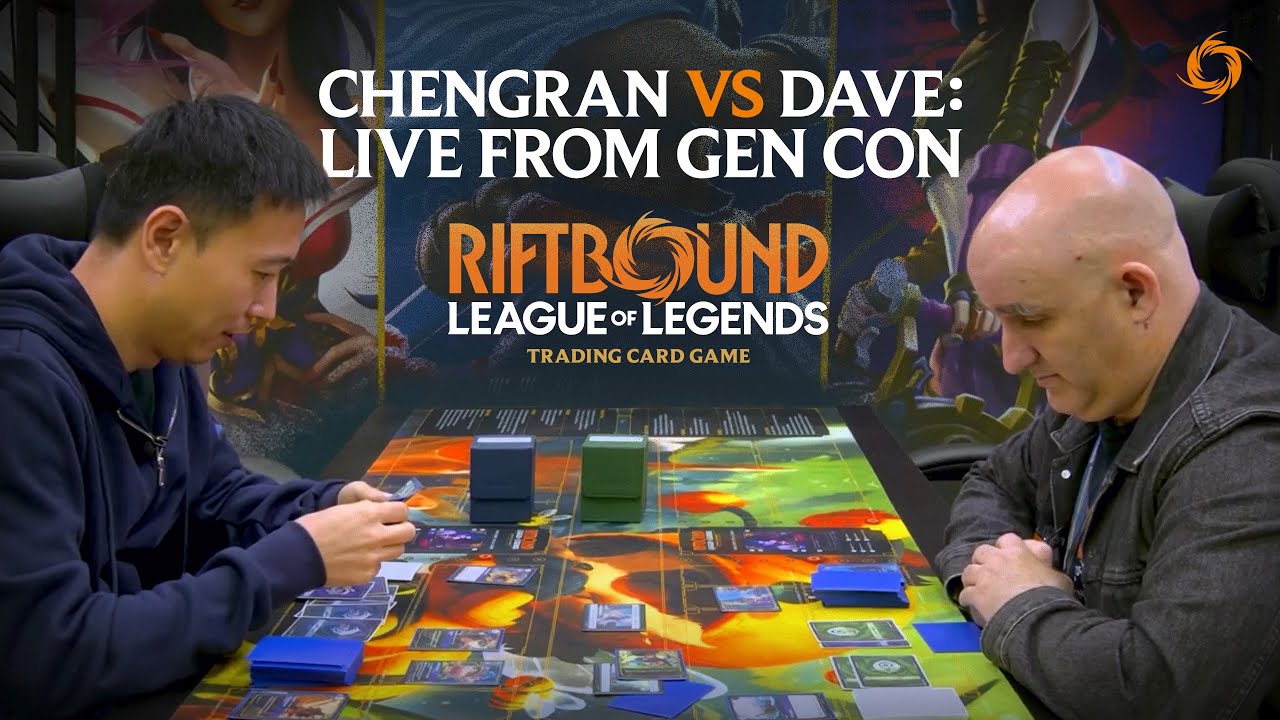
As someone who has tried and failed many times to stay true to League of Legends, I know how inaccessible Summoner’s Rift can seem, but that has recently changed thanks to Linked to the rift. For the past week, since its launch, I’ve been playing it as much as I can, and Dave Guskin (Linked to the rift‘s Game Director) is right – this TCG is one of the most accessible I’ve played in a while, and it will have players hooked.
Whether you’re a long-time TCG fan like me, love League of Legends or only know the characters through Arcane, or are new to League or card games, there’s something utterly delightful here with Riftbound.
Even my fiancée had a good time when I encouraged (read: bribed) her to play a few games with me – saying, “It’s much better than Magic [The Gathering].” I’m not sure I’ll go that far, but Wizards of the Coast should be careful, their lunch might be eaten soon.
Look on it
Choose your fighter
Linked to the rift is like a delicious pot of ideas when it comes to gameplay.
Just like League of Legends and some popular TCG alternatives (i.e. Flesh and blood And Magic: The Gathering Commander Format), building your deck begins with your choice of Legend – a character from The League extensive list.
This Legend decides which of the two Riftbound Flavors of runes you can use in your deck – these decide which cards you can include and are based on the character’s personality. For example, Jinx is fueled by fury and chaos, while Viktor is concerned with spirit and order. The Legend also has an ability that you can use throughout the game to improve your strategy: Jinx allows you to draw an extra card when your hand is empty (or almost empty), so it pairs well with discard effects.

With this in mind, you build a 40-card deck (with no more than three copies of any one card) that includes at least one Champion unit matching your Legend. This is so they can be your Chosen Champion, a card that sits outside of your deck and that you can play as if it were in your hand (although unlike Magic: The Gathering Commander, if this Champion is killed, it remains in the trash like all other cards).
As of right now, there are 16 pairs of Champion Legends (some Champions like Vi don’t yet have a Legend to pair with), and even though I was only familiar with a handful of them, I’ve already fallen in love with their designs – not just their stunning character artwork, but also the varied playstyles they facilitate.
Among these 16 titles, I’m sure most gamers will find a legend suitable for the type of game they want.
As Guskin explained to me in a conversation we had before Linked to the rift“I think we saw there was an opportunity in creating this card game from the ground up to ensure that people could play the way they wanted.”
He wasn’t just talking about what they were building, but also how they were interacting with the game in the moment, with more action-packed and more relaxed playstyles being perfectly acceptable: “We can design a system that supports a really solid 1v1 competitive format, but also a multiplayer game where maybe someone isn’t involved in combat on a battlefield, there’s no risk of the game ending, and they can go have a snack and come back.

In the Rift
Once you have your deck, how do you play?
Players are in a race to earn eight points, which they do by capturing or holding battlefields. These locations are decided at the start of the game (often with a random element) and each offers a unique effect, such as buffing all units fighting there or letting the controller draw bonus cards.
On each of their turns, players will summon units to send onto a battlefield, cast spells that make their units stronger (or disrupt their enemies), and craft equipment that will provide some sort of continued advantage if they are allowed to stay.
They do this using the Runes I mentioned previously.
What’s good Linked to the rift is that your Runes are not like Energy or Lands in some other TCGs in that they are mixed with all your other cards; instead, they have their own deck of 12 cards, and you can put two runes into play on each of your turns – meaning that by the sixth turn, all 12 could be in play.

I say “could be in play” because some powerful cards will not only deplete your resources (“exploit” them if you’re used to the lingo of other card games), they will also require you to recycle runes, that is, return them to the bottom of your deck.
Another confusion compared to the usual TCG formula, the race for eight points presents a particular problem: the last point is special. It can only be won by conquering all battlefields in a turn or by occupying a location (by having a unit there at the start of your turn). Otherwise, when you gain a point, you draw a card instead.
If you’ve ever played a TCG and experienced the pain of drawing too many or too few resources, you’ll know why the Runes deck is an exciting twist on the usual formula – one that puts much more tactical control in the players’ hands.
As for why the last point needs to be special, Dave Guskin explained to me: “It’s a bit like sudden death.
“So actually we didn’t have this rule at first, but we did a lot of playtesting internally at Riot and some externally, and you would play it, it would be really cool and dynamic, and then all of a sudden someone sneaks in for the last point and it was just a very disappointing end to the game.”

He added: “Winning should be that epic moment where a player shows they deserve it, and sneaking up on that last point seemed contrary to what we wanted to build.
“So we came up with the idea of this kind of king of the hill. Either a player proves that he can choose a location and defend himself against anyone who challenges him, or he can demonstrate total military superiority by conquering every battlefield.”
We tested it, and although it made games last a little longer, no one cared because those last few rounds became so exciting.

The disappointing nature of the endings certainly rings true for some of my experiences with other point-based TCGs.
I felt Lorcana for a while, but I eventually fell off because it felt like too many matches were ending without me having enough influence on the outcome – it’s a fantastic game in many ways but I remember several matches where I could see my eventual defeat or victory several rounds in advance, and assuming we both played perfectly, there was nothing my opponent or I could do to change the outcome.
With Linked to the riftWith Guskin’s approach, as I and other players have experienced, it’s possible to see real hard-fought matches in which a player is on the brink of victory for a moment – sometimes achieving a victory, sometimes snatching defeat – and this results in exhilarating gameplay.
A new best TCG?
I like Linked to the rift as you can probably tell from my writing, and I think it’s knocking on the door to becoming an all-time great TCG – we’ll have to see how it develops over the next few expansions, but I have high hopes so far.
It has a low skill level, which makes it easy for people to get to grips with it, even if they are new to it. League or TCGs, but also plenty of tactical meat to chew on if that’s what you’re looking for.
I’ve already signed up for a few Nexus Nights at my local game stores, and as I write this I’m counting down the days until the next one so I can play more.

Unfortunately, the game is so popular that the card stock is running out, but restocks and better availability have been promised by Riot to arrive soon (“between now and the end of the year”).
When these restocks arrive, be sure to pick up the Proving Ground boxed set as soon as possible – it’s essentially a board game with everything that allows two to four players to play a game with some pretty strong pre-constructed decks that make for some exciting matches. This is easily the best way to try Linked to the riftand once you play it, I’m sure it will hook you like I did.
Follow TechRadar on Google News And add us as your favorite source to get our news, reviews and expert opinions in your feeds. Make sure to click the Follow button!
And of course you can too follow TechRadar on TikTok for news, reviews, unboxings in video form and receive regular updates from us on WhatsApp Also.


