Advice for PCOS has not changed for 30 years, says Essex woman



 Provided
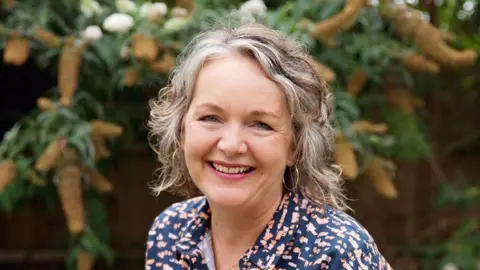
When Alex Allan was diagnosed with polycystic ovary syndrome (PCOS) at the age of 22, her GP told her the symptoms could not be managed and would return when she wanted to have a baby. Thirty years later, she says women still receive the same advice.
PCOS is a hormonal disorder in which the ovaries produce large amounts of male sex hormones that interfere with the development and release of eggs, which can affect periods and fertility.
Ms Allan, 51, is from Leigh-on-Sea, Essex, and works as a nutritionist.
She says her PCOS symptoms included hair loss, facial hair, feeling weak and weight gain.
“When I get calls with young women and they are given the same advice as 30 years ago, [it] It makes me so sad that we haven’t moved forward,” she said.
One in eight women in the UK are affected by PCOS, according to the charity Verity.
At the time of her diagnosis, Ms Allan was living in London and working in the children’s book industry.
When she visited her GP about her condition, she said she felt blamed for her symptoms because of her weight.
“There’s nothing we can do. Take the pill and come back to me when you want to have a baby,” she told him.
After that appointment, she says the GP provided no further information.
“One of the symptoms of PCOS can be fertility, but not all women have it and not everyone with PCOS wants to have a baby,” she says.
The current mother of two said she has no plans to have children at 22.
“Once their diagnosis is confirmed, [patients with PCOS] are generally offered the contraceptive pill.
“It’s not really about getting to the root cause of your condition.
“I don’t think it should be a standard – a one-size-fits-all approach,” she says.
Back when the internet was still in its infancy, Ms Allan said she turned to diet groups to manage her symptoms, knowing they were due to her weight.
Verity found that only 3% of PCOS patients felt informed by their healthcare professional and 28% felt like their symptoms were not taken seriously.
“Lack of public awareness delays diagnosis and leaves many patients struggling with symptoms they do not understand,” the report said.
 Provided
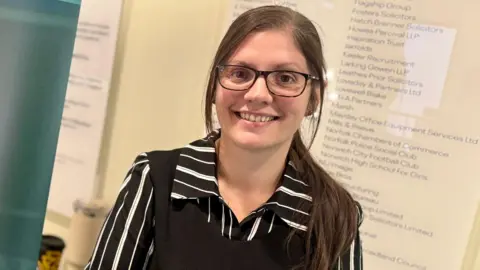
Charlotte Notley, 34, from Norwich, was diagnosed with insulin-resistant PCOS in 2021 and claims the GP offered her the pill and would only refer her to a gynecologist if she wanted to have a baby.
She says living with PCOS has made her feel like she’s not normal, adding: “I don’t know what it’s like to wake up and not have a horrible migraine or pain in your ovaries or uterus.”
Ms Notley says the lack of information led her to turn to social media and Chat GPT to find out more about her symptoms.
“Social media, as scary as it is, has been my doctor for 18 months.
“I shouldn’t have to take to social media and use other people’s advice and what they have tried and tested to manage a disease that is not curable.
“I should be able to go to my GP and ask them what are the best things I can do,” she says.
In 2024, Ms Notley says she stopped seeking help from the GP because of her problem.
“I wasn’t going anywhere and I was tired of being told all the time that I was too fat,” she says.
 Provided
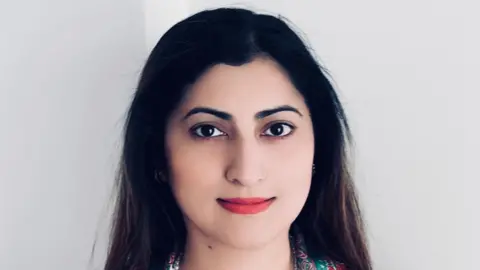
Rahat Khan, 50, an NHS consultant obstetrician and gynecologist at Phoenix Hospital in Chelmsford, said: “PCOS is a disease, it’s not a disease, it can affect periods and fertility.
“It is a difficult disease to diagnose and there is no cure.
“It is not appropriate to blame anyone for being overweight or having PCOS as it can be detrimental to their mental wellbeing.
“It’s important to contact your GP or gynecologist rather than self-medicate or try to find solutions, as this may not be very helpful.”
Chand Kaur, 27, founder of PCOS Relief, said the charity supports 2,500 people around the world and while she believes there has been research into the disease internationally, it has not been enough to make “a huge breakthrough”.
“A lot of research is now coming out of Australia, so Australia is leading the way in PCOS,” she says.
“I think medicine has progressed, but in terms of diagnosis and terminology [around PCOS] “I think it’s pretty much the same thing,” she said.
Ms Kaur says a PCOS diagnosis often comes with the stigma of being infertile.
She adds, however, that once pregnant, 65% of women with PCOS make it to term, although they may face higher risks of complications such as gestational diabetes or preeclampsia.
Sue Mann, national clinical director for women’s health at NHS England, said: “We are acutely aware that too many women suffering from conditions like polycystic ovarian syndrome have struggled to get the help they need.
“That’s why we’re taking steps to improve services and experiences for women, including by rolling out women’s health centers across the country.
“With so much content circulating online, it is so important that women receive clear, personalized advice from trusted NHS professionals.”
A Department of Health and Social Care spokesperson said: “Women with polycystic ovarian syndrome have been failing for too long.
“We are updating guidelines for clinicians, improving training, tackling medical misogyny and renewing our women’s health strategy to ensure every woman gets the care she deserves.”


