‘Step therapy’ insurance strategy led to Wisconsin woman being denied MS relapse drug for months


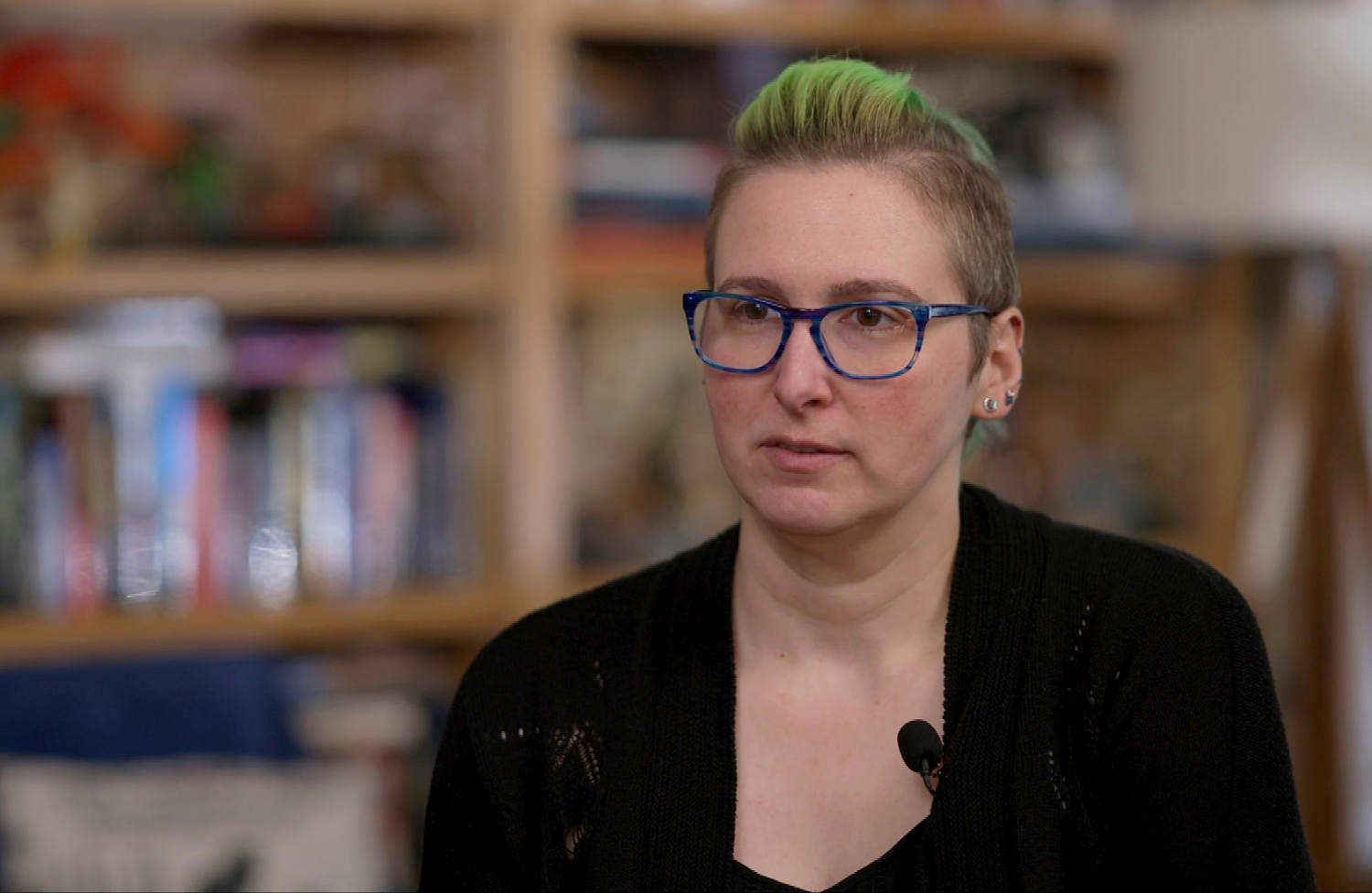
Serena Hostvet has trouble keeping her hand steady when drawing something simple like a pumpkin, and it makes her furious.
“At this point, I would just give up,” said Hostvet, 43, of Eau Claire, Wisconsin. “Art is an essential part of me. Not being able to do it as often or as well as before is depressing.”
This is also how she makes her living. Hostvet designs jewelry and creates original illustrations for small businesses. “Everything I do is with my hands,” she says.
Hostvet suffers from multiple sclerosis, an autoimmune disease that affects the brain and the nerves that extend from his spinal cord through his body. In addition to trembling hands, Hostvet’s vision is compromised. She sometimes has difficulty finding words in everyday conversations.
Its specific type of disease is the most common form, called relapsing-remitting multiple sclerosis, or RRMS. People with this type of MS experience periodic flare-ups of symptoms – numbness and difficulty walking and seeing, for example – that can last for weeks.
If you are faced with bills that seem out of the ordinary or a refusal of coverage, care or repairs, whether for health, home or automobile, please send us an email at Costofdenial@nbcuni.com.
After a relapse, symptoms “can improve anywhere from 0% to 100%,” said Dr. Fred Lublin, director of the Corinne Goldsmith Dickinson Center for Multiple Sclerosis at the Icahn School of Medicine at Mount Sinai in New York. This means that there is a high chance that patients will be left with ongoing problems.
“Each attack can cause permanent damage,” he said. Lublin is not part of the Hostvet care team.
A “final decision”?
There is no cure for multiple sclerosis. Medications can help suppress the immune system so that it stops attacking the brain and spinal cord, although the cost of medications and their effectiveness can vary widely.
Hostvet’s care was caught up in what’s called “step therapy,” where health insurance companies require patients to try cheaper medications that may or may not work before switching to more expensive drugs prescribed by their doctors.
The approach is relatively common. A 2021 study found that step therapy can be applied in up to 57.5% of health plans.
According to Hostvet doctors, she tried a medication called dimethyl fumarate, a pill that costs less than $1,000 a year. Within weeks, Hostvet developed severe flushing and debilitating gastrointestinal side effects and had to stop taking the drug.
She tried another pill, teriflunomide. Because of this, she lost her vision and the ability to see colors properly in one eye.
What happened next was a nearly two-month struggle between the doctor and Hostvet’s insurance company, Anthem Blue Cross and Blue Shield, to approve another drug, Ocrevus. This is administered by IV infusion twice a year for what could be the rest of the patient’s life. Ocrevus is also quite expensive. Drugmaker Genentech lists its price at $78,858 each year.
Hostvet’s doctor at a branch of the Mayo Clinic, who declined to be interviewed, wrote letters to Anthem Blue Cross, urging it to cover the drug that treats adults with relapsing or progressive forms of multiple sclerosis. Hostvet shared with NBC News the exchanges between its team of doctors and Anthem Blue Cross, detailing how the insurance company twice rebuffed requests for payment for the drug.
“This is our final decision,” an Anthem Blue Cross representative wrote to Hostvet on October 10. “Your rights to complain against us have been exhausted.” Hostvet has worked for Anthem Blue Cross since 2011.
NBC News reached out to Elevance Health, owner of Anthem Blue Cross. In a statement, the company said it was initially “unable to verify” that Hostvet had completed the appropriate step therapy.
Once the company was able to verify Hostvet’s treatment, it “quickly approved the treatment.”
On Wednesday, Hostvet received his first infusion of Ocrevus. It was a “great stress reliever,” she said.
But it took two months for Hostvet to receive the medication prescribed by his doctors. It has been two months since Hostvet went without treatment for her multiple sclerosis.
Such a delay in treatment places additional stress on patients, putting them at risk of relapse, said Bari Talente, executive vice president of advocacy and health care access at the National Multiple Sclerosis Society. “It can be very difficult and potentially harm a person’s health.”
Lublin said it’s reasonable for insurance companies to ask patients to try less expensive treatments — up to a point. According to him, every day a patient does not receive appropriate treatment puts their life in danger.
Hostvet acknowledged that the system can be overwhelming, especially for someone with a chronic illness.
“It’s exhausting, but don’t stop,” she says. “Contact everyone you can. There will be someone to help you.”


