4 billion equations calculated for F1 team during race weekend


Formula 1 is undeniably fast. Multi-million dollar motorsport cars reach speeds in excess of 210 miles per hour on tracks that curve and twist wildly. Even the pit crews operate at breakneck speed; a complete tire change at all four corners must be completed in two seconds. For the Oracle Red Bull team, the data transmitted from champion Max Verstappen’s car to their operations center is even faster. Exponentially.
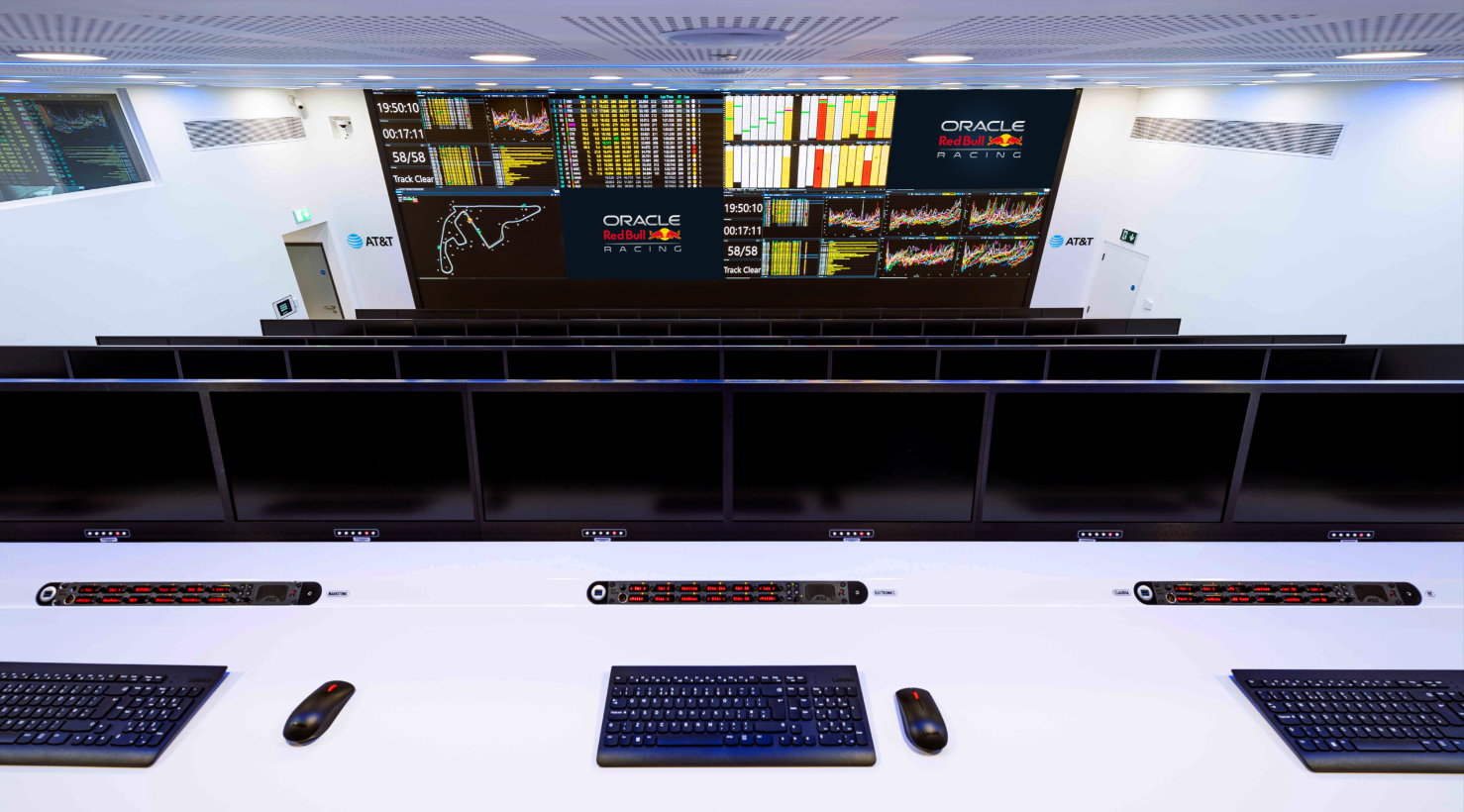
Every millisecond counts, and data supports tiny improvements with each achievement. Nearly 800 sensors are integrated into the car and data is transmitted to the Oracle Red Bull team via fiber optic cables laid by AT&T to the racing team’s operations center in Milton Keynes, UK. This lightning-fast transfer of information is invisible to fans, but it is undoubtedly essential to operations.
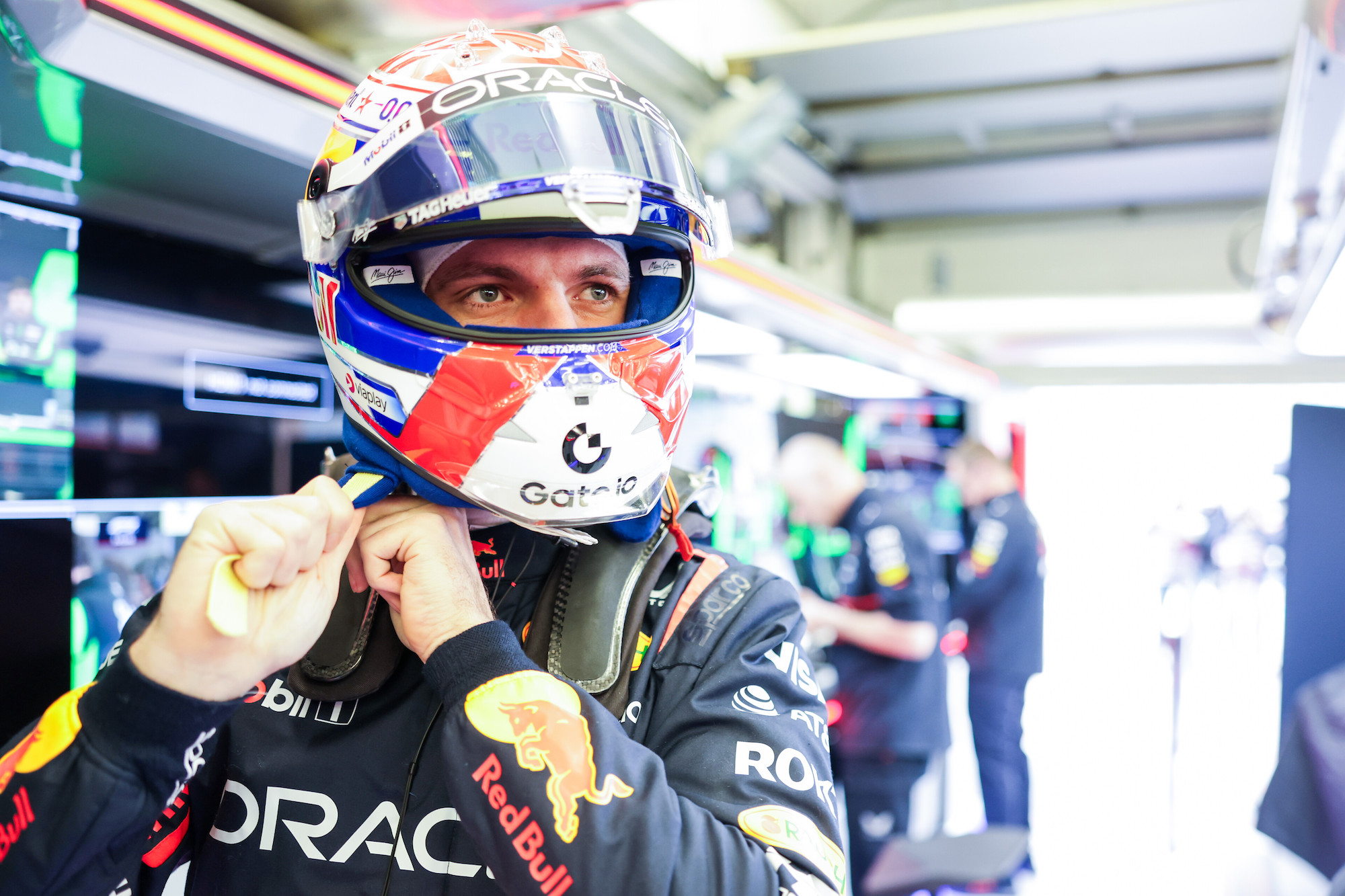
“During the race there’s a lot of analysis going on; it’s constant,” Verstappen said. Popular science. “Of course, the more information the pits have, the more they can help me throughout the race.”
We’re talking about a huge number of flights across the network, to the tune of around 4 billion equations, over the course of a race weekend. Statistics are king, and the Oracle Red Bull team relies on rock-solid connectivity to predict what will work best. That includes this weekend’s F1 race in Las Vegas.
Focus on the Monte Carlo simulation process
Morgan Maia, senior manager of technical partnerships at Oracle Red Bull Racing, says 120 to 130 people are dedicated to processing and analyzing data each weekend. It’s important to transmit real-time data between the track and the factory to ensure the team has the right information at the right time and in the right place, he says.
The team uses what’s called a Monte Carlo simulation, which uses these billions of equations to generate models that predict success while making tiny incremental changes to influence the best outcome. Data is fed quickly into the system and it calculates scenarios, providing information on tire degradation rates, fuel consumption, etc. The team has multiple interchangeable chassis, rear aero wings and other parts so it can exercise its options as conditions change.
Before even hitting the track, the technical team will run two billion equations. The other half of the four billion equations is used to aid racing strategy. All of this is happening in the background, as Verstappen gets dressed for practice and then on the start line.
“The quicker you can analyze all the data you can get, the quicker you can find solutions or improvements to the car,” says Verstappen. “There are a lot of people at the factory to help behind the scenes.”
AT&T has worked alongside Oracle Red Bull since 2011. One indicator of its growth is that the number of sensors installed on the car has increased from 250 to 800 over the years. By the way, the sensors on the Oracle Red Bull F1 machine aren’t stuck like Post-It notes. Each is integrated into the design of the car and integrated from the start. Engineers make sure every little data sensor is part of the chassis, tires, electronics and other elements. Information about the brakes, cooling system and aerodynamics is fed into the simulations to see where adjustments are needed. Verstappen also receives feedback on his driving and what competitors are doing, as needed.
“If it goes really well, they don’t say much because that means I’m doing a good job,” Verstappen says. “Of course, some races are generally more difficult and the more data you can get the better. It varies a lot, from braking points to driving lines to the decisions we have to make regarding tires.”
Looking to 2026 and using data effectively
F1 has imposed a $140 million cost cap for 2025, intended to level the playing field for racing teams at all levels. This $140 million includes auto parts, salaries of some staff members, travel and development. As a result, the cost of data must be controlled, and the partnership with Oracle and AT&T allows the team to save money: instead of having to purchase an entire server farm, the data flows through the cloud.
Big changes are coming to F1 in 2026, including a new chassis design and a revamped hybrid powertrain. Sustainable fuels will be mandatory, and movable front and rear wings with active aerodynamics will be required for tighter (read: more thrilling, more breathtaking) racing. The Oracle Red Bull team is ready to take on what lies ahead with everything they’ve learned during their parenting at AT&T and beyond.
Verstappen says he has great confidence in his data and engineering team. Even though he understands the data read, he knows that a large number of people are working to optimize the car’s performance and his own.
“I look at the data, but at the same time we have a lot of smart engineers at Red Bull who look at every part of the car to optimize every element of it,” he says. “Basically, it’s never good enough and we want to find more performance. We’re constantly working on it.”
For all his appreciation for massive amounts of data, the four-time F1 champion says the human driver remains the X-factor that makes racing interesting. He admits there’s a bit of self-promotion in that statement, but he’s not wrong. Even highly skilled drivers can be unpredictable and inconsistent, which is part of the fun.
“The driver remains a very important factor,” says Verstappen. “Ultimately, I think the driver remains the most important sensor in the car.”

Holiday Gift Guide 2025


